What is a roaming eSIM? Understand it clearly to avoid confusion with traditional roaming

When learning about roaming eSIM, many people often wonder whether it is similar to traditional carrier roaming, whether it incurs charges, or whether they need to turn on data roaming like before. This confusion makes many travelers hesitant when choosing an eSIM for their overseas trip. The article below will help you understand what roaming eSIM is, how it works, and when you should use it to stay connected to the internet proactively and securely.
What is roaming eSIM?
Roaming eSIM is a familiar term users use when referring to using an eSIM to connect to the internet during overseas trips. In this case, the eSIM is installed directly on the device and provides mobile data in the destination country, serving needs such as internet access, maps, social media, or online work.
In terms of usage, roaming eSIM is often understood as a solution for international connectivity using an eSIM, instead of buying a physical SIM at the airport or registering international roaming packages as before. Users only need to install an eSIM that matches their destination and use it throughout the trip.
How are users misunderstanding roaming eSIM?
Although it is becoming increasingly popular, roaming eSIM still confuses many people because they are used to using physical SIM cards and traditional roaming. These misunderstandings mainly come from old habits, not because the eSIM itself is complicated.
- Many people think using roaming eSIM means they have to register roaming with their Vietnamese carrier: In reality, an eSIM works like a separate data SIM, unrelated to the roaming package of the primary SIM you are using.
- Many people confuse roaming eSIM with traditional data roaming: Turning on data roaming is only a technical step for the eSIM to connect to the network, and does not mean roaming charges will be applied to the physical SIM.
- Users worry about unexpected costs: Because they have had bad experiences with roaming before, many people fear uncontrolled charges, while an eSIM usually has a fixed data allowance and validity period from the start.
- Some people think they must remove the physical SIM when using an eSIM: On devices that support eSIM, users can absolutely keep their Vietnamese SIM to make and receive calls and OTPs, while using the eSIM for data when traveling abroad.
It is these misunderstandings that sometimes lead to roaming eSIM being judged unfairly, even though in essence it is a simpler and easier-to-adopt solution than traditional roaming.
See also: Can an eSIM be transferred to another phone? How to move an eSIM to a new device
How is roaming eSIM different from traditional carrier roaming?
Although both help devices connect to the internet while abroad, roaming eSIM and traditional roaming operate under two completely different mechanisms. This difference directly affects costs, usage, and how much control users have throughout the trip.
| Criteria | Roaming eSIM | Traditional carrier roaming |
| SIM used | Independent data eSIM installed on the device | Vietnamese physical SIM |
| How it connects to the network | Connects to the local mobile network or the eSIM’s partner network | Vietnamese SIM roams onto a foreign network |
| Depends on the domestic carrier | Not dependent | Fully dependent |
| How to register | Buy and install the eSIM before or during the trip | Register a roaming package with a Vietnamese carrier |
| How charges are calculated | According to the data package and preset usage period | According to the roaming package or incurred charges |
| Ability to control costs | High, with data allowance and validity known in advance | Depends on actual usage |
| Turn roaming on/off | Only turn it on for the eSIM in use | Roaming must be turned on for the primary SIM |
| Using SIMs in parallel | Can be used together with the Vietnamese SIM on supported devices | Usually only uses 1 SIM for roaming |
| Suitable for | Travel, short business trips, when cost control is important | Needs to make calls and send messages using a Vietnamese number |
How does roaming eSIM actually work?
When you use an eSIM to connect to the internet abroad, the operating mechanism is not the same as traditional roaming as defined by Vietnamese carriers. With traditional roaming, your physical SIM is “roamed” and uses the international carrier’s network under agreements between carriers. By contrast, an eSIM works as an independent data SIM that is downloaded and activated directly on the device.
Specifically, after you buy an eSIM suitable for your destination, the eSIM QR code is sent to your email and you install it immediately on your phone. The eSIM then stores a virtual SIM profile in the device’s software memory, under the control of the operating system (such as iOS on iPhone or the SIM management system on Android).
When you arrive in the country where you will use it, the eSIM automatically connects to the local mobile network or partner network supported by the eSIM, using the purchased data package to access the internet.
The key points in how roaming eSIM works are:
- There is no need to replace the physical SIM; the entire activation and management process happens through the phone’s settings.
- When connected, the eSIM uses the network infrastructure at the destination, similar to buying a local SIM, but the eSIM already has the configuration and data package attached in advance.
- The eSIM does not store information on the physical SIM; data connections rely only on the eSIM profile you have installed.
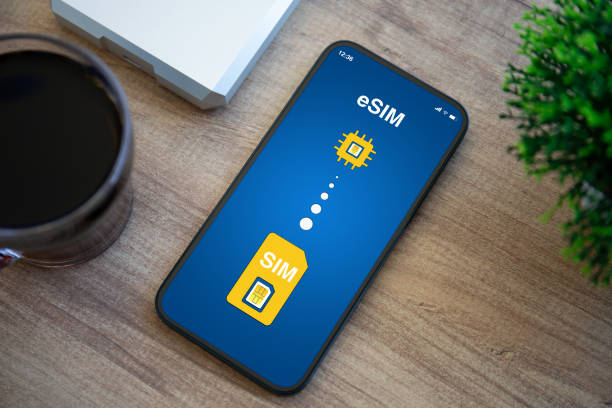
Therefore, roaming eSIM in practice does not “roam” in the traditional sense of a Vietnamese SIM, but rather uses the mobile network at the destination according to the purchased data package, helping you access the internet quickly and proactively.
When should you choose roaming eSIM?
Roaming eSIM is not always a mandatory choice, but it clearly shows its advantages in situations where users need fast, proactive, and easy-to-control connectivity costs while abroad:
- When you mainly need the internet and do not prioritize international calls: On most trips, the most common needs are using maps, social media, ride-hailing apps, booking apps, or working online. For these purposes, a data eSIM is more effective than traditional roaming, which often includes calls and SMS even when users do not really need them.
- When you want to know the cost in advance and avoid unexpected charges: Roaming eSIM is often offered with a fixed data package and usage period, making it easy for users to budget for the trip. This helps limit the risk of going over the allowance or incurring high charges like when using roaming on a physical SIM.
- When you do not want to remove the physical SIM or interrupt the number you are using: On devices that support eSIM, users can keep their Vietnamese SIM to receive calls, messages, or verification codes, while the eSIM fully handles internet connectivity abroad. This is especially convenient for those who need to stay in touch continuously.
- When you need to connect right after landing: eSIM can be installed in advance before the trip, allowing the device to automatically connect to the network as soon as you arrive at your destination. Users do not need to find a SIM counter, do not depend on public Wi-Fi, and save significant time upon arrival.
- For short trips or travel across multiple countries: For travel itineraries, short business trips, or trips across multiple countries, roaming eSIM reduces the inconvenience of buying and swapping physical SIMs at each destination, delivering a lighter and more flexible experience.
See also: Can an eSIM share Wi-Fi? Answers and detailed instructions
SimPM – a travel eSIM solution replacing traditional roaming
Instead of having to register roaming with a domestic carrier and dealing with many limits in both cost and usage, more and more people are switching to travel eSIM as a more flexible connectivity solution when going abroad. SimPM was developed in that direction, focusing on a simple, easy-to-use experience that fits the practical needs of first-time eSIM users.
- Proactive costs, no unexpected charges: eSIM packages are sold with clear data allowances and usage periods, helping users know the cost in advance, unlike traditional roaming, which charges based on usage.
- Quick installation via QR code, no physical SIM needed: After purchase, the eSIM is sent by email as a QR code, can be installed before the trip, and is ready to connect as soon as you arrive.
- Keep your Vietnamese SIM when traveling abroad: Users can still use their primary SIM to receive calls, SMS, and OTP codes, while the SimPM eSIM handles internet connectivity.
- Suitable for travel, short business trips, or multi-country trips: SimPM offers eSIMs for many destinations, helping you avoid having to buy a physical SIM in each country or rely on public Wi-Fi.
- Easy to manage right on the device: Turning the eSIM on, off, or switching between eSIMs is done directly in the settings on iPhone or Samsung, without complicated technical steps.
Frequently asked questions about roaming eSIM
Below are the common questions users have when learning about and using roaming eSIM, focusing on costs, how to use it, and common situations when traveling abroad.
Does roaming eSIM incur additional charges like traditional roaming?
No. Roaming eSIM is usually sold with a fixed data package and usage period. When the data allowance is used up or the package expires, the eSIM will stop data access and will not generate additional unexpected charges like traditional carrier roaming.
Does roaming eSIM need data roaming to be turned on?
Yes. For the eSIM to work properly abroad, you need to turn on Data Roaming for the eSIM in the settings. This does not mean roaming charges will be incurred from the Vietnamese SIM.
Do you need to remove the physical SIM when using roaming eSIM?
No. You can keep your Vietnamese physical SIM in the phone to receive calls, SMS, or verification codes, while the roaming eSIM handles data connectivity.
Can roaming eSIM be used in parallel with a Vietnamese SIM?
Yes. On devices that support eSIM, users can use the eSIM for mobile data and the Vietnamese SIM for calls at the same time without affecting each other.
Can roaming eSIM be used immediately upon arriving abroad?
Yes. If the eSIM has been installed in advance, the device will automatically connect to the network as soon as you arrive in the supported country, without needing to buy a SIM at the airport or look for public Wi-Fi.
What should you do if roaming eSIM cannot connect to the network?
First, check whether the eSIM has been turned on and whether Data Roaming for the eSIM has been enabled. If it still cannot connect, restart the device or manually select the network again. If necessary, you should contact the eSIM provider’s support team for specific guidance.
Hopefully, after this article, you now clearly understand what roaming eSIM is, how it works, and how it differs from traditional carrier roaming. With travel eSIM solutions deployed at SimPM, users have another option for internet connectivity abroad that is simpler, more proactive, and easier to control costs on international trips.