5 mistakes when buying an eSIM for the first time – How to avoid wasting money

Buying an eSIM for the first time may seem simple, but if you miss even one small check, you could lose from 100.000 VND to 2,5 million VND for no good reason. The most common mistakes are: not checking device compatibility, choosing the wrong coverage, selecting the wrong plan, activating at the wrong time, and not backing up the QR code. Here’s how to identify and avoid each mistake.
Overview of 5 mistakes and their real-world impact
Before going into each specific mistake, you can quickly review the summary table below. These are the 5 most common mistakes recorded by customer support at SIMPM, along with the average cost buyers may have to pay when they make them.
| Mistake | Occurrence rate | Average cost | Can it be avoided? | |
|---|---|---|---|---|
| 1 | Not checking whether the device supports eSIM before buying | Cao | 200.000 – 900.000d, deducted from the plan | Yes, it only takes 30 g seconds to check |
| 2 | Choosing the wrong coverage area, confusing a 1-country plan with a regional plan | Very high | 1.000.000 – 2.500.000 VND, need to purchase more abroad | Yes, just map out your itinerary in advance |
| 3 | Choosing the wrong data allowance and validity period | Cao | 300.000 – 800.000due to excess or insufficient data | Can be avoided by about 90% if you know how to calculate it |
| 4 | Activating the eSIM at the wrong time | Average | 200.000 – 400.000d, lost1 – 2data days | Yes, if you read the terms carefully |
| 5 | Not backing up the QR code | Average | 150.000 – 500.000 VND, must buy a new plan again | Yes, if you back it up in multiple places |
5 Mistakes when buying an eSIM for the first time you need to note
Mistake 1: Not checking whether the device supports eSIM before buying
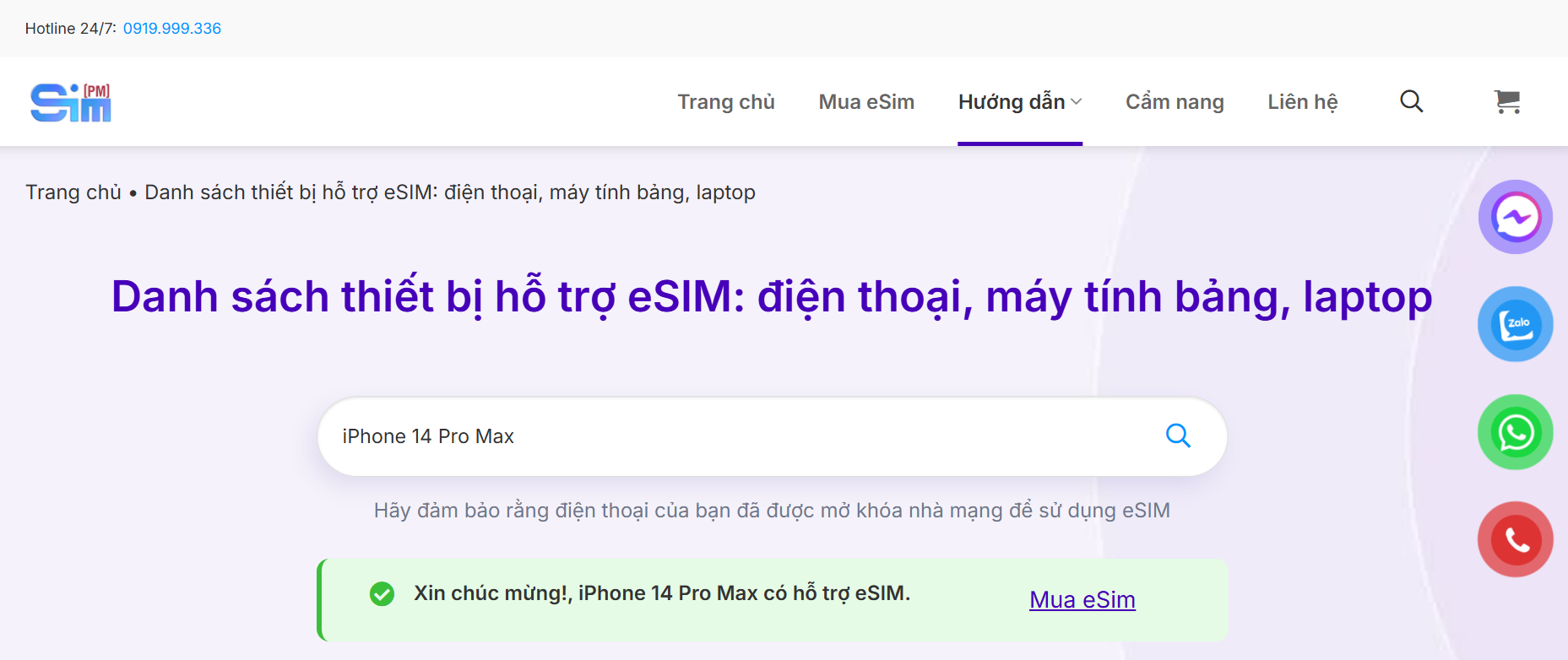
This is the most basic mistake and also the most common, especially among users of imported iPhones or Samsung phones, second-hand devices, or phones gifted from overseas. The consequence is serious: after you buy the eSIM and scan the QR code, the phone shows an error and there is no eSIM profile section. In many cases, the provider will not issue a refund because the QR code has already been scanned or activated.
There are 3 device groups that are especially easy to confuse.
Group 1: Hong Kong and Macau iPhones, ZA/A and ZP/A codes
These are iPhone models sold for the Hong Kong, Macau, and mainland China markets. From the iPhone XS to the newest models, iPhones with ZA/A and ZP/A codes do not support eSIM. Instead, the phone has 2 physical SIM slot. This does not change across generations. Even the iPhone 16 Pro Max with ZA/A code is still a 2-SIM physical model.
The check is very simple: go to Settings > General > About > Model Number. If the model code ends with ZA/A or ZP/A, the device does not have eSIM.
Group 2: Vietnam-market Samsung Galaxy models before the S23 generation
Official Samsung phones sold in Vietnam usually have the XXV suffix in CSC, meaning Consumer Software Customization. Some Vietnam-market Galaxy models before the S23 generation, especially the S22 series with S908E XXV codes, have an eUICC chip but cannot activate eSIM because of region-based firmware restrictions.
From the Galaxy S23 series onward, official Vietnam-market versions have eSIM enabled by default. However, the most reliable way is still to check directly on the phone.
Go to Settings > Connections > SIM Manager > Add eSIM. If you do not see this menu, there is a high chance your phone version does not have eSIM enabled.
Group 3: second-hand phones, poorly unlocked phones, or refurbished devices of unclear origin
Some phones unlocked using unofficial software may have the eUICC chip disabled. With devices bought from small shops, especially when the price is 20 – 30% lower than the market, you should ask to try activating the eSIM at the store before paying.
Avoiding this mistake only takes about 30 g seconds: go to Settings > Mobile or Cellular > Add eSIM. If the phone shows options to scan a QR code or enter details manually, the device supports eSIM. If the menu does not appear or is greyed out, the phone does not have eSIM.
Real example: Tran Ha My,31years old, freelance designer in Hanoi, traveling to Bangkok5day in month2/2026. You buy an iPhone13Pro imported price18million at the used phone market and thought that “iPhone13then there is definitely an eSIM.” After that, she bought a Thailand eSIM package3GB/7day price269.000d. When I arrived at Bangkok Airport and scanned the QR code, the phone did not show the eSIM menu. After checking the device model again, I found out it was the ZA/A version from Hong Kong. A269.000It cannot be refunded because the QR code has already been scanned; you have to buy a physical SIM at the airport at a price twice as high as in the city center.
Mistake 2: Choosing the wrong coverage area, buying the wrong 1-country plan when traveling to multiple countries
This is the mistake that can cause the biggest financial loss. eSIM coverage is usually divided into 3 main groups:
| Plan type | Features |
|---|---|
| 1-country plan | Cheapest, usable in only one country |
| Regional plan | Usable in multiple countries within the same region or continent |
| Global plan | Usable in more than 100 countries, highest price |
Choosing the wrong plan group means you may end up with insufficient coverage and pay more than necessary.
There are 3 common situations:
- First, users buy multiple 1-country plans for a multi-country itinerary. This can cost 2 – 3 times more than buying one regional plan.
- Second, users buy a global plan for a trip that only goes to one country. This often wastes about 40 – 60% of the cost.
- Third, users choose the correct destination country but forget the transit country. For example, you connect through Doha, Dubai, or Istanbul and have 4 – 6 hours at the airport, but the eSIM plan does not cover Qatar, the UAE, or Turkey. When you need data for Google Maps, Uber, or communication, you will have no connection.
The way to avoid this mistake is very simple but often overlooked. Before buying, write down your entire itinerary and list all the countries you will visit, including transit countries if the layover is more than 3 hours and you need internet access.
Then compare 3 options:
| Option | When should you choose it? |
|---|---|
| Buy separate plans for each country | Suitable when visiting only 1 country or when each country has very different needs |
| Buy a 1 gal plan | Suitable when visiting from 2 countries upward within the same continent |
| Buy a global plan | Suitable when visiting from 4 countries across different continents upward |
Based on real-world experience, if you are traveling to 2 countries or more within the same continent, a regional plan is usually about 30 – 50% cheaper than buying separately for each country. If your itinerary spans 4 or more countries across different continents, a global plan is the one that really makes sense.
Practical example: Le Minh Quan,26years old, an account executive at Vietcetera in Ho Chi Minh City, traveling to Europe on an itinerary covering France, Italy, and Germany in12day of the month4/2026Quan purchases3Dedicated eSIM for3countries, with reference prices from eSIM providers1Western European countries at that time: about569.000for France5GB, 489.000VND for Italy3GBand549.000₫ for Germany3GBTotal cost is approximately1.607.000d. If purchasing a Europe package39country inSIMPM, the cost would have been much lower and still usable in all 3 countries. Quan wasted more than 1 million VND just because he did not know there was a regional Europe plan.
Mistake 3: Choosing the wrong data allowance and duration
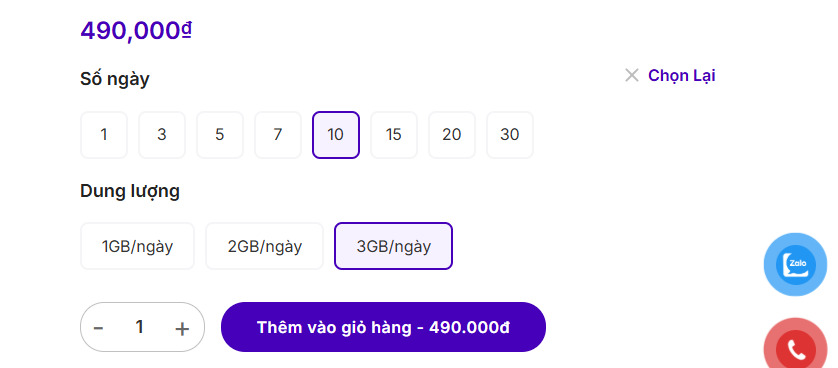
Running out of data in the middle of a trip is a very frustrating experience. You may be at an airport abroad checking your next flight, using Google Maps to walk somewhere, or trying to book a ride, and then 4G suddenly stops working. If you have to buy data urgently abroad, the cost is usually 3 – 5 times higher than buying a plan from Vietnam, especially if you buy at an airport SIM counter or a local convenience store.
On the other hand, buying a plan that is too large for your actual needs also wastes 40 – 70%. For a 5-day trip where you only use Zalo, light email, and Google Maps, a 3 – 5GB plan is already quite comfortable, while 1 – 2GB may be just enough if you use data sparingly.
You can estimate data allowance based on 4 common usage groups:
| Usage needs | Reference data allowance |
|---|---|
| Only use maps and light messaging such as Zalo, WhatsApp text | 0,5 – 1GB/day |
| Typical users, including maps, chat, email, Instagram, Facebook, stories | 1 – 1,5GB/day |
| Streaming and work, including Zoom, YouTube, uploading high-resolution photos to the cloud | 2 – 3GB/day |
| Content creator, livestreaming, posting high-quality stories, editing video on the move | 4 – 5GB/day |
As for the usage period, the safe rule is to add more1 – 2buffer days compared with the itinerary. For example, the trip7days should choose a plan8 – 9days to allow for a delayed flight, an early landing, or having to stay longer for work. The additional cost for1 – 2buffer days are usually only about30.000 – 50.000d, but it can help you avoid the risk of your plan expiring while you are still abroad.
Mistake 4: Activating the eSIM at the wrong time
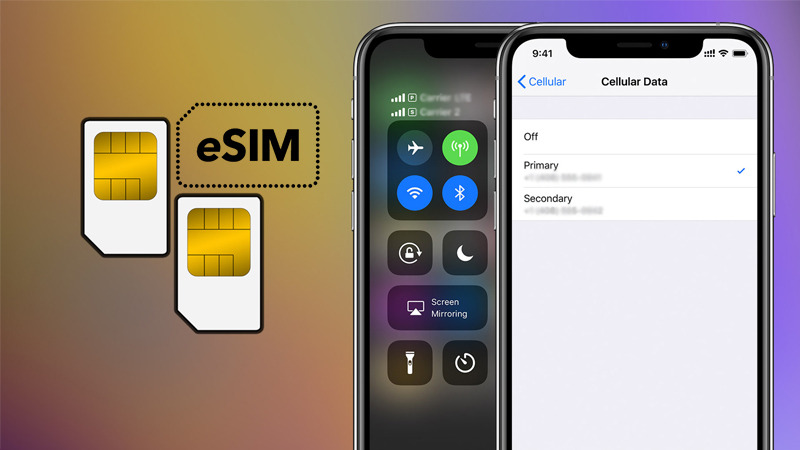
This is the hardest mistake to notice, because it relates to how the provider calculates plan usage time. Each provider has different policies. If you activate at the wrong time, you may lose 1 – 2 days of data right from the start of the trip.
There are 3 common situations.
- First, users activate the eSIM in Vietnam a few days before the trip. With many providers, the plan starts counting down from the moment of activation. That means a 7-day plan starts immediately when you scan the QR code, even though you have not left the country yet. However, some other providers, such as many Airalo plans, count time from the moment you get signal in the destination country. So you need to read the Validity Policy carefully before buying.
- Second, users wait until landing to activate, but the airport has no free WiFi and they also have not turned on roaming for their Vietnam SIM. Without internet, the phone cannot download the eSIM profile to the eUICC chip, causing activation to fail.
- Third, users have activated successfully but forget to turn on Data Roaming for the eSIM line. In that case, the phone may have signal but still cannot access data.
The correct eSIM activation process should include 3 steps.
Before the trip:
You need to back up the QR code in multiple places and carefully read the provider’s terms about when the day count starts. There are 2 common mechanisms:
| Validity calculation method | Meaning |
|---|---|
| Counted from the activation time | The plan starts counting down immediately when you scan the QR code or install the profile |
| Counted from the first signal received in the destination country | The plan only starts when the eSIM connects to the network in the registered country |
The second mechanism is more user-friendly, but not every provider applies it.
Upon landing:
You should look for the airport’s free WiFi, since most major international airports have it. If there is no WiFi, you can turn on roaming for your Vietnam carrier for about 1 – 2 minutes to download the eSIM profile to the phone. After the profile has finished downloading, turn off roaming on your Vietnam SIM to avoid high charges.
After installation:
Go to Settings > Mobile or Cellular, select the new eSIM line and turn on Data Roaming for this line. Note that you should only enable Data Roaming for the eSIM, not for your Vietnam number line if you do not want domestic roaming charges. Then set the eSIM as the default Mobile Data line so the phone automatically uses 4G/5G from the eSIM.
Whether you should activate in Vietnam or at your destination depends on each provider’s policy. If the provider counts from the moment of activation, you should wait until landing to activate so you make the most of the plan duration. You can also see the step-by-step guide in the article “how to activate eSIM”.
See more: Do you need to buy an eSIM for Hong Kong? The most convenient and cost-effective internet solution
Mistake 5: Not backing up the QR code and profile information
Most providers’ eSIM QR codes can only be scanned once. After a successful scan, the QR code is considered used and cannot be reused. If you reset your phone, accidentally delete the profile in Settings, or switch to a new phone before transferring it, you will need the eSIM information again to install it. If you only save the QR code in one place and that place is lost, you may have to buy a new eSIM and lose the entire cost of the old plan.
The safe way is to follow the backup rule “3-2-1 for QR”, specifically storing it in 4 places below:
| Backup location | How to do it |
|---|---|
| Photos or Gallery | Take a screenshot of the QR code as soon as you receive the email from the provider. Rename the file in the format “eSIM-[Provider]-[Country]-[Date]” so it is easy to find again. This is the fastest backup method and can be opened even without internet |
| Original email | Do not delete the provider’s email for at least 1 months after your trip ends. This email usually includes both the QR code and a link to view the profile online |
| Cloud storage | Save the QR image to iCloud, Google Drive, or Dropbox in a separate “eSIM Backup” folder. Before traveling, check whether the cloud has finished syncing |
| ICCID and SM-DP+ address as text | Save them in Notes or Google Keep. These two pieces of information let you manually install the eSIM if the QR code fails, by going to “Add eSIM” and then choosing manual entry |
Most reputable providers will send the ICCID and SM-DP+ address in the order confirmation email. The security of QR codes and eSIM profiles is analyzed in more detail in the article “Is a secure eSIM really safe?”
Bonus mistake: Choosing a provider that is “cheap on paper” but expensive when problems occur
Besides the 5 main mistakes, another error that is often overlooked is choosing a provider based only on the displayed price. Some providers list very attractive prices, but when issues arise, buyers realize the real cost is not cheap at all.
Four signs that a provider may be “cheap on paper but expensive when problems occur”:
| Sign | Risk |
|---|---|
| No 24/7 support hotline with a real person | When you lose signal abroad in the middle of the night, you only get a chatbot or a feedback form after 24 – 48 hours |
| No clear refund policy | If the eSIM cannot be activated, buyers are often denied refunds or asked to provide many complicated documents |
| No Vietnamese support | All communication has to be in English or Chinese, making it hard to explain details when the issue is backend-related |
| Actual speed is lower than advertised | No SLA commitment, no compensation mechanism when the signal is weak or speed is poor |
When choosing an eSIM provider, you should check 5 criteria:
| Criteria | Why is it important? |
|---|---|
| Hotline support 24/7 with a real person | You can call before buying to test the quality of support |
| 100% refund policy within 7 – 14 days | Reduces risk if the eSIM cannot be activated on your device |
| Vietnamese support through at least 2 channels | For example, chat and email, or chat and hotline |
| Reviews on independent channels | You should check Trustpilot, Google Maps, Facebook reviews, not just the reviews on the provider’s website |
| Transparent pricing | No hidden fees at checkout, no auto-renewal when the plan ends |
When should you not buy an eSIM and instead keep a physical SIM?
eSIM is more convenient than a physical SIM in many cases, but it is not suitable for everyone. There are 5 groups of users who should consider keeping a physical SIM.
- First are feature phone users such as Nokia 105, Itel It2123, and Masstel Fami. These devices do not have an eUICC chip, so they cannot use eSIM.
- Second are people who frequently switch second-hand phones at phone markets. In this case, inserting a physical SIM to check the phone at the store is often faster than the eSIM activation process.
- Third are people in areas where SM-DP+ infrastructure is not yet stable, such as some remote regions. The eSIM activation process may be slow, error-prone, or unstable.
- Fourth are users with Hong Kong iPhones with ZA/A codes. Even though they are newer iPhones, this version still does not have an eSIM chip.
- Fifth are people who need a dual physical SIM for a specific purpose, for example device testing or professional use.
In other cases, such as international travelers, users of iPhone XS and later, Samsung S20 and later international versions, or businesses deploying IoT, eSIM is usually the more convenient choice. You can read the article “eSIM vs physical SIM” for a detailed comparison across 12 criteria between the two types.
See also: Can you use eSIM and physical SIM at the same time on iPhone?
Differences between eSIM in Vietnam and travel eSIMs for overseas use
One thing many Vietnamese users still misunderstand is that domestic eSIM in Vietnam and travel eSIM for use abroad are two completely different types in terms of purpose.
- Vietnam domestic eSIM provided by Viettel, VinaPhone, MobiFone, Vietnamobile, iTel. This type is used in Vietnam, linked to a real Vietnamese phone number, and can make calls, send texts, and be used for banking and eKYC via VNeID. Activation usually requires a chip-based citizen ID card, verification via VNeID, or visiting a carrier store.
- Travel eSIM for overseas use provided by the SIMPM travel plan. This type is used in the registered country, is mostly data-only and does not include a calling number. Some plans may include a temporary number in the destination country. Activation is usually simple via QR and does not require a citizen ID card.
If you buy a Vietnam domestic eSIM by mistake for an overseas trip, you may face 2 consequences. First, you may be charged very high roaming fees if you do not register a dedicated roaming plan. Second, you will have no signal abroad. Conversely, if you buy a travel eSIM for use in Vietnam, the plan will not work if Vietnam is not included in the registered coverage area.
| Criteria | Vietnam domestic eSIM | eSIM travel |
|---|---|---|
| Usage area | Vietnam | Registered country |
| Calling and texting number | Yes, a real Vietnamese number | Mostly data-only, some plans include a temporary number |
| Payment | VND via bank transfer or card | VND or USD via international card |
| Device support | All devices with eSIM | All devices with eSIM |
| eKYC | Required, usually via VNeID | Not required |
| Reference price | 70.000 – 200.000 VND/month | 200.000 – 2.000.000 VND/trip |
8-step checklist before buying an eSIM
Below is a short checklist to help you avoid 5 common mistakes before paying:
| Step | What to check |
|---|---|
| 1 | Check the model and region of the device in Settings > General > About > Model Number to make sure the device supports eSIM |
| 2 | Map out your itinerary and count all the countries you will visit, including transit countries if you stay there for more than 3 hours |
| 3 | Choose the right coverage area: 1 country, region, or global |
| 4 | Calculate the data you need using this formula: GB/day by usage group × number of days × 20% buffer |
| 5 | Add an extra 1 – 2 days of buffer to the plan validity |
| 6 | Check the provider’s day-count policy, from the moment of activation or from the moment signal is first received |
| 7 | Right after receiving the QR email, back it up in 4 places: Photos, original email, cloud, text ICCID and SM-DP+ |
| 8 | Check the provider’s reputation on independent channels and read the refund policy carefully for 7 – 14 days |
The 30 g-second rule: if any step in the 8 steps above makes you unsure, contact the provider’s hotline before buying. A 2-minute call can help you avoid losing millions of dong unnecessarily.
SimPM eSIM: Choose right from the first time for Vietnamese users
To get 4G as soon as the plane lands and minimize the 5 mistakes above, you can order an eSIM at SIMPM. The QR code is sent by email within 5 minutes, along with Vietnamese-language support 24/7 before and during use.
Popular plans for first-time buyers include:
| eSIM plan | Who is it suitable for? |
|---|---|
| Korea eSIM | Plan 5 – 10GB/5 – 15 days, suitable for independent travel and short business trips |
| Japan eSIM | Plan 3 – 10GB/5 – 15 days, stable signal in popular sightseeing areas |
| Europe eSIM | One plan usable across all of Europe, economical for multi-country itineraries |
Updated prices and details for each plan are available on the corresponding product page.
Benefits for first-time buyers:
| Benefit | Value delivered |
|---|---|
| Vietnamese-language support 24/7 before purchase | Helps you choose the right coverage and data allowance, reducing mistakes number 2 and number 3 |
| Free device check support via SIMPM hotline | Helps determine whether the device is eSIM-compatible |
| 100% refund within 7 days if it cannot be activated on the device | Reduces risk when buying for the first time |
| QR sent by email and saved in the SIMPM account | Helps reduce the risk of losing the QR code when you need to use it again |
You can order online at simpm.vn, choose a country, select a plan, and receive the QR code by email after 5 minutes. SIMPM hotline offers advice 24/7 if you need help choosing the right plan.
Frequently asked questions
Can I get a refund if I buy the wrong eSIM?
Yes, but it depends on each provider’s policy. Reputable providers usually offer a 100% refund within 7 – 14 days if the eSIM has not been activated or cannot be activated on the device. On the other hand, some less reputable providers may refuse refunds on the grounds that the “QR has been activated,” even if you only scanned it to try. Therefore, check the refund policy carefully before paying.
Can an eSIM bought in Vietnam be used abroad?
It depends on the eSIM type. Vietnam domestic eSIMs from Viettel, VinaPhone, and MobiFone can only be used in Vietnam. When going abroad, you need to register a separate roaming plan, which often costs more. Meanwhile, travel eSIMs bought in Vietnam through SIMPM, Airalo, or Holafly can only be used in the registered country. These two eSIM types serve completely different purposes.
Should I activate the eSIM before or after flying?
This depends on the provider’s policy. If the provider counts the days from the moment of activation, you should activate it after landing to make full use of the plan validity. If the provider counts from the moment the first signal is received in the destination country, you can activate it early in Vietnam for more peace of mind. Before buying, read the terms on validity carefully.
Can iPhone XS use eSIM?
Yes. iPhone XS, XS Max, and XR released in 2018 were the first iPhone models to support eSIM. All iPhones from XS and later have eSIM, except the Hong Kong, Macau, and mainland China versions with model codes ZA/A and ZP/A. These versions use 2 physical SIM slot instead of 1 physical SIM and 1 eSIM.
If I lose the eSIM QR code, can I recover it?
It depends on the provider. Most reputable providers allow users to view the QR again in their online account or resend it by email upon request. Some low-cost providers do not store the QR after sending it, so if you lose it, you have to buy a new plan. For safety, back up the QR in 4 places: Photos, email, cloud, along with the ICCID and SM-DP+ information in text form.
Where should I buy an eSIM to be trustworthy?
You should choose a provider with 5 factors: a support hotline 24/7 with a real person answering, a 7 – 14 day refund policy, Vietnamese-language support, good reviews on independent channels such as Trustpilot, Google Maps, and Facebook reviews, and transparent pricing with no hidden fees. In Vietnam, some reputable travel eSIM providers include SIMPM, Airalo, and Holafly. SIMPM offers Vietnamese support 24/7 and refunds within 7 days; Airalo is a large international provider but mainly supports English; Holafly is known for unlimited plans, especially in Europe.
Can one eSIM be used by multiple people at the same time?
No. One eSIM can only be activated on one device at a time. If you need connectivity for a group of 2 – 4 people, you have 2 options. The most flexible way is for each person to buy a separate eSIM. A more economical way is for one person to buy an eSIM and then turn on personal WiFi sharing so the whole group can use it, but this depends on the main device and will use more battery.
Buying an eSIM for the first time is not difficult if you know the common mistakes in advance and check carefully before paying. Just avoid the 5 mistakes above, and you can save a significant amount of money and have more stable connectivity throughout your trip. If you need quick advice before buying, the SIMPM hotline offers Vietnamese support 24/7. A 2-minute call can help you avoid losing millions of dong unnecessarily.