eSIM vs Physical SIM in 2026: 12-Point Comparison for Vietnamese Users

Are you wondering whether to use an eSIM or a physical SIM? In practice, no SIM type is “better in every way.” The right choice depends on the device, usage habits, and individual circumstances. This article compares eSIM and physical SIMs across 12 practical criteria such as activation, switching devices, storing multiple profiles, security, cost, environmental impact, and device compatibility.
Where are the differences between eSIM and physical SIM?
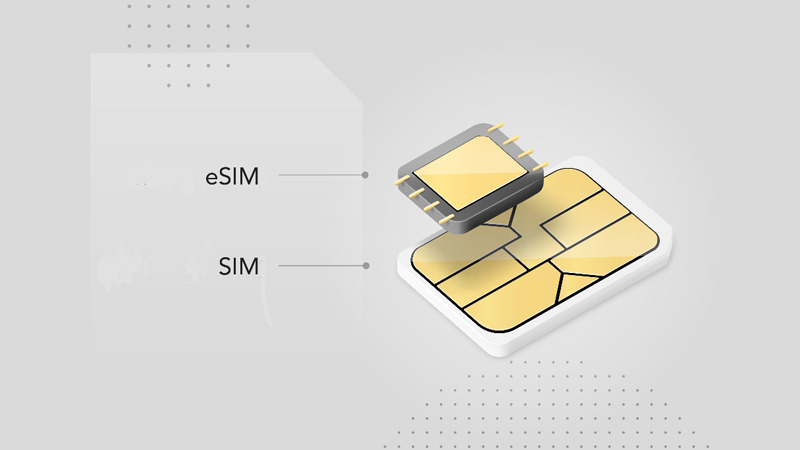
Before getting into the detailed comparison, it is important to understand one basic point: both eSIM and physical SIMs are used to store subscriber information, phone numbers, and carrier profiles. The difference lies in the storage format and how they are activated.
- A physical SIM is a removable plastic card that is inserted directly into the SIM slot on a phone. You can hold it in your hand, remove it, move it to another device, and inspect it with the naked eye.
- An eSIM is a very small eUICC chip that is permanently soldered onto the device’s circuit board. Users cannot remove or handle the eSIM directly. Instead, the carrier profile is downloaded to the device through the carrier’s server.
When making calls, sending texts, or using mobile data, eSIM and physical SIMs work in the same way. Both use the 4G or 5G mobile network, with the same speed and connection quality if you use the same carrier, the same plan, and the same coverage area. The main differences are in activation, switching devices, managing multiple SIM profiles, and the behind-the-scenes operational factors.
Comparison table of 12 criteria between eSIM and physical SIM
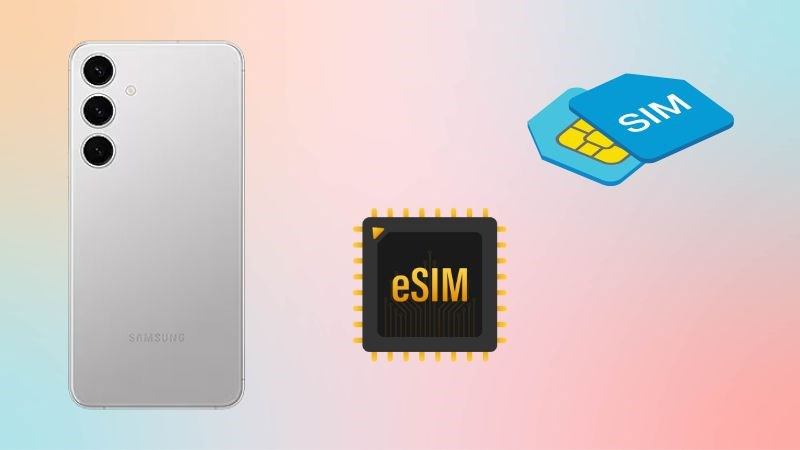
The table below summarizes the 12 important criteria when comparing eSIM and physical SIM. The final decision should not be based only on which type “wins more categories,” but on which criteria matter most for your needs.
| # | Criteria | Physical SIM | eSIM | Which type has the advantage |
|---|---|---|---|---|
| 1 | Activation process | Insert the SIM into the slot | Scan the QR code and download the profile | Physical SIM |
| 2 | Activation time | About 30 g seconds | 2 to 5 minutes, may take 10 to 15 minutes | Physical SIM |
| 3 | Initial internet required | Not required | WiFi or 4G is needed to download the profile | Physical SIM |
| 4 | Store multiple profiles | A 1 card equals 1 profile | Can store 5 to 10 profiles, activate 2 lines at the same time | eSIM |
| 5 | Switching devices | Remove the SIM and insert it into a new device | Use Quick Transfer or request a new QR code | Physical SIM |
| 6 | Number porting to a new carrier | Usually requires visiting a store | Can be done online through an app | eSIM |
| 7 | Recovery if the phone is lost | Go to a store to get a replacement SIM | Request a new QR code online | eSIM |
| 8 | Security against SIM-swap risk | At risk | Also at risk through call center scams | Tie |
| 9 | Environmental impact | Includes plastic cards, packaging, and shipping | No physical plastic card needed | eSIM |
| 10 | Device compatibility | Nearly every phone with a SIM slot | Only some devices support it | Physical SIM |
| 11 | Replacement cost | About25.000to50.000depending on the carrier | About15.000to25.000d | eSIM |
| 12 | Connection speed and quality | Same as eSIM if on the same network | Same as physical SIM if on the same network | Tie |
Quick summary: physical SIM has the advantage in 5 criteria, eSIM has the advantage in 5 criteria, and the remaining 2 criteria are considered equal. So there is no absolute winner. What matters is which type of user you are and what you need to prioritize when using it.
Activation process: physical SIM is simpler, eSIM needs initial internet
This is the most noticeable difference between eSIM and physical SIM, and also the reason many first-time eSIM users feel a bit unfamiliar.
With a physical SIM, the process is something almost anyone can do. You just remove the old SIM, insert the new SIM into the phone, and wait about 30 g seconds for the device to detect the signal and start using it. This process does not require WiFi, does not need a code scan, and does not depend much on an online activation system.
eSIM works differently. To activate it, the phone needs an internet connection already available, usually WiFi or mobile data from the old SIM, to connect to the carrier’s SM-DP+ server and download the subscriber profile to the eUICC chip. Under normal conditions, this process usually takes about 2 to 5 minutes.
For new users, a physical SIM is still more accessible. However, once you are familiar with scanning QR codes and activating eSIM, the process is no longer too complicated. In return, eSIM offers several advantages in the following criteria.
Switching devices and changing carriers: eSIM is more convenient in some cases
When it comes to switching devices, the physical SIM still has a clear advantage in simplicity. You just remove the SIM from the old phone and insert it into the new one, and the process is completed in about 30 g seconds. This method does not require an account, data syncing, or contacting the carrier.
With eSIM, switching devices depends on the device and operating system. There are 3 common cases to note:
| Case | How to transfer the eSIM |
|---|---|
| iPhone XS/XR and later, both devices running iOS 16+ | Use eSIM Quick Transfer. On the new iPhone, go to Settings > Cellular > Add eSIM > Transfer From Nearby iPhone. The device will connect via Bluetooth and WiFi to transfer the profile, without needing a new QR code |
| Samsung Galaxy S22, S23 and later running One UI 5.1+ | Use the Transfer SIM feature in Settings > Connections > SIM Manager. One UI 5.0 and earlier do not support this feature |
| No Quick Transfer or Transfer SIM | You need to contact the carrier to request a new eSIM QR code. Processing time is usually about 15 to 30 minutes |
In terms of storing multiple profiles, eSIM is superior to physical SIM. A physical SIM card can hold only one subscriber profile. If a phone has two SIM slots, it can still use only up to two physical SIMs at the same time.
By contrast, the eUICC chip in an eSIM can store about 5 to 10 different profiles, depending on the device. Users can activate up to 2 lines at the same time under dual-SIM standby mode, but mobile data can be used on only one line at a time. This is a major advantage for people who travel abroad often or need to use multiple numbers on the same device.
On the other hand, number porting to a new carrier is also more convenient with eSIM. With eSIM, users can complete the process online through the new carrier’s app. Carriers such as Viettel, VinaPhone, MobiFone, and Vietnamobile all support this method. Meanwhile, a physical SIM still usually requires visiting a service point to replace the card.
Security: is eSIM safer than physical SIM?
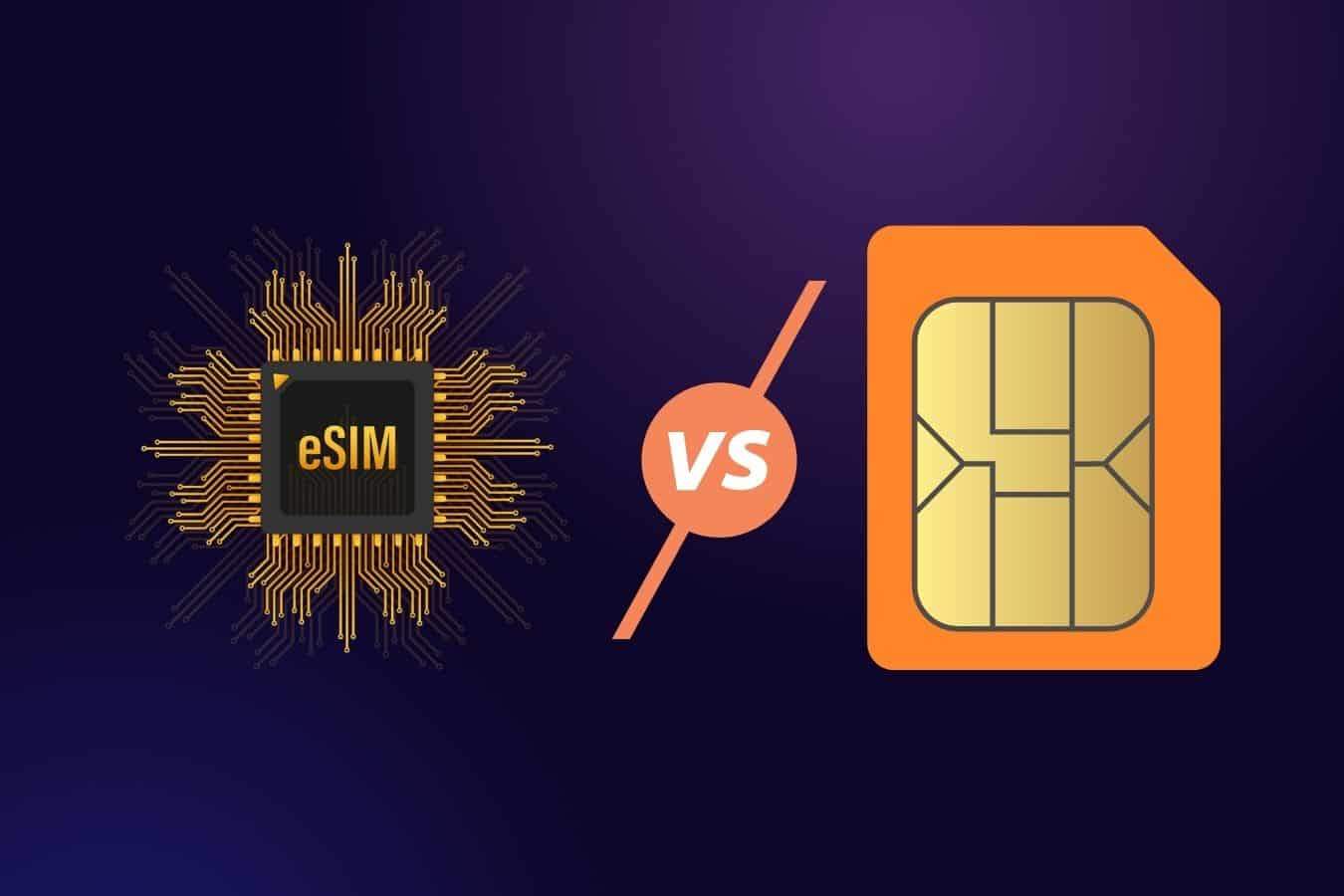
The short answer is: not exactly. Overall, eSIM and physical SIMs can be considered equal in terms of security, but the risks of each type are different.
A physical SIM carries the risk of being lost or stolen. If you drop your wallet, lose your phone, or expose the SIM, a bad actor could insert that SIM into another device to receive OTP messages and then take over access to your bank, email, or social media accounts.
eSIM reduces this risk because the eUICC chip is built into the phone and cannot be removed like a physical SIM card. However, eSIM has another risk: being taken over through carrier call-center fraud. An attacker may impersonate the subscriber, provide stolen personal information, and request a replacement eSIM QR code. If the verification process is not strict enough, the eSIM profile can be transferred to the attacker’s device.
As for recovery if the phone is lost, eSIM has the advantage. With a physical SIM, you usually have to go to the carrier store, present your ID documents, and complete the replacement procedure. This process can take half a day, especially if you are far from a service point.
With eSIM, you can contact the call center or use the app to request a new QR code by email. In many cases, processing time is only about 30 minutes. This is a significant plus for people who travel frequently or are at high risk of losing their phone.
Environment and cost: eSIM is more compact and has fewer extra costs
In terms of environmental impact, eSIM has a clear advantage. Every physical SIM produced comes with a PVC plastic card, paper packaging, printing, packing, and shipping processes. These factors create waste and carbon emissions throughout the supply chain.
According to a GSMA report, the global telecom industry produces about 4 to 5 billion physical SIMs each year, creating more than 18.000 tons of plastic waste. If only 10% of users switch to eSIM, plastic waste could be reduced by about 40.000 tons per year, equivalent to 100 million SIM cards eliminated.
In terms of cost, both physical SIMs and eSIMs are usually free for the initial activation for new customers. The main difference lies in the replacement fee when users lose their phone, switch devices, or accidentally delete the eSIM profile. Below are the reference fees:
| Carrier | Physical SIM replacement fee | eSIM QR replacement fee |
|---|---|---|
| Viettel | About35.000For regular SIMs, premium numbers may cost more | About25.000d |
| VinaPhone | Around 12.500 VND including VAT, cheapest for physical SIM | About25.000d |
| MobiFone | About25.000for SIM4Gstandard | Around 15.000 VND, cheapest on eSIM |
| Vietnamobile | About25.000d at the physical store or35.000d at the service point | Free conversion program available |
The fees above are for reference only and may change depending on the time or promotion. Before switching or replacing a SIM, you should confirm directly with the carrier’s call center. If you need step-by-step instructions for each carrier, you can refer to the article “How to activate eSIM.”
Device compatibility and connection speed
In terms of compatibility, physical SIMs still hold a major advantage. Almost every phone with a SIM slot can use a physical SIM, from high-end smartphones to budget models such as Nokia 105, Itel, or Masstel priced under 1 million VND. Users only need to insert the SIM into the device to use it, without having to check too many technical specifications.
eSIM is more limited. Today, eSIM mainly appears on newer devices or those in the upper-midrange and above, including:
| Device | eSIM support capability |
|---|---|
| iPhone | iPhone XS, iPhone XR and later, from year 2018 |
| Samsung Galaxy | Galaxy S20 international versions and later. The S20 FE and some US versions did not have eSIM at launch |
| Google Pixel | Pixel 4 and later. Pixel 2 and Pixel 3 only worked with Google Fi or Sprint, and from Pixel 4 onward eSIM became more widely supported by many carriers |
| Xiaomi, Vivo, Oppo | Some flagship models such as Xiaomi 13+, Vivo X100+, Oppo Find X5 Pro global versions and later. Chinese domestic versions usually do not support eSIM |
You can see a more complete list in the article “30+ eSIM-compatible phones updated 2026”. One very important note for people buying imported iPhones is that the Hong Kong iPhone, model ZA/A, is usually a dual physical Nano-SIM version and does not have eSIM. Even though it looks like a dual-SIM phone from the outside, this is not a configuration of one physical SIM plus one eSIM.
In terms of data speed and connection quality, eSIM and physical SIMs do not differ. If you use the same carrier, the same plan, the same device, and the same location, download speed, upload speed, and latency are basically the same.
Many people think eSIM is faster because it is “more modern,” but that is a misunderstanding. eSIM only changes how the subscriber profile is stored; it does not make the 4G or 5G network faster on its own.
3 typical user groups: Which group are you in?
After comparing 12 criteria, the most important question is no longer whether eSIM or physical SIM is better. The better question is: which user group do you belong to and what are your actual usage needs?
| User group | Characteristics | Recommendation | Reason |
|---|---|---|---|
| International travelers | Travel abroad 2 times a year, use an iPhone XS+ or Samsung S20+ | Travel eSIM such as Airalo, Holafly, SimPM | No need to swap SIMs in each country, can store multiple profiles, saves time at the airport |
| General users in Vietnam | Use an iPhone with eSIM support or a high-end Samsung, rarely switch devices | Viettel, VinaPhone, MobiFone, or Vietnamobile eSIM | Neater SIM management, easier online carrier switching, less physical plastic |
| Budget phone users or frequent device switchers | Use a basic phone, Android under 5 million, or often buy used phones | Physical SIM | Wide compatibility, easy to check, not dependent on Quick Transfer or a new QR code |
| IoT businesses | Managing smart agriculture, vehicle fleets, smart cities, or 100 devices and above | eSIM IoT SGP.32 | Provision and manage profiles remotely, without needing someone to handle a physical SIM on each device |
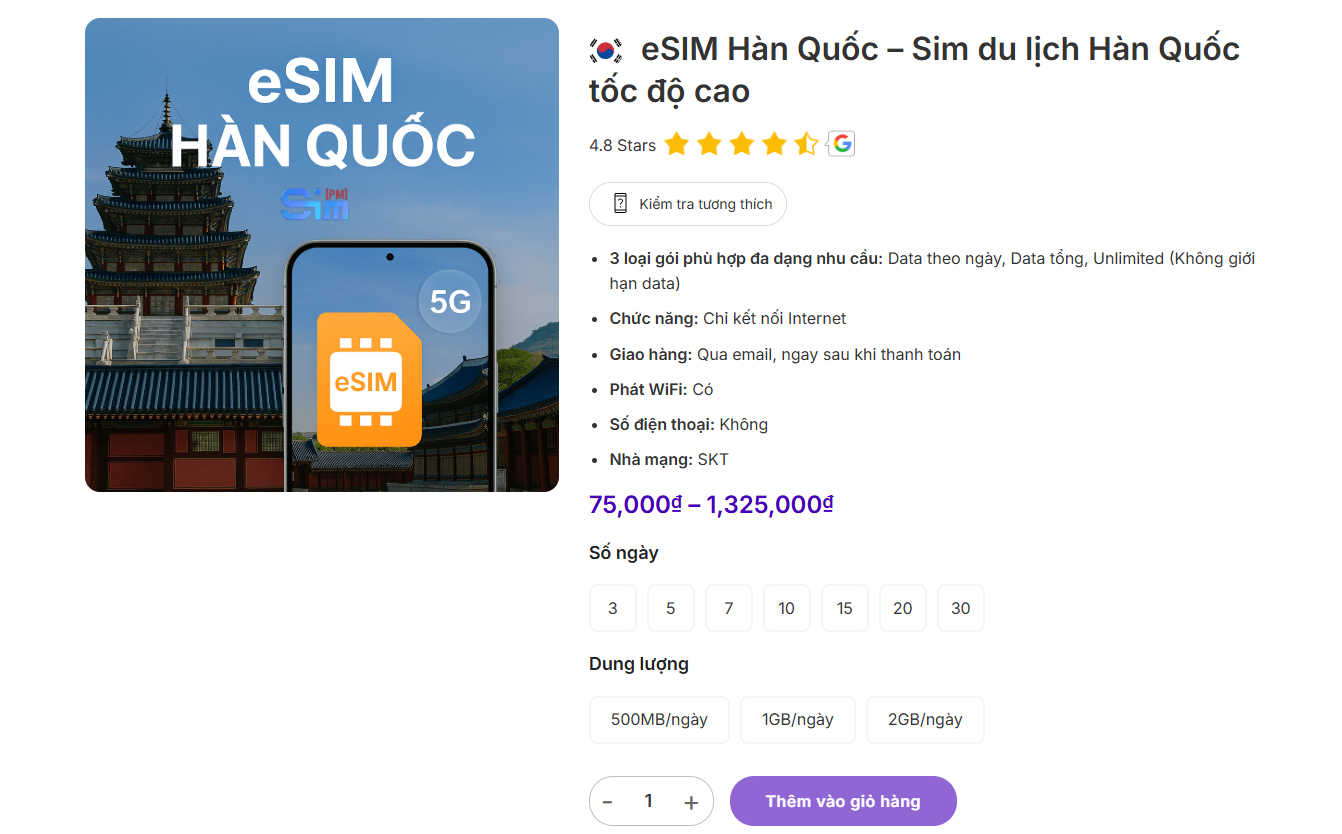
For example, if you are going to Korea for 7 days, instead of buying a SIM at Incheon Airport and spending extra time in line, you can scan a SimPM eSIM QR code before landing. When you arrive at the airport, your phone is already ready with signal so you can use it right away.
When is a physical SIM still better than eSIM?
Many articles often conclude that eSIM is the modern choice and the better option. However, in real life, there are still cases where a physical SIM is more suitable. This does not mean eSIM is inferior; it simply means the user’s needs do not yet require eSIM.
You should prioritize a physical SIM in the following cases:
| Case | Why the physical SIM is more suitable |
|---|---|
| Using a low-cost basic phone such as Nokia 105, Itel, Masstel | These devices do not yet support eSIM, so a physical SIM is the only option |
| Frequently buying or selling used phones | You can insert the SIM and check the signal immediately, without depending on the carrier system |
| Switch devices often and are not familiar with iCloud or Samsung Cloud | Removing the SIM and inserting it into a new device is still the fastest and easiest action |
| In areas where the SM-DP+ infrastructure is not yet stable | Some remote, mountainous, or island areas may not be convenient for eSIM activation |
| Buying a Hong Kong iPhone model ZA/A | This is a dual physical Nano-SIM version and does not have eSIM |
In the cases above, a physical SIM is still the simpler, easier-to-manage option with fewer technical steps. In particular, if you buy an imported iPhone, you should check the model code carefully to avoid confusing a version with eSIM and a version that only supports dual physical SIMs.
5 facts about eSIM that not everyone explains clearly
Most eSIM promotional content usually focuses on advantages such as convenience, modernity, and suitability for travel. However, to make a fairer decision, users also need to know the points below that are mentioned less often.
- First, eSIM does not make network speed faster than a physical SIM. If you use the same carrier, the same plan, and the same coverage area, the connection quality is the same. The idea that eSIM is faster simply because it is newer is not accurate.
- Second, eSIM can still be taken over. The risk does not come from having the SIM card stolen, but from forms of impersonation of the subscriber when dealing with the carrier’s call center.
- Third, eSIM is harder to transfer to a new device than a physical SIM in many cases. If the device does not support Quick Transfer or Transfer SIM, the user needs to request a new QR code and may incur additional fees.
- Fourth, eSIM can get stuck in the “Activating” state. This is a fairly common issue, usually related to the carrier system, internet connection, or an old profile still stored in the cache.
- Fifth, the Hong Kong iPhone model ZA/A does not have eSIM. It is a dual physical Nano-SIM version, so buyers should not mistakenly believe that “dual-SIM phone” automatically means eSIM.
These points are not meant to deny the benefits of eSIM. The goal is to help users have full information before deciding, instead of looking only at the advertised advantages.
eSIM trends in Vietnam and worldwide by 2030
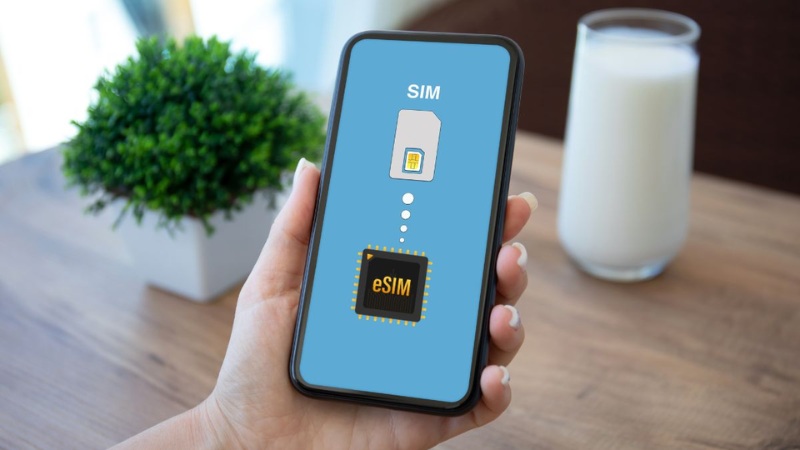
The shift from physical SIM to eSIM is happening worldwide, but the pace is different in each country. Some developed markets are converting very quickly, while many others will continue to maintain physical SIMs for years to come.
According to GSMA Intelligence forecasts, the usage share between physical SIM and eSIM/iSIM may change at the following milestones:
| Year | Physical SIM | eSIM | Status |
|---|---|---|---|
| 2025 | 60% | 40% | Physical SIM still dominates |
| 2030 | 30% | 70% | eSIM/iSIM begins to dominate |
| 2035 | 10% | 90% | Nearly reaches the full eSIM era |
Some markets such as Singapore, the US, Hong Kong, and the UAE had already reached an eSIM share of over 50% by 2024. Meanwhile, Vietnam’s transition pace is about 4 to 5 years behind the world.
In Vietnam, the planning of information and communications infrastructure for the period2021-2030, approved by the Prime Minister under Decision36/QD-TTg dated11/1/2024, aiming to expand the national digital infrastructure. In that picture, eSIM is encouraged for application in IoT devices and connectivity5G.
This means physical SIMs will not disappear in Vietnam anytime soon. Physical SIMs are expected to remain on sale until around 2027-2028, especially in the basic phone, mid-range phone, and users who do not yet need to switch to eSIM segments. Therefore, buying a physical SIM at the present time does not mean it is outdated.
Frequently asked questions about eSIM and physical SIM
Is eSIM better than a physical SIM?
eSIM is not better than a physical SIM in every case. eSIM has advantages in storing multiple profiles, switching carriers online, quick recovery when a device is lost, and reducing environmental impact. Meanwhile, physical SIMs are still strong in simplicity, activation speed, fast device switching, and broader device compatibility.
When should you use eSIM instead of a regular SIM?
You should use eSIM if you travel abroad frequently, use iPhone XS or later, Samsung Galaxy S20 or later, or need to store multiple SIM profiles on the same device. eSIM is especially suitable for international travelers and users of high-end devices who rarely change phones.
When is a physical SIM better than eSIM?
A physical SIM is more suitable if you use a basic phone, an affordable Android phone, often switch older phones, are in an area where eSIM activation infrastructure is not yet stable, or buy a Hong Kong iPhone model ZA/A. In these situations, a physical SIM is still simpler and more reliable.
Is eSIM more secure than a physical SIM?
Both eSIM and physical SIMs have their own security risks. A physical SIM can be stolen, while an eSIM can be taken over through subscriber identity fraud when requesting a QR reissue. eSIM has the advantage of not being able to be removed from the device, but that does not mean eSIM is completely immune to risks.
Is eSIM more expensive than a physical SIM?
Not necessarily. Depending on the carrier, the cost of reissuing a physical SIM or eSIM QR code may vary. VinaPhone has a reference fee for reissuing a physical SIM of about12.500VND, while MobiFone charges a reissue fee for the eSIM QR code of about15.000d. Viettel about35.000for physical SIM and about25.000For eSIMs. Vietnamobile may offer free eSIM conversion promotions from time to time.
Can you switch from a physical SIM to eSIM?
Yes. You can contact your mobile carrier’s hotline to request a switch from a physical SIM to an eSIM while keeping your phone number. Some reference hotlines include Viettel198, VinaPhone 18001091, MobiFone 18001090and Vietnamobile789. The conversion fee is usually about15.000to30.000depends on the carrier.
By 2030, will physical SIMs disappear?
No. According to GSMA Intelligence forecasts, physical SIMs may still exist until 2035 with about 10% of global mobile connections. In Vietnam, physical SIMs are expected to continue being sold for the next few years, especially for basic phones and mid-range devices.
There is no absolutely better choice between eSIM and physical SIM. eSIM is more suitable for users of iPhone XS or later, Samsung Galaxy S20 or later, frequent travelers, or those who need to manage multiple SIM profiles on the same device. Physical SIMs are more suitable for users of basic phones, low-cost devices, people who often switch older phones, or anyone who wants the simplest possible operation.
If you are an international traveler, eSIM can save a lot of time when moving between countries. If you only use one main phone number, rarely switch devices, and your device supports eSIM, switching to eSIM is also a cleaner option. On the other hand, if you need broad compatibility and frequently change phones, a physical SIM is still a very practical choice.
If you want to try eSIM for your upcoming international trip, such as going to Korea during cherry blossom season, Japan during red maple season, or traveling to more than 100 other destinations, SimPM offers many travel eSIM plans suitable for each itinerary. You only need to share your destination and departure date, and the consulting team will help you choose the right plan via Zalo or the simpm.vn website. Popular plans include Korea eSIM, Japan eSIM, Europe eSIM for Schengen trips, and many other international destinations. Compatible devices include iPhone XS or later, Apple Watch Series 3, international Samsung Galaxy S20 or later, and many other eSIM-supported models.