B2B eSIM for Enterprises 2026: TCO, Benefits, SGP.32 Roadmap

You are building an IoT 2026 plan for your business. Your manager asks: “Should we move 5.000 sensors to eSIM?” When searching on Google, most articles only say in general that eSIM is convenient and no physical SIM swap is needed, but they miss important information such as 5-year TCO, vendor lock-in risk, or the pilot roadmap before committing billions of dong in investment.
This article will systematize 5 specific benefits, 3 real risks, a 6-step implementation roadmap, 3 application scenarios in Vietnam, and a TCO analysis for 10.000 devices over 5 years. These are foundational data points for the IT team or the company leadership to consider launching a pilot as soon as next quarter.
How is B2B eSIM different from consumer eSIM?
Many IT managers in Vietnam still confuse B2B eSIM with consumer eSIM. This is also why many first pilot projects last 4 – 6 months before being stopped.
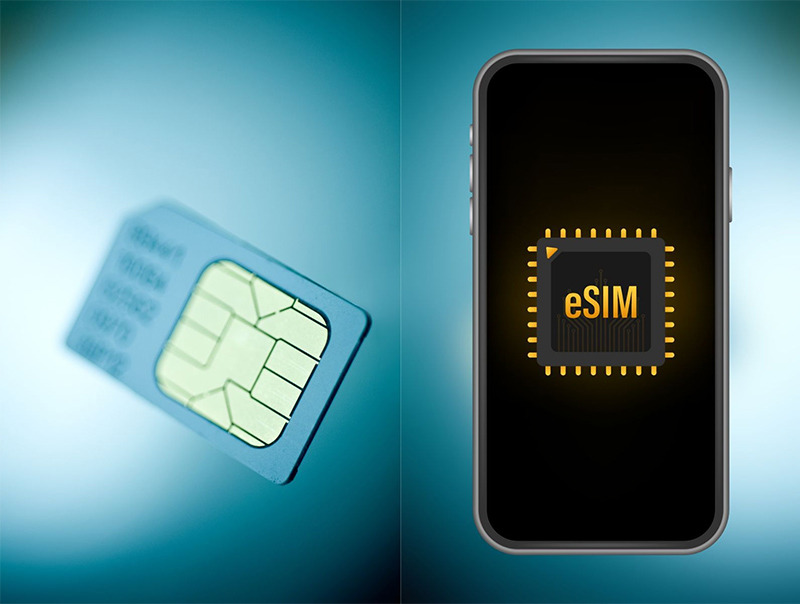
In short, B2B eSIM and consumer eSIM use the same underlying technology platform, including the eUICC chip and SM-DP+ server, but they differ significantly in technical standards, profile provisioning model, and deployment scale.
B2B eSIM is designed for IoT devices and machine-to-machine connectivity, or M2M. It runs on the GSMA SGP.32 standard, published by GSMA in 5/2023. The stable SGP.32 v1.2 version was released in 6/2024. The SGP.33 testing specification for product certification was available from early 2025, and devices certified by GSMA officially began to appear in 2025.
Meanwhile, consumer eSIM is for phones, especially international travel needs. It runs on the SGP.22 standard, uses personal profiles, and is usually installed by manually scanning a QR code. The platform concept is explained in more detail in the article “What is IoT eSIM?”, while an overview of GSMA standards can be found in the article “GSMA eSIM standards”.
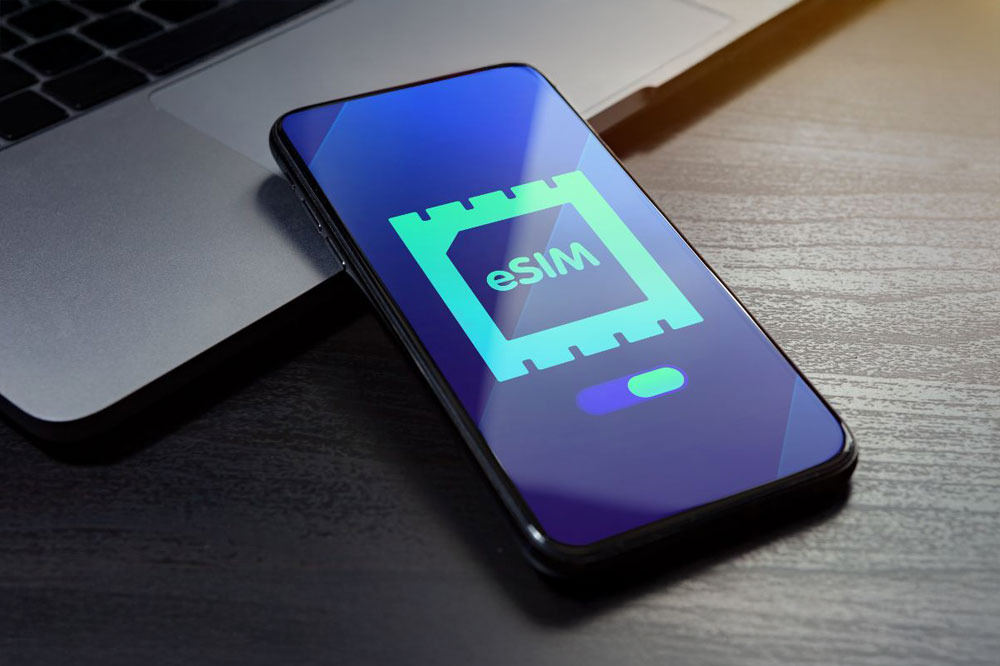
The four fundamental differences between B2B eSIM and consumer eSIM are:
| Criterion | eSIM B2B | eSIM consumer |
|---|---|---|
| Form factor | Uses an eUICC chip soldered permanently onto the IoT device board | Uses a personal eSIM profile, usually scanned via QR |
| Profile provisioning method | Mass push through an API to thousands of devices | Manual QR scanning, one profile at a time |
| Use case | Devices running 24/7, lifecycle of 3 – 7 years | Short-term use, usually 5 – 14 days for a trip |
| Pricing model | M2M wholesale under long-term contracts | Retail by data package |
If a business mistakenly buys consumer eSIM for an IoT device fleet, the system will not support remote profile provisioning, will not offer automatic network switching, and will not connect to an MDM device management platform. This is a common mistake in early pilots. The section “3 costly mistakes” at the end of the article will analyze this in more detail.
5 specific benefits of B2B eSIM for Vietnamese businesses
The five benefits below are compiled from GSMA Intelligence’s report “IoT Connections Forecast to 2030” and Counterpoint Research’s “IoT Connectivity Landscape”.
In terms of market context, Counterpoint forecasts that the number of IoT connections using eSIM will reach 2,2 billion by 2030, with annual growth of about 43%. GSMA Intelligence forecasts that eSIM will account for around 37% of the total 38,7 billion global IoT connections by 2030. The market is moving in this direction; the question is only whether your business joins early or late.
Benefit 1: Remote profile provisioning via RSP standard
Instead of sending technicians to each location to insert SIM cards into each device, the eSIM profile can be downloaded over the network from the SM-DP+ server.
For a business with 1.000 IoT sensors distributed across 63 provinces and cities, remote provisioning can save an average of 500.000 – 2.000.000 VND per device in field dispatch costs.
This estimate is converted from international industry standards, in which the cost of sending someone on-site to replace a SIM in the US typically ranges from 50 – 500 USD/time, then adjusted for conditions in Vietnam. The final number still depends on deployment terrain and the technical salary level of each business. The remote provisioning mechanism is explained in more detail in the article “RSP remote SIM provisioning”.
Benefit 2: Automatic carrier switching when signal is lost
Devices using SGP.32 eSIM can store multiple profiles at once and automatically switch to another carrier when the main carrier’s signal is weak or the connection is lost.
This feature is especially valuable for truck fleets running across provinces. For example, Viettel is often stronger in rural areas, while VNPT has an advantage in urban areas. A truck running the Hanoi – Ca Mau route can switch back and forth between carriers without manual intervention from operations staff.
Benefit 3: Reduce total cost of ownership by 25 – 40% over 5 years
These savings do not come from “cheaper SIMs.” In reality, the eUICC chip is usually more expensive than a traditional plastic SIM. The savings mainly come from lower technician dispatch costs, lower SIM replacement costs when switching carriers, and reduced management overhead for physical SIM inventory. For a device fleet of over 1.000 units, this benefit becomes more visible. The TCO analysis for a 10.000-device model over 5 years will be presented below.
Benefit 4: Rapid large-scale deployment
With B2B eSIM, 10.000 devices can be activated within a few days through mass profile push. If using traditional physical SIMs, a business may spend 2 – 3 months on shipping, SIM installation, and testing each device. For IoT startups that need to bring products to market quickly, this time advantage can become a decisive competitive factor.
Benefit 5: Protection against physical attacks and remote device deactivation
The eUICC chip is soldered permanently onto the board, so thieves cannot remove the SIM and insert it into another device to abuse data. When a device is lost or stolen, the IT team can erase the profile remotely through the MDM platform, thereby disabling the device immediately. Security risks and prevention methods are analyzed in more detail in the article “Is eSIM security safe?”.
The five benefits above only truly deliver value when the device fleet reaches a certain scale threshold. The section “When physical SIM is still better” will clarify this breakeven point.
3 real risks when Vietnamese businesses deploy IoT eSIM in the 2026 – 2027 phase
At this point, many people may think the business should deploy IoT eSIM immediately. However, businesses need to assess carefully before presenting the plan to leadership. Reports from Counterpoint Research and Transforma Insights both note that IoT eSIM pilots in emerging markets often take longer than expected because the SM-DP+ infrastructure and legal framework are not yet uniformly complete. Below are 3 important risks.
Risk 1: Dependence on the eUICC chip vendor
The global eUICC chip market is currently led by Thales and Giesecke+Devrient, or G+D. IDEMIA and VALID follow behind them.
G+D received SGP.32 certification in 4/2025, with more than 20 design-win projects and 40 trial projects. Thales received GSMA eSIM security certification in 7/2025 and has deployed 23 million eSIMs on connected vehicles. IDEMIA has also announced more than 3 million eSIM activations.
The problem is: once a business chooses a vendor for 10.000 devices, switching to another vendor after 2 – 3 years will be very costly. The business must check cross-system compatibility, recertify in 6 – 12 months, and may need to update firmware over the air.
The way to reduce this risk is to sign a multi-vendor contract from the pilot stage. At the same time, the vendor should be required to commit to SGP.32 compatibility and not use proprietary locks.
Risk 2: Regulatory uncertainty in Vietnam
At present, the Ministry of Information and Communications has not issued any specific regulations for enterprise IoT eSIMs. The current framework only stops at general encouragement in Decision36/QD-TTg dated11/01/2024on the planning of information and communications infrastructure for the period2021 – 2030.
Policy may change during the business pilot process. For example, there may be a requirement for VNeID authentication for each device, or restrictions on the use of eUICC chips from foreign vendors.
The way to prevent this is to regularly follow information from mic.gov.vn and join policy feedback groups through the Vietnam Association for Information Processing.
Risk 3: SM-DP+ infrastructure for M2M IoT in Vietnam is not yet commercially ready
Viettel and VNPT now have M2M/NB-IoT SIM services for B2B IoT on NB-IoT, LTE-M and 5G infrastructure covering 63 provinces and cities. The VNPT IoT Platform has also achieved the international oneM2M certification.
However, eSIM SGP.32 for enterprise M2M IoT is still in the research and deployment preparation stage. The expected full commercial service level for IoT eSIM is only reached at the end of 2026 or the beginning of 2027, when the carrier’s SM-DP+ server is ready.
These three risks do not mean businesses should delay testing. On the contrary, pilot projects in 2026 can help Viettel and VNPT complete commercial infrastructure by year-end. The global eSIM market context for the 2025 – 2030 period is further analyzed in the article “the future of eSIM 2030”.
6-step roadmap for implementing IoT eSIM for businesses
Below is a reference framework for Vietnamese businesses deploying IoT fleets from 100 to 10.000 devices. The total time from pilot to full rollout is usually about 9 – 12 months. Businesses can adjust depending on scale and specific industry, but should not skip any steps.
Step 1: Pilot with 10 – 50 devices, weeks 1 – 4
At the initial stage, choose a low-risk use case, such as temperature sensors in a cold storage facility with an on-site operator. The goal is to test connectivity, the activation flow, and the compatibility between device firmware and the eUICC chip.
Metrics to achieve:
| Metric | Target |
|---|---|
| Activation success rate | From 95% or higher |
| Latency | Under 2 g seconds |
Step 2: Expand the pilot to 100 – 300 devices, months 2 – 3
At this step, the business should enable automatic carrier switching between 2 carriers. The Viettel and VNPT pair is a popular choice. The goal is to measure actual TCO and benchmark ROI by comparing it with the existing physical SIM fleet.
Important metric: positive ROI within 18 months.
Step 3: Integrate with internal systems, months 3 – 5
This is usually the most labor-intensive step, but also a very important one. The business needs to connect the eSIM platform with internal systems such as ERP for asset management, MDM for device management, and an internal IoT dashboard. If this step is skipped, the business will not be able to manually manage 10.000 devices during full rollout.
Step 4: Pre-production operation with 500 – 1.000 devices, months 5 – 7
This phase needs to run service quality monitoring for 90 days. Metrics to measure include packet loss rate, uptime, and latency when switching carriers.
Target metrics:
| Metric | Target |
|---|---|
| Uptime | From 99,5% or higher |
| Packet loss | Under 0,5% |
Step 5: Soft launch with 2.000 – 5.000 devices, months 7 – 9
Businesses should implement this by geographic region, prioritizing provinces and cities with good telecom infrastructure such as Hanoi, Ho Chi Minh City, Da Nang, and Hai Phong. During this phase, it is necessary to monitor compliance with regulations from the Ministry of TT&TT and collect feedback from the operations team.
Step 6: Full rollout to 10.000+ devices, months 9 – 12
Once the pilot steps are stable, the business can roll out to the entire device fleet. This is also the time to sign long-term contracts with the carrier and the eUICC chip vendor. At the same time, a change management process should be established for chip replacement, firmware updates, and operational issue handling.
This roadmap can be shortened to 6 – 8 months if the business already has a strong MDM and ERP infrastructure. Conversely, if there is no device management platform yet, it should be extended to 14 – 15 months to avoid mistakes in the integration step. The section “3 costly mistakes” at the end of the article includes an illustrative example of this issue.
3 industries applying B2B eSIM in Vietnam
The three scenarios below illustrate industries that can apply B2B eSIM in Vietnam during the 2026 – 2027 period.
Note that these are reference scenarios by sector, not official deployment information for any specific business. Data should be updated when there are public disclosures from Vietnamese businesses on investor relations pages or in the press.
Scenario 1: Smart home appliances for export

A manufacturer of smart rice cookers, IoT water purifiers, or robot vacuums may sell products in the domestic market and export to Laos, Cambodia, Myanmar, and Thailand.
A typical scale can reach 30.000 – 50.000 devices per year.
The advantage of eSIM in this scenario is the ability to remotely provision local carrier profiles for each market. The business does not need to change component sets or SIM labels for each country.
It may save an estimated 40 – 60% in shipping and SIM warehousing costs compared with the traditional physical SIM approach. The final figure depends on the number of export markets and the level of device dispersion.
Scenario 2: Tracking refrigerated trucks in the food supply chain
Logistics businesses in the dairy, seafood, and pharmaceutical sectors often have 1.500 – 3.000 refrigerated trucks running the North – South route. The key need is to track cargo temperature and GPS in real time.
The advantage of eSIM is that automatic carrier switching can be configured between Viettel and VNPT. Viettel is often stronger in rural and mountainous areas; VNPT is stronger in urban areas. As a result, the business can maintain uptime of about 99,5% on routes across Vietnam.
For refrigerated goods, a 30-minute connection loss during transit can mean losing control of the storage conditions for an entire container. The damage from this situation is often many times greater than the cost of eSIM.
Estimated ROI can reach 30 – 40% after 18 – 24 months compared with the physical SIM approach.
Scenario 3: Smart city with streetlight sensors and license plate recognition cameras
Investors in smart urban areas or ward- and district-level smart city projects may deploy 10.000 – 30.000 streetlight sensors and license plate recognition cameras.
Vinhomes Smart City by Vingroup is one of the pioneering Vietnamese projects applying IoT and AI to urban management 24/7, in which the license plate recognition camera system has been publicly disclosed. However, the specific connectivity standard, such as SGP.32 or traditional M2M SIM, has not been revealed.
The general advantage of SGP.32 eSIM in this scenario is the ability to update profiles remotely when switching carriers according to annual bids. The business or investor does not need to send technicians to 30.000 locations to replace SIMs when changing providers.
Three general lessons from the scenarios above:
| Lesson | Meaning |
|---|---|
| Start testing with 50 devices | You should not jump straight from 0 to thousands of devices, because firmware bugs or the activation flow may only appear during real-world operation |
| Work with 2 mobile operators from the start | Contract costs may rise by an additional 10 – 15%, but this is a necessary uptime insurance cost |
| Invest in an MDM platform in parallel with testing | If you skip it, later integration costs can be 3 – 5 times higher according to industry benchmark analysis |
TCO analysis: physical SIM and eSIM for 10.000 IoT devices over 5 years
This is often the first part senior leadership cares about when evaluating a move to eSIM. The table below is based on a hypothetical model of 10.000 IoT devices, operating over 5 years, with a replacement rate of 5% per year and deployment across 63 provinces and cities. This is a reference estimate. Each business should build its own TCO model based on its real usage scenario.
| Item | Physical SIM | eSIM SGP.32 | Difference |
|---|---|---|---|
| Initial SIM/eUICC purchase cost | 500 million VND, 50.000 VND/SIM | 700million VND,70.000d/eUICC | +200 million |
| Send staff on site to deploy 10.000 devices | 5 billion VND, 500.000 VND/time | 100 million VND, remote deployment | -4,9 billion |
| Data charges over 5 years | 18 billion VND | 16 billion VND | -2 billion |
| SIM replacement at a rate of 5%/year | 2 billion VND | 200 million VND, remote profile reissuance | -1,8 billion |
| Multi-operator failover hardware | 500 million VND, need 2 SIMs/device | Already available, 1 eSIMs store 2 profiles | -500 million |
| MDM platform fee over 5 years | 500 million VND | 800 million VND | +300 million |
| Total over 5 years | 26,5 billion VND | 17,8 billion VND | -8,7 billion, equivalent to -33% |
The break-even point for this model is around 1.200 devices. Below that threshold, physical SIMs may still be cheaper because the field service cost is not yet large enough to offset the cost of the eUICC chip and the MDM platform.
If field service cost drops to 200.000 VND/visit, for example in urban areas or where in-house technicians are available, the break-even point rises to around 3.000 devices. A detailed comparison between eSIM and physical SIM for individual users is available in the article “eSIM vs physical SIM.”
It is important to note that the 33% savings figure comes from a reference model based on specific assumptions. Every business has a different cost structure. A city logistics fleet of 500 vehicles will have a very different TCO from 30.000 agricultural sensors in the Mekong Delta.
Before presenting the plan to leadership, businesses should build their own TCO model with 5 – 7 input variables, including:
| Input variable | Information to determine |
|---|---|
| Device fleet size | Total number of current devices and planned expansion |
| Replacement rate | Percentage of devices or SIMs that need replacement each year |
| Field service cost | Technician cost, travel, handling time |
| Average data revenue per device | Or average data cost if it is an internal system |
| Vendor price | eUICC chip cost, data charges, platform fee |
| MDM platform fee | Deployment and operating fees over the device lifecycle |
| Device lifecycle | Usually 3 – 7 years depending on the industry |
When is physical SIM still the better choice for businesses?
eSIM is not always the best choice. There are at least 4 cases where businesses should continue using physical SIMs, not because eSIM is worse, but because the deployment conditions are not yet sufficient to benefit from it.
Fleets under 200 devices
At small scale, TCO often has not yet crossed the break-even point. Vendor dependency risk may be greater than the savings benefit. In this case, a technician can complete SIM installation in about 1 weeks.
Businesses that have already invested heavily in physical SIM infrastructure
If in the last 1 – 2 years the business has built a complete physical SIM management system, switching to eSIM immediately may leave the old investment not yet depreciated and therefore wasted.
Industries with legal requirements for physical SIM traceability
Some industries such as finance, security, and defense may require removable and sealed SIMs as evidence. An eUICC chip soldered permanently onto the board does not meet this requirement.
Areas with only one operator providing good coverage
If the device only operates stably with a single operator, especially in remote areas, automatic operator switching brings almost no additional practical value.
The table below helps summarize the decision quickly:
| Scenario | Recommendation | Reason |
|---|---|---|
| Fleet over 1.000 devices, distributed across multiple provinces | eSIM SGP.32 | TCO exceeds break-even, multi-operator switching has high value |
| Fleet of 200 – 1.000 devices, concentrated in one area | Test eSIM on 100 devices | Actual TCO needs to be measured before committing |
| Fleet under 200 devices | Physical SIM | TCO has not yet exceeded break-even |
| Finance or security industries with SIM sealing requirements | Physical SIM | Better aligned with compliance verification requirements |
How are consumer eSIM and B2B eSIM different?
This section is for readers new to the eSIM concept. Although both use the same core technology of an eUICC chip and an SM-DP+ server, consumer eSIM and B2B IoT eSIM differ in 6 important criteria: user group, profile model, profile provisioning, lifecycle, pricing model, and management method.
| Criteria | eSIM consumer, SGP.22 | eSIM B2B IoT, SGP.32 |
|---|---|---|
| Target user | International travel phone | Enterprise IoT/M2M devices |
| Profile model | Individual, 1 user/profile | Device fleet managed through an MDM platform |
| Profile provisioning method | Manual QR code scanning | Bulk push through an API |
| Lifecycle | 5 – 14 days/trip | 3 – 7 years/device |
| Pricing model | Retail by package | M2M wholesale under contract |
| Management method | User self-service | IT team manages via dashboard |
For example, if a company is using SIMPM consumer eSIM for employees traveling to Korea, Japan, or Europe, that is a completely different product from the B2B IoT eSIM in this article. The technical standards are different, the provider may be different, and the contract is also different. How eSIM works in general is explained in detail in the article “How does eSIM work.”
3 costly mistakes when Vietnamese businesses deploy IoT eSIM for the first time
The three stories below are compiled from interviews with IT managers at businesses that tested IoT eSIM during the 2024 – 2025 period. Company names are withheld at the source’s request, but the lessons learned are valuable for many IT teams planning 2026.
Mistake 1: Skipping the test, deploying 5.000 devices straight away
A logistics business in northern Vietnam deployed 5.000 devices directly in 2024 and had to stop the project after 4 months.
The reason was that the firmware of the IoT device they chose was not compatible with the new-generation eUICC chip. The issue was only discovered after 5.000 devices had already been deployed.
The remediation cost reached 18 billion VND for chipset replacement and over-the-air firmware updates. If 50 devices had been tested in the first 4 weeks, this issue could have been detected at a cost of less than 200 million VND. A list of common eSIM errors and how to handle them is provided in the article “common eSIM errors.”
Mistake 2: Choosing a single operator to save on contract price
An agricultural IoT startup in the Mekong Delta chose a single operator for 800 soil moisture sensors because the contract price was cheaper by 15% compared with the 2-operator option.
By month 6, that operator experienced a nationwide data center outage lasting 6 hours. All 800 sensors lost connectivity right at the most important irrigation window.
The estimated crop damage was around 850 million VND. The 15% saving from the contract was not enough to offset a nationwide outage lasting 6 hours. Therefore, working with 2 operators should be viewed as a mandatory insurance cost for critical IoT systems.
Mistake 3: Not investing in an MDM platform from the start
A smart home appliance manufacturer in Binh Duong deployed 3.000 products with eSIM, but managed profiles using Excel and manual code execution.
By month 4, when they needed to update firmware over the air, they discovered there was no platform to monitor device status. As a result, they had to spend 4,2 billion VND to urgently integrate MDM, which was 3 times higher than doing it in parallel from the testing stage.
The lesson is very clear: MDM should not be delayed. Integration costs later are often 3 – 5 times higher than investing from the beginning.
See also: 5 mistakes when buying eSIM for the first time – How to avoid wasting money
Frequently asked questions about B2B enterprise eSIM
When can Vietnamese businesses deploy IoT eSIM?
Vietnamese businesses can begin testing IoT eSIM from 2026. Large-scale stable deployment is expected to be more suitable by the end of 2026 or early 2027, when Viettel and VNPT complete the SM-DP+ infrastructure for IoT SGP.32 at a commercial service level.
Currently, Viettel and VNPT already have SIM M2M/NB-IoT services for B2B IoT on the NB-IoT, LTE-M and 5G infrastructure. The eSIM SGP.32 for M2M IoT is still in the implementation research stage.
IT teams can start testing 50 devices as early as this quarter to prepare for large-scale deployment by the end of the year.
What are the specific benefits of eSIM for businesses?
B2B eSIM brings 5 key benefits: remote profile provisioning, automatic operator switching when signal is lost, 25 – 40% TCO reduction over 5 years, fast large-scale deployment, and improved resistance to physical attacks.
The actual value depends on fleet size and geographic distribution. A detailed analysis has been presented in the 5 benefits section at the beginning of the article.
How much does it cost to deploy eSIM for 1.000 IoT devices?
The initial deployment cost of eSIM for 1.000 IoT devices is approximately 1,3 – 2,5 billion VND, including eUICC chips, field service, and MDM integration.
The estimated 5-year TCO is around 1,8 – 2,5 billion VND, compared with 2,6 – 3,2 billion VND if using physical SIMs. The exact figure depends on geographic distribution, the selected provider, and the operator’s pricing model. Businesses still need to build their own TCO model for their specific case.
What are the risks of B2B eSIM compared with physical SIM?
The three main risks are: dependence on the eUICC chip supplier, regulatory uncertainty in Vietnam, and domestic SM-DP+ infrastructure not yet reaching commercial service level.
All three of these risks can be mitigated. Businesses should choose multi-sourcing providers, monitor the policies of the Ministry of Information and Communications TT&TT, and design backup architecture for the period 2026 – 2027.
What is SGP.32 and how does it apply to businesses?
SGP.32 is a GSMA standard for IoT eSIM in machine-to-machine devices. This standard was announced in 5/2023, and the stable v1.2 version was released in 6/2024. The SGP.33 testing suite for product certification has been available since early 2025.
Businesses adopt SGP.32 to deploy eSIM for sensors, vehicle fleets, smart devices, and other IoT systems. This standard differs from consumer eSIM SGP.22, which is intended for travel phones. GSMA-certified SGP.32 devices officially began appearing on the market from 2025.
Do Viettel, VNPT, and MobiFone already have B2B eSIM services?
Viettel and VNPT currently already have SIM M2M/NB-IoT services for B2B IoT on the NB-IoT, LTE-M and 5G infrastructure covering 63 provinces. The VNPT IoT Platform has achieved the international oneM2M certification.
The SGP.32 eSIM for M2M IoT is currently in the deployment preparation stage, with official commercialization expected from the end of 2026 to early 2027. Businesses can contact Viettel IoT Cloud or VNPT IoT to learn about early testing programs.
Should small businesses with fewer than 50 devices use eSIM?
Businesses with fewer than 50 IoT devices should not use B2B eSIM yet. The reason is that TCO has not yet crossed the break-even point, which is around 1.200 devices, while the supplier dependency risk is greater than the savings benefit.
At small scale, physical SIM remains the more reasonable choice. Businesses should wait until the fleet grows to around 500 – 1.000 devices before reassessing the switch.
Next steps for Vietnamese IT teams
For Vietnamese businesses in the 2026 – 2027 period, B2B eSIM is no longer a question of “Should we use it or not?”, but rather “When should we test it and at what scale?”.
For IoT fleets of 1.000 devices or more, the 5-year TCO may be 25 – 33% lower than physical SIMs. The condition is that the business must choose the right multi-source provider, work with at least 2 operators, and invest in an MDM platform from the testing stage.
If your company is planning 2026 – 2027 IoT, the first step is not choosing a provider, but running a 50-device test over the next 3 months to better understand your specific use case.
SIMPM is currently building a B2B eSIM consulting service for Vietnamese businesses, supporting IT teams from testing to large-scale deployment. Businesses can contact us via hotline 24/7 or the SIMPM Business Zalo to book a free 30-minute consultation on the SGP.32 eSIM roadmap for their device fleet.