List of 30+ eSIM-Compatible Phones 2026 (iPhone, Samsung, Pixel, Xiaomi)

Are you standing in a store and wondering whether this phone supports eSIM? Or did you just buy a U.S. iPhone overseas and discover it has no physical SIM slot? This article compiles more than 30 eSIM-compatible phones, tablets, and smartwatches as of 2026, focusing on 5 main brand groups: Apple, Samsung, Google, Xiaomi, and the Vivo/Oppo/Huawei group.
Overview of eSIM-compatible devices
The eSIM journey began rather quietly. In 9/2017, Apple introduced the Apple Watch Series 3 G GPS + Cellular, one of the world’s first mainstream consumer products to use eSIM. Just one year later, on 12/9/2018, the iPhone XS, XS Max, and XR trio brought eSIM to smartphones, opening the stage for users to become familiar with the concept of electronic SIMs.
As of 2026, there are more than 200 phone, tablet, and smartwatch models that support eSIM. These devices span many major brands, with the most notable being Apple, Samsung, Google, Xiaomi, and several other Android makers such as Vivo, Oppo, and Huawei.
| Brand | Typical eSIM-capable device lineup |
|---|---|
| Apple | iPhone XS and later, iPad Pro 2018 and later, Apple Watch Series 3 and later |
| Samsung | Galaxy S20 international version and later, Z Fold/Flip, Note 20 |
| Pixel 2 used for Project Fi, Pixel 4 and later with broader support | |
| Xiaomi | Xiaomi 13 series and later |
| Vivo, Oppo, Huawei | Some global flagship models from 2024 onward |
Each brand implements eSIM differently. Apple is the most aggressive, with the U.S. version of the iPhone 14 having completely removed the physical SIM slot since 2022. Samsung takes a both/and approach, keeping the physical SIM slot while adding eSIM. Google follows a middle path, while Xiaomi, Vivo, and Oppo entered later but are now accelerating clearly.
eSIM-compatible iPhone: From iPhone XS to iPhone 17
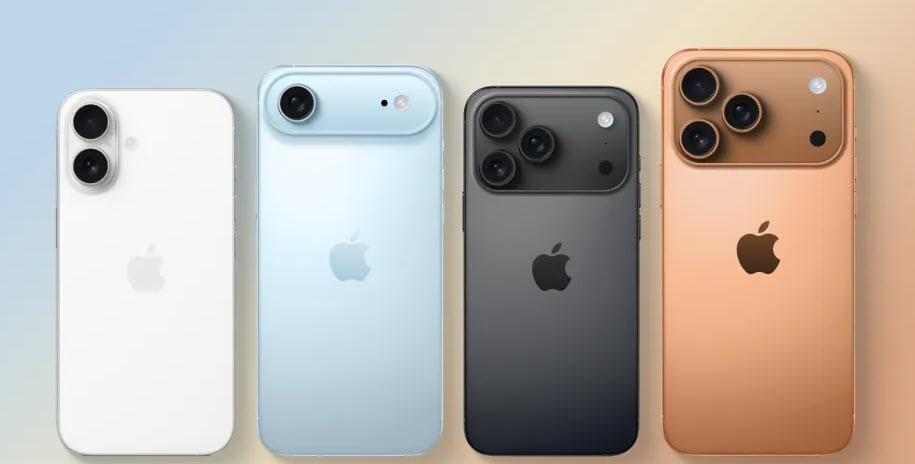
Apple began bringing eSIM to iPhone in 2018 with the iPhone XS, XS Max, and XR trio. Since then, almost every new iPhone generation has supported eSIM, with no product line left out. By the end of 2025, the iPhone had gone through 8 eSIM-enabled generations, with the most notable milestone being 2022, when the U.S. version of the iPhone 14 officially removed the physical SIM slot.
| iPhone | Release year | SIM configuration | Region eSIM-only |
|---|---|---|---|
| iPhone XS, XS Max, XR | 9/2018 | 1 Nano-SIM + 1 eSIM | No |
| iPhone 11, 11 Pro, 11 Pro Max | 9/2019 | 1 Nano-SIM + 1 eSIM | No |
| iPhone SE 2 generation | 4/2020 | 1 Nano-SIM + 1 eSIM | No |
| iPhone 12, 12 mini, 12 Pro, 12 Pro Max | 10/2020 | 1 Nano-SIM + 1 eSIM | No |
| iPhone 13, 13 mini, 13 Pro, 13 Pro Max | 9/2021 | 1 Nano-SIM + 1 eSIM, supports 2 active eSIMs | No |
| iPhone SE 3 generation | 3/2022 | 1 Nano-SIM + 1 eSIM | No |
| iPhone 14, 14 Plus, 14 Pro, 14 Pro Max | 9/2022 | Dual SIM international version, eSIM-only U.S. version | U.S. |
| iPhone 15 series | 9/2023 | Dual SIM international version, eSIM-only U.S. version | U.S. |
| iPhone 16 series | 9/2024 | Dual SIM international version, eSIM-only U.S. version | U.S. |
| iPhone 17 series | 9/2025 | Dual SIM international version, eSIM-only in 11 markets | U.S., Canada, Japan, Mexico, UAE, Saudi Arabia, Qatar, Kuwait, Bahrain, Oman, Guam |
The biggest milestone was on 7/9/2022, when Apple announced that the U.S. version of the iPhone 14 no longer had a physical SIM slot. Since then, the company has not returned to the old SIM configuration in the U.S. market. With the iPhone 17 launched in 9/2025, the eSIM-only policy continued to expand to another 10 markets, mainly in North America, Japan, and the Gulf region. Meanwhile, Vietnam, the EU, the UK, China, and India still keep the dual SIM configuration, at least with no changes in this period.
From the iPhone XS onward, each device can store up to 8 eSIM profiles in the eUICC chip and activate up to 2 lines simultaneously under DSDS. However, at any one time, the device can use only 1 mobile data line. In practice, most users only need 1 primary SIM and 1 travel eSIM for everyday use.
eSIM-compatible iPad: From iPad Pro 2018 to iPad Pro M4
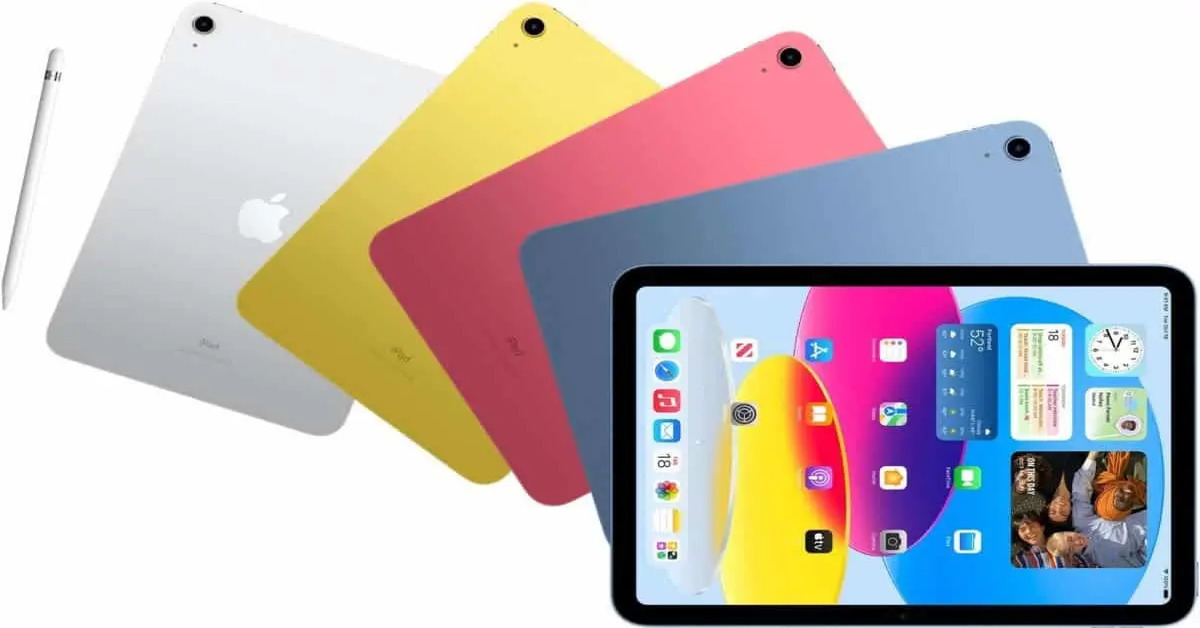
The iPad was one of the device lines where Apple introduced eSIM relatively early. The 3-generation iPad Pro, released at the end of 2018, the same year as the iPhone XS, was one of Apple’s first tablets to support eSIM. However, users should note one important point: only the WiFi + Cellular version has eSIM, while the WiFi-only version does not support mobile connectivity at all.
| iPad | Release year | Generation | eSIM support |
|---|---|---|---|
| iPad Pro 11-inch / 12.9-inch 3 generation | 11/2018 | A12X | Yes, Cellular version; China/HK version does not |
| iPad Air 3 generation | 3/2019 | A12 | Yes, Cellular version; China/HK version does not |
| iPad mini 5 generation | 3/2019 | A12 | Yes, Cellular version; China/HK version does not |
| iPad 7 to generation 10 | 9/2019 – 10/2022 | A10 – A14 | Yes, Cellular version |
| iPad Pro M1, M2 | 4/2021 – 10/2022 | M1/M2 | Yes, Cellular version |
| iPad Air M1, M2 | 3/2022 – 5/2024 | M1/M2 | Yes, Cellular version |
| iPad mini 6 generation | 9/2021 | A15 | Yes, Cellular version |
| iPad Pro M4 | 5/2024 | M4 | Global eSIM-only with Cellular version |
| iPad Air M2 | 5/2024 | M2 | Global eSIM-only |
One less-noticed detail is that the M4 iPad Pro and M2 iPad Air, launched in 5/2024, switched to eSIM-only globally. That means not only the U.S. version, but every Cellular version of these two iPad lines in any market no longer has a physical SIM slot. If you buy an M4 iPad Pro Cellular in Vietnam, Singapore, the U.S., or Europe, the result is the same: eSIM only.
For Vietnamese users who often buy imported iPads, pay special attention to the iPad Pro 3 generation, iPad Air 3 generation, and iPad mini 5 generation in China or Hong Kong versions. These versions do not have eSIM because the Chinese market has not enabled consumer eSIM for local users.
Apple Watch with eSIM support: From Series 3 to Ultra 2
Apple Watch is easier to distinguish than iPhone because there is no difference between U.S., Vietnam, or international versions in terms of eSIM. All Apple Watch Cellular models use eSIM globally. Users only need to check whether the watch is the Cellular or GPS-only version, because the GPS version has no eSIM and cannot be used 4G independently for calls or messages.
| Apple Watch | Release year | eSIM support with Cellular version |
|---|---|---|
| Apple Watch Series 3 | 9/2017 | Yes, it was the world’s first consumer eSIM product |
| Series 4, 5, 6, 7 | 2018 – 2021 | Yes |
| Apple Watch SE 1 generation, 2 generation | 2020, 2022 | Yes |
| Apple Watch Ultra | 9/2022 | Yes, always Cellular |
| Series 8, 9, 10 | 2022 – 2024 | Yes |
| Apple Watch Ultra 2 | 9/2023 | Yes |
| Apple Watch SE 3 if released | Expected | Yes for the Cellular version |
In Vietnam, Viettel, VinaPhone, and MobiFone all supported Apple Watch Cellular from the 2019 – 2020 period. Vietnamobile also supported Apple Watch eSIM activation from the end of 2022. Apple Watch uses a “number sharing” connection mechanism, meaning the watch shares the same phone number as the iPhone and does not need an independent subscription.
Samsung Galaxy with eSIM support: From S20 international version to S25 Ultra
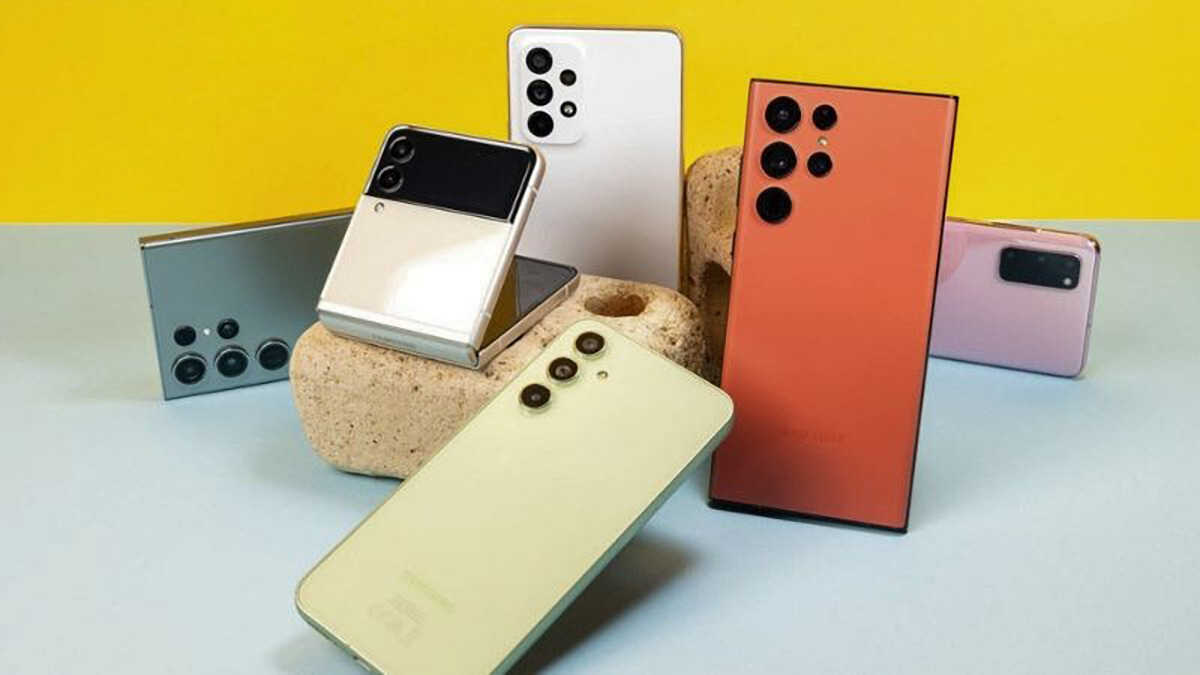
Samsung chose a different path from Apple. Instead of removing the physical SIM slot, the company keeps nano-SIM and adds eSIM in parallel, creating a dual SIM coexist configuration. The first Galaxy line to have eSIM was the international Galaxy S20, S20+, and S20 Ultra, launched in 2/2020.
One very easy-to-miss point is that the Galaxy S20 FE does not support eSIM in any market because Samsung removed the feature to lower the price. The U.S. version of the Galaxy S20 series initially also did not have eSIM, but it was later enabled through the One UI 4 update. Therefore, if you buy a used U.S. device, you should still check again after updating the software before concluding that the phone has no eSIM.
| Samsung Galaxy | Release year | eSIM support | Region note |
|---|---|---|---|
| S20, S20+, S20 Ultra international version | 2/2020 | Yes | The U.S. version initially did not, but was enabled via One UI 4; S20 FE does not have it in any region |
| Note 20, Note 20 Ultra international version | 8/2020 | Yes | The U.S. version has eSIM from 11/2021 via update; Korea, China, HK, and Macau still do not |
| Galaxy Z Fold 2 | 9/2020 | Yes | The U.S. version enabled eSIM via update at the end of 9/2020 |
| S21, S21+, S21 Ultra | 1/2021 | Yes | Worldwide, including the U.S. version |
| Z Fold 3, Z Flip 3 | 8/2021 | Yes | Worldwide |
| S22, S22+, S22 Ultra | 2/2022 | Yes | Worldwide |
| Z Fold 4, Z Flip 4 | 8/2022 | Yes, multi-eSIM | Worldwide |
| S23, S23+, S23 Ultra | 2/2023 | Yes | Worldwide |
| Z Fold 5, Z Flip 5 | 7/2023 | Yes | Worldwide |
| S24, S24+, S24 Ultra | 1/2024 | Yes, multi-eSIM | Worldwide |
| Z Fold 6, Z Flip 6 | 7/2024 | Yes | Worldwide |
| S25, S25+, S25 Ultra | 1/2025 | Yes, multi-eSIM | Worldwide |
| Galaxy A54, A55 | 2023, 2024 | Yes, region-limited | EU, Korea, Australia have it; North America version SM-A546U1, China, and HK do not |
| Galaxy Tab S9, S10 series 5G | 2023 – 2024 | Yes | Tab S9 was Samsung’s first tablet with broad eSIM support; the Tab S10 series supports dual eSIM |
| Galaxy Tab S7+ 5G, S7 FE 5G, S8 5G | 2020 – 2022 | Yes | The regular Tab S7 does not have eSIM; only S7+ 5G and S7 FE 5G do |
Galaxy S24 Ultra and S25 Ultra support multi-eSIM, allowing multiple profiles to be stored and up to 2 lines used simultaneously under DSDS. The actual configuration is usually 1 physical nano-SIM combined with 1 eSIM, or 2 eSIM depending on the market. Even so, like the iPhone, the device can still use only 1 mobile data line at a time.
Google Pixel with eSIM support: From Pixel 2 to Pixel 9 Pro Fold
Google Pixel has a very notable detail: the Pixel 2, launched on 4/10/2017, was actually the world’s first smartphone with an eSIM chip, just about a month after Apple Watch Series 3 and nearly a year before the iPhone XS. However, because the Pixel 2 used eSIM only for Google’s Project Fi and did not yet support all carriers widely, this information is often overlooked.
| Google Pixel | Release year | eSIM support |
|---|---|---|
| Pixel 2, 2 XL | 10/2017 | Yes, Project Fi only; the first smartphone with an eSIM chip |
| Pixel 3, 3 XL | 10/2018 | Has eSIM hardware, initially Google Fi and Sprint only |
| Pixel 4, 4 XL | 10/2019 | Has universal carrier support, the first Pixel with broad eSIM support |
| Pixel 4a, 5, 5a | 2020 – 2021 | Yes, universal |
| Pixel 6, 6 Pro | 10/2021 | Yes |
| Pixel 6a | 7/2022 | Yes |
| Pixel 7, 7 Pro | 10/2022 | Yes |
| Pixel 7a | 5/2023 | Yes |
| Pixel Fold | 6/2023 | Yes |
| Pixel 8, 8 Pro | 10/2023 | Yes, Google pushed eSIM more strongly |
| Pixel 8a | 5/2024 | Yes |
| Pixel 9, 9 Pro, 9 Pro XL | 8/2024 | Yes |
| Pixel 9 Pro Fold | Announced 13/8/2024, on sale 4/9/2024 | Yes |
One easy-to-misstate point is that the Pixel 3, launched in 10/2018, had eSIM hardware, but at the time of sale it only supported Google Fi and Sprint. The first Pixel to support eSIM for many carriers in a universal carrier direction was the Pixel 4, launched in 10/2019. So if you see any comparison table saying the Pixel 3 supported every carrier right from launch, that information needs to be checked again.
Google chose a fairly balanced implementation. Pixel devices still keep the nano-SIM slot, but from the Pixel 8 onward, the company has pushed eSIM more strongly with a simpler activation process and deeper cooperation with carriers in the U.S. Users can refer to the article “how to activate eSIM” for details on the setup process on Pixel.
Other Android lines: Xiaomi, Vivo, Oppo, Huawei
Android brands outside Samsung and Google entered eSIM later. Most eSIM-capable flagship models from this group only started appearing from 2021 onward. Vietnamese users should pay special attention to region, because eSIM in the Xiaomi, Vivo, and Oppo groups is often only available on EU or Global versions, while the domestic China versions very often do not have eSIM.
| Brand | Model | Year | eSIM-supported region |
|---|---|---|---|
| Xiaomi | Xiaomi 13 series, Xiaomi’s first model line with native eSIM | 12/2022 China version, 2/2023 Global version | EU and Global only; China/HK/Macau do not have it |
| Xiaomi | Xiaomi 14, 14 Pro, 14 Ultra | 10/2023 China version, 2/2024 Global version | EU and Global only |
| Xiaomi | Xiaomi 15 series | 10/2024 China version, 2/2025 Global version | EU and Global only |
| Vivo | X80 Pro | 4/2022 | Global version only |
| Vivo | X90 Pro | 12/2022 China version, 2/2023 Global version | Global version only |
| Vivo | X100, X100 Pro | 11/2023 China version, 1/2024 Global version | Global version only |
| Vivo | X200, X200 Pro | 10/2024 | Global version only |
| Oppo | Find X5 Pro Global | 2/2022 | Global version only, with eSIM |
| Oppo | Find X6 Pro | 3/2023 | China version only, no global version, no eSIM for Vietnam |
| Oppo | Find X7 standard | 1/2024 | China version only, no eSIM for Vietnam |
| Oppo | Find X7 Ultra | 4/2024 | Global version available, eSIM supported |
| Huawei | Mate 40 Pro | 10/2020 | Has eSIM but no GMS |
| Huawei | P50 Pro, Mate 50 Pro | 2021 – 2022 | Has eSIM, no GMS |
| OnePlus | OnePlus 11 | 2/2023 | OnePlus’s first eSIM model, global version only |
| OnePlus | OnePlus 12 | 12/2023 China version, 1/2024 Global version | Global version only |
| Motorola | Razr 40 Ultra | 6/2023 | Global version has eSIM, China version uses dual physical SIM |
| Motorola | Razr 50 Ultra | 6/2024 | Global version has eSIM |
| Nothing | Nothing Phone (2), (2a), (3a) | 2023 – 2025 | EU and global |
There are three important points Vietnamese users should remember. First, the Xiaomi Mi 11 Ultra, launched in 3/2021, does not support native eSIM in any region; Xiaomi’s first true eSIM flagship is the Xiaomi 13 series. Second, the Oppo Find X6 Pro and Oppo Find X7 standard are only domestic China versions, with no global version for the Vietnamese market, so they cannot use eSIM in Vietnam. Third, Huawei has had eSIM since the Mate 40 Pro onward, but because it lacks Google Mobile Services, the experience with many international apps will be limited.
Devices that do not support eSIM and should not be mistaken when buying
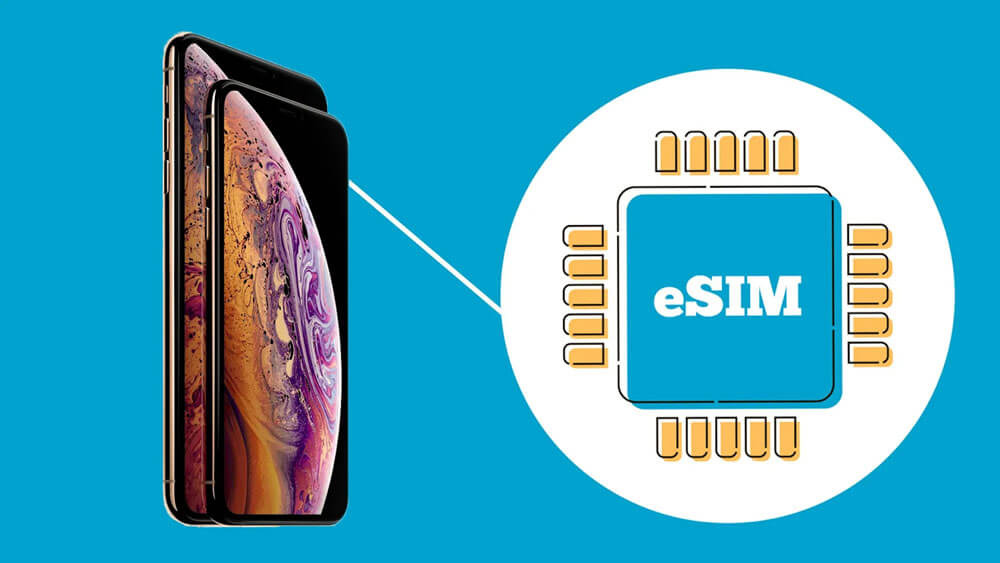
The list of eSIM-compatible devices keeps getting longer, but that does not mean every new phone has eSIM. In reality, quite a few models released in the 2024 – 2025 period still do not support eSIM, especially budget phones, China domestic imports, or certain special region versions. When buying used or imported phones, users should be careful with the following groups:
| Device group | Note |
|---|---|
| Older iPhones from iPhone X, 8, 7, 6 and earlier | Only nano-SIM, no eSIM support. iPhone X 2017 is the last iPhone line without eSIM |
| Samsung Galaxy S20 FE | No eSIM support in any region; Galaxy A54/A55 U.S. version SM-A546U1 and China/HK versions also do not have eSIM |
| Xiaomi Mi 11 Ultra | No native eSIM support in any region; the first Xiaomi with real eSIM is the Xiaomi 13 series |
| Oppo Find X6 Pro and Find X7 standard | Only domestic China version, no global version, no eSIM for the Vietnamese market |
| Some China domestic Xiaomi, Vivo, and Oppo models | Xiaomi 14 China ROM, Vivo X100 China, Oppo Find X6 Pro China often do not have eSIM even though the global versions in the same series do |
| Budget feature phones under 3 million VND | Nokia 105, Itel, Masstel only have a physical SIM slot and no eUICC chip |
| Budget Android phones under 5 million VND | Realme C-series, Tecno Spark, Infinix Hot, and most entry-level lines do not yet support eSIM |
| Hong Kong/Macau iPhone models ZA/A | Use dual physical Nano-SIM, no eSIM, this is a very common trap when buying imported iPhones |
When buying a used or imported phone, do not just trust the seller’s claim that “this phone definitely has eSIM.” The safest way is to check directly on the device itself through the settings or by dialing *#06# before paying.
How are U.S. iPhones different from international versions?
This is a very important section for Vietnamese users who often buy imported iPhones. From the iPhone 14 onward, the U.S. version no longer has a physical SIM slot. When opening the box, users will not find a SIM tray on the side of the phone, and this is not a design defect or product flaw but Apple’s policy applied since 7/9/2022.
The quickest way to tell is to check the model number under Settings → General → About → Model Number. The suffix will show the region and corresponding SIM configuration. Among these, two very easy-to-confuse codes are ZP/A and ZA/A, but in fact they are completely different configurations.
| Model number ends with | Region | SIM configuration | eSIM? |
|---|---|---|---|
| LL/A | U.S. | iPhone 14 and later use eSIM only | Yes, eSIM-only |
| VN/A | Vietnam | Nano-SIM + eSIM | Yes, dual SIM |
| CH/A | China | Single or dual Nano-SIM | No, because the domestic China market has not enabled consumer eSIM |
| J/A | Japan | iPhone 17 uses eSIM only | Yes, iPhone 17 eSIM-only |
| ZP/A | Singapore | Nano-SIM + eSIM | Yes, dual SIM |
| ZA/A | Hong Kong, Macau | Dual physical Nano-SIM | No eSIM |
| KH/A | Korea | Nano-SIM + eSIM | Yes |
| B/A | UK, Ireland | Nano-SIM + eSIM | Yes |
The biggest trap is the Hong Kong iPhone with code ZA/A. Many people see the phone has 2 SIM and think it is nano-SIM + eSIM, but in fact it has 2 physical SIM slots and no eSIM at all. Meanwhile, the Singapore iPhone with code ZP/A uses the nano-SIM + eSIM configuration just like the Vietnam version. A single wrong letter in the model code can lead users to buy a product that is completely different in eSIM capability.
With the iPhone 17 launched in 9/2025, the list of eSIM-only markets has expanded to 11 regions, including the U.S., Canada, Japan, Mexico, UAE, Saudi Arabia, Qatar, Kuwait, Bahrain, Oman, and Guam. The Vietnam VN/A, UK B/A, EU, Singapore ZP/A, and Korea KH/A versions still keep the dual SIM configuration.
For Vietnamese buyers of imported iPhones in Hanoi or Ho Chi Minh City, the consequences are very clear. If you buy a U.S. version of the iPhone 14, 15, 16, or 17, you must use an eSIM from Viettel, VinaPhone, MobiFone, or Vietnamobile because the device has no slot for a nano-SIM. The difference in implementation philosophy between Apple and Samsung can be explored further in the article “The History of eSIM Development.”
How to check for yourself whether your phone supports eSIM
In many cases, users do not remember the exact model or are not sure which region their device is from. In that case, the most reliable way is to check directly on the device. There are 5 common methods, depending on the operating system and phone brand you are using.
| Device | How to check |
|---|---|
| iPhone | Go to Settings → Cellular or Mobile Service on newer iOS versions. If you see “Add eSIM” or “Set Up Cellular,” then the phone supports eSIM |
| Samsung Galaxy | Go to Settings → Connections → SIM manager. On One UI 5 and earlier, it may be called “SIM card manager”. If you see “Add eSIM,” then the phone supports it |
| Google Pixel | Go to Settings → Network & internet → SIMs. If you see “Download a SIM,” then the phone supports eSIM |
| Xiaomi/Vivo/Oppo | Go to Settings → SIM card & mobile network, then look for the “Add eSIM” or “eSIM” option. The menu location may vary by brand |
| Code *#06# | Open the dialer app and enter *#06#. If you see an EID line, the phone has an eUICC chip and supports eSIM |
Among the methods above, entering *#06# is the fastest and most universal. If the screen shows an EID, usually a 32-character string starting with 89, your device has an eUICC chip and can use eSIM. If you only see an IMEI but no EID, the device is most likely not eSIM-compatible. The technical mechanism behind this check is explained in more detail in the article “How does eSIM work”.
If the settings section does show “Add eSIM” but activation keeps failing, the issue may not necessarily be with the device. In that case, the problem may come from the carrier’s backend system or the eSIM plan you are using. If you are concerned about security before switching to a digital SIM, you can also read the article “Is eSIM secure and safe”.
Once you are sure your device supports eSIM and you are preparing for an overseas trip, you can take a look at SimPM’s travel eSIM plansSimPM. SimPM provides support via Zalo 24/7 and the website simpm.vn, suitable for users who need quick activation and plan advice based on destination and length of stay. Some popular destinations for Vietnamese travelers include Korea eSIM for cherry blossom season, Japan eSIM for red maple leaf season, and Europe eSIM for Schengen trips. Just tell us your destination and departure date, and the support team will recommend a plan that fits your usage needs.