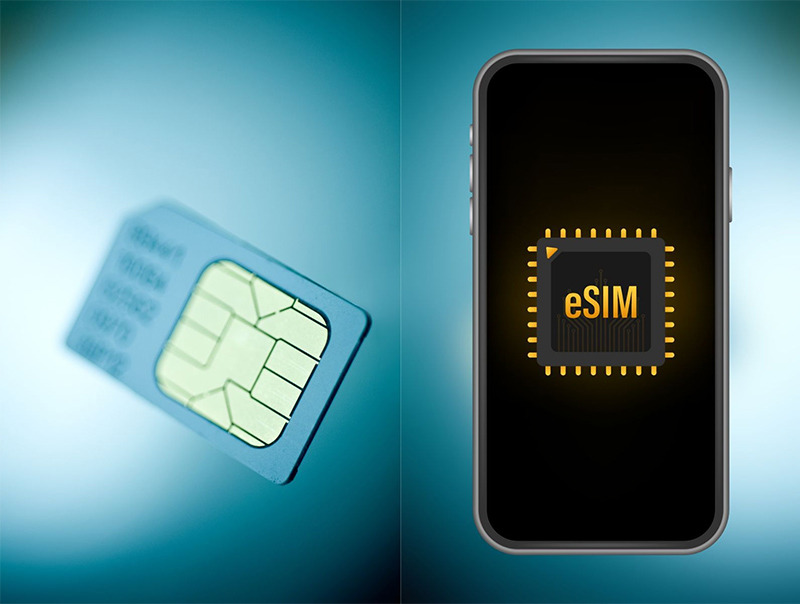
eSIM Future 2030: 6 Trends Shaping Global Telecom

There is a question that you, like many people in the telecom industry, may have quietly asked yourself whenever you pick up a new iPhone: “Five years from now, will we still be inserting SIM cards into phones?” The answer does not hinge on a single moment in time, but unfolds across six major trends that are gradually becoming clearer in the period 2025-2030. If Apple Watch Series 3 in 2017 was the point when eSIM began moving closer to mainstream users, then the 5 years ahead will be the period when this technology reshapes the global telecom industry—not through a single big bang, but through thousands of small changes from carriers, chipset makers, governments, and users’ own habits.
iSIM becomes widespread from 2027-2028: When the SIM disappears completely into the chip
If you ever thought eSIM was small enough already, iSIM goes one step further. Unlike eSIM, which still requires a separate chip soldered onto the motherboard, iSIM, or Integrated SIM, integrates the full eUICC functionality directly into the device’s main processor. Simply put, it is similar to how Apple once put the GPU together with the CPU on Apple Silicon: the function stays the same, but it no longer exists as a separate component.
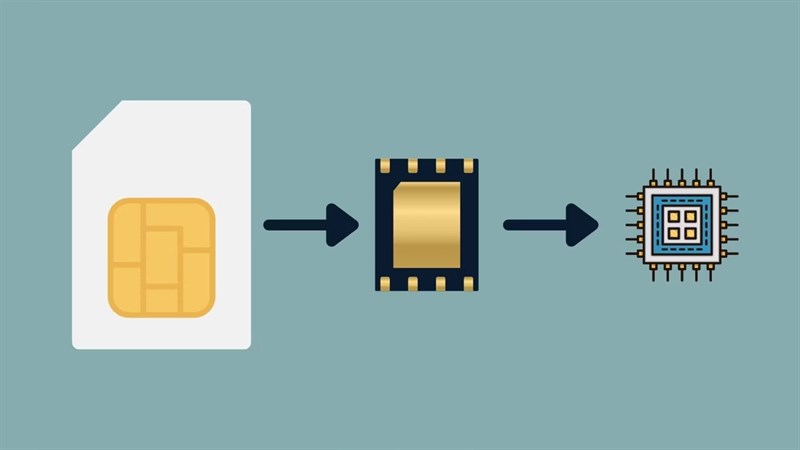
According to Counterpoint Research analysis, iSIM will develop through two main waves. The first wave is expected to surge in IoT applications during 2027-2028, led by IoT modem companies such as Quectel, Telit, and Sequans, along with eUICC providers such as Kigen, G+D, and Thales. The second wave will happen more slowly in smartphones, as adoption is expected to accelerate after 2028, especially when new generations of Snapdragon and Apple Silicon integrate eUICC functionality directly into the SoC.
Some notable iSIM milestones have become fairly clear in recent years:
| Timing | Milestone |
|---|---|
| 15/11/2022 | Qualcomm Snapdragon 8 Gen 2 launched, becoming the first mobile chip to integrate iSIM |
| Year 2022 | Vodafone, Qualcomm, and Thales demonstrate the first commercial iSIM on the Galaxy Z Flip3 in Europe |
| Month 2/2023 | At MWC Barcelona, Qualcomm and Thales announce that iSIM on Snapdragon 8 Gen 2 has achieved GSMA certification |
The reason iSIM is expected to gradually replace eSIM in the next 5-7 years comes down to three very practical benefits. First, iSIM saves PCB space and component costs, making it possible to build thinner devices or leave more room for a larger battery. Second, without a SIM tray and without a separate eSIM chip, devices can improve water resistance, especially with IP68 or IP69 ratings. Third, iSIM simplifies mass production, which is very important for small, low-cost IoT devices that are manufactured in large quantities.
Apple is also expected to move toward integrating iSIM into future generations of Apple Silicon, possibly appearing with iPhone 18 or iPhone 19 during 2026-2027. However, as of mid-2026, the company has not announced an official roadmap. When this happens, the separate SIM chip will begin to disappear quietly, much like the 3,5 mm headphone jack vanished from smartphones starting in 2016.
SGP.33 IoT certification 2026: Opening the door to mass-market IoT
In 2026, there is a technical milestone that is not very loud but could become a major boost for the IoT market: the SGP.33 standard. The Global Certification Forum, or GCF, is expected to begin using SGP.33 as the certification standard for IoT eSIM devices from the beginning of 2026. It may sound technical, but put simply, SGP.33 is the testing specification that accompanies the SGP.32 standard issued by GSMA on 26 month 5 year 2023, helping ensure that IoT eSIM devices on the market can operate in the same technical language.
The practical meaning of SGP.33 is that it opens the door for many different IoT device categories to achieve a unified certification. This is a very important factor if eSIM wants to move beyond smartphones and wearables into large-scale connected systems.
Some use cases that could become common in the next few years include:
| Use case | Real-world applications |
|---|---|
| Electricity and water smart meters | Electricity and water utilities can receive data in real time instead of sending staff out to read meters periodically |
| Fleet tracking logistics | Trucks, containers, or delivery drones can stay connected across Vietnam, Laos, and Cambodia without changing SIM cards |
| Smart agriculture | Sensors measuring salinity, soil moisture, and temperature in the Mekong Delta can send data directly to farmers’ phones |
| Healthcare wearable | Wearable medical devices can continuously transmit heart rate, SpO2, and health indicators to clinics |
According to analysis by the Trusted Connectivity Alliance, the first products to achieve SGP.33 certification are expected to appear at the end of 2026, paving the way for a mass-market wave during 2027-2028. The organization also estimates that around 50 million SGP.32-compatible eSIMs will be managed by the end of 2027. If you want to understand more deeply the architecture behind this transition, you can also read the article What is eSIM IoT, while the GSMA eSIM standards article will help you get an overall view of GSMA’s SGP.7 standard.
NTN cellular satellite: When eSIM connects via satellite
A revolution is quietly taking place right above us. Thousands of low-Earth-orbit satellites are gradually covering the sky, bringing the promise that even if you are out at sea, in the mountains, or lost in an area without mobile signal, the phone in your pocket can still send a rescue signal. The technology behind this capability is NTN, short for Non-Terrestrial Network, meaning cellular networks via low-Earth-orbit satellites.
During 2024-2026, NTN is rapidly moving from testing to commercialization. eSIM plays an important role because it makes satellite connectivity easier for mainstream users to access, without changing SIM cards, without specialized devices, and while keeping the mobile profile unchanged.
Three notable milestones are shaping this field:
| Timing | Milestone |
|---|---|
| 15/11/2022 | Apple SOS via Satellite launches with the iPhone 14 series, in partnership with Globalstar |
| 3/1/2024 | Starlink Direct-to-Cell launches the first satellites capable of connecting directly with ordinary smartphones |
| 26/11/2024 | The FCC approves Starlink and T-Mobile to roll out Direct-to-Cell in the US, initially for messaging |
With eSIM, the impact of this trend is very close to everyday life. Imagine you are driving long-distance on the West Ho Chi Minh route, passing through a stretch with no mobile signal. In the near future, the eSIM on your device may automatically switch to satellite connectivity, while your profile, phone number, and communication experience remain unchanged. Users do not need to change SIM cards, sign up for a separate service, or carry an extra device.
In Vietnam, this field is still waiting for policy action. As of 2025, the government has not issued official approval for Starlink, although related discussions have taken place. The 2025-2026 period could see policy changes, especially as 5G is deployed more broadly and the need to expand coverage in remote areas, islands, and offshore waters becomes increasingly clear.
5G IoT explosion: Billions of devices connected via eSIM and iSIM
The size of the eSIM and iSIM market by 2030 is one of the most widely forecast topics in telecom, and also one that is frequently revised. In the “eSIM/iSIM Industry Outlook” report at the beginning of 2022, GSMA Intelligence once gave a very ambitious figure: around 6,7 billion global eSIM and iSIM connections by 2030, four times the level at that time. However, later updates lowered the forecast to nearly 4,9 billion connections, reflecting the reality that adoption is moving more slowly than initially expected.
Whether the final number is 4,9 billion or 6,7 billion, three market groups are still expected to lead growth. First is eSIM smartphones, with Counterpoint Research forecasting that 82% of smartphones will support eSIM by 2030, equivalent to 70% of all cellular devices, along with more than 9 billion cumulative eSIM-capable devices shipped by the end of the decade. Second is large-scale IoT deployment, where smart cities in Hanoi and Ho Chi Minh City, smart agriculture in the Mekong Delta, and cross-border fleet tracking are notable use cases in Vietnam. Third is wearables, not limited to Apple Watch or Galaxy Watch but expanding to Xiaomi Watch, Huawei Watch, Fitbit, and Garmin.
Behind this wave are three cellular IoT technologies coexisting, each serving a different need:
| Technology | Main role |
|---|---|
| LTE-M | Suitable for devices that need medium bandwidth and low latency, such as continuously connected surveillance cameras |
| NB-IoT | Suitable for low-power devices that only send small amounts of data periodically, for example electric smart meters |
| 5G RedCap | 5G reduced capability standard dedicated to IoT, commercialized from 2024-2025 |
The largest growth framework still comes from 5G. Ericsson Mobility Report in 11 2024 forecasts that the world will have 6,3 billion 5G subscriptions by the end of 2030, equivalent to about 53% of total global mobile subscriptions. The report also expects 5G to surpass 4G and become the dominant access technology from the end of 2027. In the MENA region alone, meaning the Middle East and North Africa, the 5G rate is forecast to reach about 60%, higher than the global average thanks to strong infrastructure investment from Gulf countries.
The growth momentum of 5G is driving demand for eSIM and iSIM because almost every new 5G device launched since 2024 supports eSIM. The backend infrastructure behind this wave is based on SM-DP+ and SM-DS, which will be analyzed in more detail in the article What are SM-DP+ and SM-DS.
Apple removes the SIM tray globally: When and where?
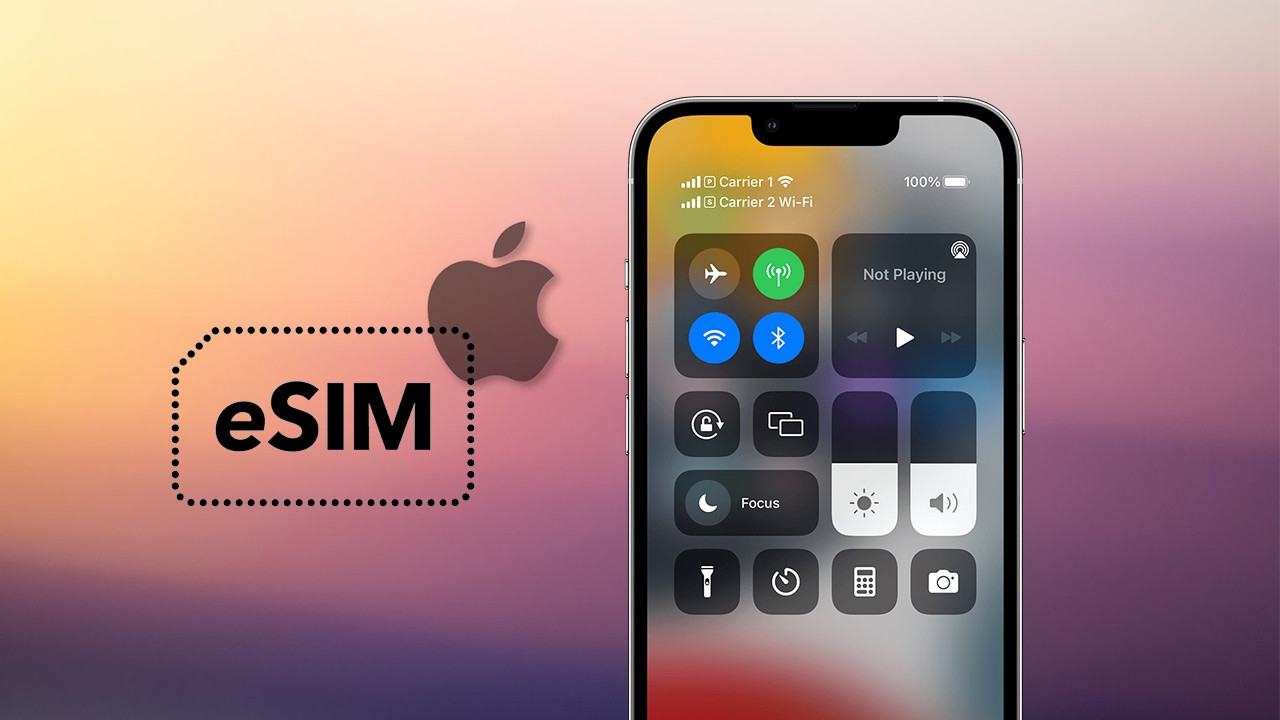
When Apple completely removed the physical SIM tray on the iPhone 14 for the US market on 7 9 2022, many people in the industry saw it as a big gamble. Many users also opposed it because the habit of using physical SIM cards had existed for so long. However, three years later, when the iPhone 17 was launched in 9 2025, Apple showed that it had no intention of turning back, but continued expanding its eSIM-only policy to many new markets.
This is no longer a forecast, but a reality in some regions. The question now is not whether Apple will remove the SIM tray, but when this policy will expand to the UK, Europe, and Asia, especially Vietnam.
| Market | Status in 2025 | SIM tray removal forecast |
|---|---|---|
| United States | eSIM-only from iPhone 14 in 2022 | Completed |
| Canada, Japan, Mexico, UAE, Saudi Arabia | eSIM-only from iPhone 17 in 9/2025 | Completed |
| Qatar, Kuwait, Bahrain, Oman, Guam | eSIM-only from iPhone 17 in 9/2025 | Completed |
| UK | iPhone 17 still has a SIM tray | Could be from iPhone 18 in 2026, currently still a rumor |
| Europe outside the UK | Still has a SIM tray | Unclear due to legal factors and dual-SIM habits |
| China | Still has a SIM tray | After 2028 due to legal factors and user habits |
| India, Vietnam, Indonesia | Still has a SIM tray | After 2028 due to infrastructure and market factors |
The reason Apple could do this in the US first lies in market share strength. Counterpoint Research notes that Apple held about 55-65% of the US smartphone market during 2022-2024, reaching a peak of 64% in the 4 quarter of 2023. This is large enough that when Apple sets technical requirements for carriers, network operators find it very hard to refuse. The same logic helped Apple expand eSIM-only to Canada, Japan, Mexico, the UAE, and several other countries in the same iPhone 17 rollout.
In Vietnam, the context is very different. Apple has a much smaller market share, while users are still used to dual SIM for both work and personal needs. If the SIM slot is removed too early, Apple could reduce its own competitiveness in markets that still rely heavily on physical SIM cards.
For Vietnamese consumers buying iPhones carried in from the US, Canada, Japan, or Mexico, the impact is already very clear. The eSIM-only iPhone 14, 15, 16, and 17 models will not have a physical SIM tray when brought to Vietnam, so users are forced to activate eSIM from Viettel, VinaPhone, MobiFone, or Vietnamobile from the very first use. The more than 20-year story leading up to this decision is analyzed in detail in the article on the history of eSIM development, especially in the section on how Apple and Samsung chose two nearly opposite approaches.
See also: Common eSIM errors: 10 problems and step-by-step fixes
Vietnam by 2030: The SGP.32 IoT and 5G eSIM roadmap
Vietnam is in a rather special position in the global eSIM journey. Compared with the US, Singapore or the UAE, the domestic market is about slower by4-5five years in terms of adoption, but there have already been clear policy signals to narrow the gap. The most notable push comes from the Information and Communications Infrastructure Plan for the period2021-2030, approved by the Prime Minister through Decision36/QD-TTg dated11month1year2024.
This document sets the goal of strongly expanding the national digital infrastructure, in which eSIM and iSIM are identified as one of the trends worth encouraging for IoT devices and 5G. This can be seen as the first clear policy signal at the government level regarding the role of this technology in future connectivity infrastructure.
From the carrier side, the roadmap over the next 5 years can be imagined in 4 g phases:
| Phase | Implementation direction |
|---|---|
| 2024-2025 | Perfect consumer eSIM, optimize eKYC via VNeID based on Decree 49/2017/ND-CP and updated guiding documents |
| 2026-2027 | Launch SGP.32 IoT B2B, prioritizing smart agriculture, logistics fleet tracking, and smart meters for EVN |
| 2027-2028 | Mass-market IoT, with smart home, wearable, and personal medical devices gradually adopting eSIM more widely |
| 2028-2030 | iSIM and 5G IoT massive develop, combined with 5G RedCap for IoT deployment at the scale of millions of devices |
Three use cases are expected to lead the Vietnamese market: smart agriculture in the Mekong Delta, logistics fleet tracking, and smart cities in Hanoi and Ho Chi Minh City. For smart agriculture, sensors measuring salinity, soil moisture, and environmental indicators can help farmers adapt better to climate change. For logistics, eSIM helps transport vehicles stay continuously connected on the North–South route and across the cross-border corridors of Vietnam, Laos, and Cambodia. For smart cities, intelligent traffic light systems, smart electricity and water meters, and surveillance cameras can operate more stably thanks to flexible mobile connectivity.
Regarding the specific adoption rate by 2030, this should be viewed with caution. The Ministry of TT&TT has not announced any official forecast for eSIM penetration in Vietnam by 2030. Based on global trends, in which GSMA Intelligence estimates global eSIM penetration will reach about 57,7% by 2030, together with domestic smartphone adoption levels, SimPM estimates that Vietnam could reach around 30-40% smartphone eSIM penetration by 2030. This is an internal estimate, not an official figure, but it still shows a major jump compared with the present.
If you are preparing for an international trip and want to use eSIM instead of traditional roaming, you can check out Korea eSIM plans, one of the most popular destinations among SimPM users.
See also: How does eSIM work? A simple explanation of the 4-step mechanism
Things that may not happen as predicted
So far, the picture looks quite optimistic: billions of eSIM connections, 82% of smartphones supporting eSIM, wider satellite coverage, and Apple gradually removing the SIM tray. However, technology forecasts are never perfectly accurate. The fact that GSMA Intelligence once revised its eSIM forecast for 2030 from 6,7 billion down to nearly 4,9 billion connections is a clear signal that real-world adoption often moves more slowly than expected.
There are five major risks that could cause the figures in the sections above to fall short of forecasts:
| Risk | Real-world impact |
|---|---|
| Slow SM-DP+ infrastructure in emerging markets | Indonesia, Vietnam, the Philippines, and Bangladesh could lag their 2-3-year roadmaps because backend investment costs are high |
| Regulatory barriers | China and India may adopt iSIM more slowly because of national security, domestic manufacturing, and data storage requirements |
| Users are not ready to switch | Older adults, second-hand device users, or owners of older devices may continue using physical SIMs until 2035 |
| Chipset gap | The segment below 100 USD is not yet ready to absorb the cost of commercial iSIM, causing the mass market to lag flagship devices by 2-3 years |
| Cybersecurity concerns | Large-scale SIM swap fraud incidents could affect user trust |
The GSMA Intelligence story of cutting its forecast from 6,7 billion to 4,9 billion is the clearest proof of this reality. When the Industry Outlook 2022 report was released, many in the industry still believed the 6,7 billion figure was already quite conservative. However, two years later, the forecast had to be adjusted because infrastructure in Africa, Southeast Asia, and South Asia developed more slowly than expected. This is an important lesson for anyone betting on technology timelines over the next 5-10 years.
Physical SIMs will still exist until 2035
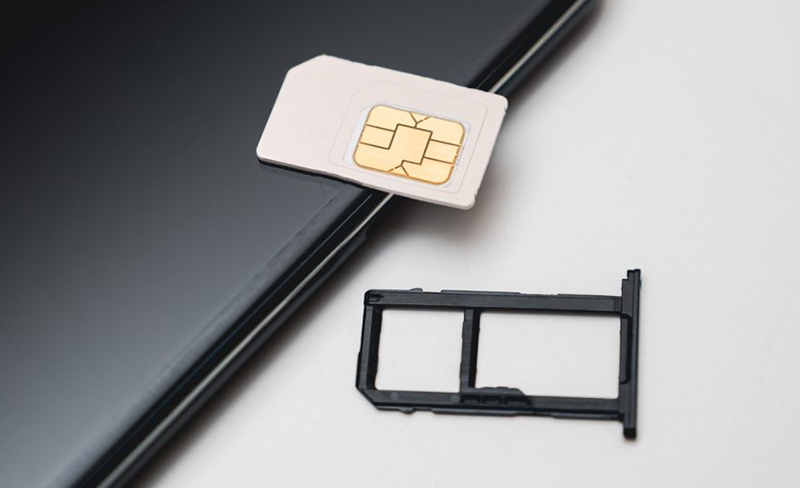
It may sound paradoxical, but physical SIMs will most likely still be sold until 2035, even though eSIM and iSIM will have captured most of the market. According to GSMA Intelligence forecasts, the ratio between physical SIMs and eSIM/iSIM will gradually change through each stage.
| Year | Forecast ratio |
|---|---|
| 2025 | Around 60/40, physical SIMs still dominate globally |
| 2030 | Around 30/70, eSIM/iSIM officially become the majority |
| 2035 | Around 10/90, the market is nearly entering the full eSIM/iSIM era |
So where will the remaining 10% of physical SIMs in 2035 come from? Mainly from specific market groups where low price, habits, and infrastructure still play a very important role.
| Segment | Reason physical SIMs continue to be used |
|---|---|
| Feature phones under 50 USD | eSIM chipsets are still too expensive for the low-price segment in India, Indonesia, and sub-Saharan Africa |
| In-store SIM registration regulations | Some countries still require in-person eKYC for security reasons |
| Older users | Many people still find removing a SIM and inserting it into a new phone simpler than syncing a cloud account |
| Small carriers in remote areas | SM-DP+ infrastructure has not yet been deployed evenly |
| Second-hand phone market | Buyers can easily inspect the device and SIM directly during the transaction |
The lesson from the transition from 3G to 5G shows that old technology often exists alongside new technology for about 10-15 years. 2G networks are still present in many countries even though 5G has been commercialized since 2019. Physical SIMs will most likely follow a similar path: gradually disappearing from flagships, but remaining longer in low-cost segments and markets with slower infrastructure development.
While waiting for the big trends of the next 5 years to gradually become reality, you can start experiencing eSIM on your upcoming international trip, whether it is spring cherry blossoms in Korea, autumn foliage in Japan, or a year-end holiday in Southeast Asia. SimPM currently offers eSIM plans for more than 200+ countries, along with consultation hotlines 24/7 via Zalo and the website simpm.vn. Just tell us your destination, and the support team will help you choose the right plan for your trip, while also guiding activation and troubleshooting for compatible devices such as iPhone XS, Apple Watch Series 3, and Samsung Galaxy S20+ and above.