The History of eSIM Development: from M2M 2010 to iSIM 2030

Perhaps you have had a very ordinary moment: scanning a QR code to activate an eSIM before an overseas trip, or wearing an Apple Watch for a morning run while leaving your phone at home, and then suddenly wondering, “When did mobile connectivity become this easy?” The answer lies not in a single invention, but in a journey spanning more than two decades. The history of eSIM development began with Apple’s first ideas about a virtual SIM at the end of 2010, moved through GSMA’s SGP.02 standard in 2014, the turning point of Apple Watch Series 3 in 2017, iPhone XS in 2018, the SGP.32 standard for IoT in 2023, and is now moving toward the iSIM era in the 2027-2030 period. This article will revisit those important milestones with you, not only through dates and technology names, but also through the roles of Apple, Samsung, Vodafone, GSMA, and how Vietnam joined this transition about 4-5 years later than the rest of the world.
Traditional SIM cards 1991-2010: The precursor to eSIM
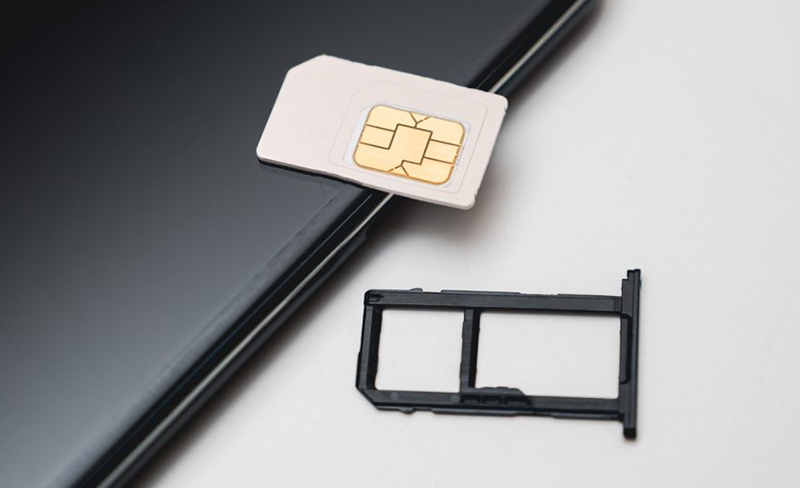
The story of eSIM did not begin in 2017, when Apple Watch Series 3 launched, but must be traced back to 7 1991 in Finland. At that time, operator Radiolinja made the world’s first commercial GSM call, using a SIM manufactured by Giesecke & Devrient in Munich. That first SIM was the size of a credit card, followed the 1FF standard with dimensions of 85,6 × 53,98 mm, and required a correspondingly large slot on the device.
From today’s perspective, that size may seem quite unusual, but it was precisely that “detachable SIM card” design that laid the foundation for how the world connected to mobile networks for decades. From there, SIM cards began a continuous process of shrinking, directly reflecting the evolution of mobile phones across generations.
| Phase | SIM standard | Size | Meaning |
|---|---|---|---|
| 1991 | SIM 1FF | 85,6 × 53,98 mm | Credit-card-sized, used in the early GSM era |
| 1996 | Mini-SIM 2FF | 25 × 15 mm | Much more compact, suitable for mainstream mobile phones |
| 2003 | Micro-SIM 3FF | 15 × 12 mm | For first-generation smartphones that needed a smaller SIM slot |
| 2012 | Nano-SIM 4FF | 12,3 × 8,8 mm | Apple pioneered adoption on the iPhone 5, with a size close to a pinky fingernail |
Behind every reduction in size was the same pressure: smartphones had to become thinner, batteries larger, and components more optimized. Every millimeter on the circuit board became a competition between the engineering team, the product team, and users’ ever-rising expectations.
By the end of the 2000s, a question began to emerge in the technical departments of Apple, Vodafone, and many other telecom companies: did phones really still need a physical SIM slot? This question arose from the increasingly obvious limitations of traditional SIM cards, as the slot still took up space on the mainboard, cards could easily fall out or scratch the contacts, each device could store only one carrier profile, and remote activation was almost impossible for small devices without direct user handling.
From a seemingly simple question, the telecom industry took more than a decade to find the answer. It was a journey involving technical standardization, commercial trials, negotiations between carriers, and the strong participation of device manufacturers. If you want to understand the foundation of this technology before going deeper, the article What is eSIM will be a suitable starting point.
The eSIM idea emerged in 2010-2013: Apple, Vodafone, and the first patent
At the end of 2010, the eSIM idea was first officially recorded when Apple quietly filed a patent application for a virtual SIM. In this document, engineers in Cupertino described a virtual SIM chip located inside the built-in eUICC on the device, capable of receiving profiles from any carrier over a wireless connection without the need for a physical slot. In essence, this was the first conceptual building block for what would later be called eSIM.
While Apple laid the patent foundation, Vodafone was one of the pioneering carriers in real-world trials. In 2010-2011, the British telecom company tested OTA provisioning for M2M SIMs, meaning profiles were sent to the device over the wireless network. This was a mechanism very close to how eSIM works today, especially for devices without direct user interaction.
These trials made GSMA realize that the market needed a common standard instead of each carrier and device maker developing its own separate solution. As a result, GSMA established the eUICC working group with the participation of major European carriers to build a unified “technical language” for the entire industry.
Another important push came from the European Union. In 4 2015, the EU passed Regulation (EU) 2015/758, published in the Official Journal on 19 5 of the same year. This regulation required that from 31 3 2018, every new car sold in the EU must have an eCall system that automatically calls emergency services when an accident occurs.
On the surface, this was a traffic safety regulation. But behind it, it created a very large M2M SIM market for the automotive industry, forcing GSMA to accelerate the completion of the SGP.02 standard. Around the same time, Qualcomm also played an important role by developing an eUICC design that could be integrated into a phone SoC, paving the way for consumer devices to adopt eSIM in the years that followed.
GSMA SGP.02: The first M2M standard in 2014-2016
In 2014, after many years of trials and technical discussions, GSMA officially released the SGP.02 standard under the full name “Remote SIM Provisioning Architecture for Embedded UICC”. Before that, SGP.01 had described the overall architecture, while SGP.02 served as the detailed technical rulebook, defining the protocols and APIs that real devices needed to follow in order to connect to the system.
The operating mechanism of SGP.02 can be simply understood as a “push model”. In this model, the server actively sends commands via SMS to the device, similar to a central system coordinating profiles for remote devices. This approach is suitable for M2M devices, where there is no direct user to scan a QR code or interact with a screen.
Behind the SGP.02 system are two main components:
| Component | Role |
|---|---|
| SM-DP | Prepare the carrier profile before sending it to the device |
| SM-SR | Secure routing and execution of profile control commands |
This model is especially suitable for devices such as modules in cars, smart electricity meters, or industrial devices installed in fixed locations. These are all devices that need stable connectivity over long periods, but do not have a user regularly operating them nearby.
The first commercial product to adopt this standard appeared at Mobile World Congress Barcelona in 2 2016: the Samsung Gear S2 Classic 3G, the world’s first commercial eSIM smartwatch. One month after its introduction, the product officially went on sale in 3 2016 with support from AT&T and Verizon in the US, and Vodafone and EE in the UK.
The Gear S2 Classic 3G did not become the major hit Samsung had hoped for, but it fulfilled an important role. For the first time, eSIM moved out of engineering meeting rooms and appeared on the wrists of mainstream users. Around the same time, BMW worked with Vodafone to equip the BMW ConnectedDrive line with M2M SIMs from 2014-2015, opening the connected-car wave in Europe, although BMW consumer eSIM did not appear until 2021.
If you want a broader look at the standards system behind eSIM, you can also read the article GSMA eSIM standard. That article will help you better understand the 7 GSMA SGP standards, from M2M to IoT.
SGP.22 Consumer and Apple Watch Series 3: The breakthrough moment in 2017
In 2017, GSMA released the SGP.21 and SGP.22 standards for Consumer eSIM. This was a very clear signal that eSIM was ready to move beyond the M2M, automotive, and smart-meter worlds and into consumer devices such as smartphones and smartwatches.
The biggest difference between SGP.22 and SGP.02 lies in the activation method. If SGP.02 uses a “push model,” where the server actively pushes profiles to the device, then SGP.22 switches to a “pull model,” where the user scans a QR code and the device downloads the profile itself. This method is much more suitable for smartphones and smartwatches, because users can actively choose the carrier, plan, and activation time.
Behind SGP.22 are two important backend components:
| Component | Role |
|---|---|
| SM-DP+ | Prepare, store, and distribute profiles for consumer devices |
| SM-DS | Help devices find the correct profile when multiple profiles or carriers are involved |
The real turning point came on 12 9 2017, when Apple introduced Apple Watch Series 3 GPS + Cellular at Steve Jobs Theater in Cupertino. The product officially went on sale on 22 9 2017 and quickly became an important milestone in the history of Consumer eSIM.
With Apple Watch Series 3, users could go for a run without carrying their iPhone, yet still make calls, send messages, and maintain mobile connectivity. This was a very easy-to-understand experience for mainstream users, helping eSIM no longer feel like an unfamiliar technical concept. Apple also did not roll it out alone, but brought along a series of major carriers from the start, including AT&T, T-Mobile, Verizon, Sprint in the US, EE in the UK, KDDI, and SoftBank in Japan.
One month after Apple, on 4 10 2017, Google introduced Pixel 2, the world’s first smartphone with an eSIM chip. However, eSIM on the Pixel 2 mainly served Google’s internal Project Fi service and had not yet expanded to universal carriers like Apple Watch had done. Therefore, 2017 is still often considered the “year zero” of Consumer eSIM, not only because products were launched, but because Apple had enough influence to push a series of global carriers to standardize QR profiles.
From iPhone XS to the US iPhone 14 model: The mass-adoption period 2018-2022
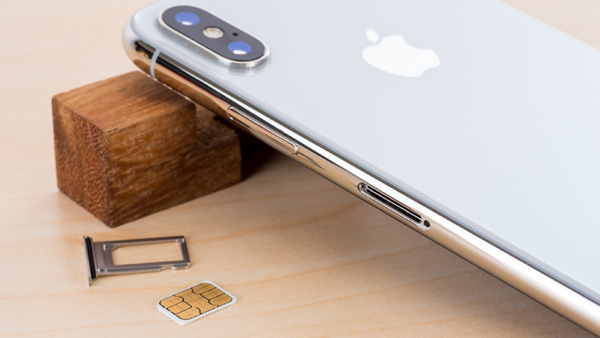
Exactly one year after Apple Watch Series 3, on 12 9 2018, Apple introduced the iPhone XS, iPhone XS Max, and iPhone XR. These were the first iPhone models to support eSIM, with a dual-SIM setup consisting of one physical Nano-SIM slot and one integrated eSIM on the device. The Dual SIM feature was officially unlocked through the iOS 12.1 update released in 10 2018.
From this point on, eSIM was no longer just an accessory feature for smartwatches. The technology began moving into Apple’s core product, the smartphone that users use every day. That created a much broader ripple effect than the earlier trial period.
The Android ecosystem also gradually moved forward. The Samsung Galaxy Fold launched in 2019 supported eSIM, followed by the international version of the Galaxy Note 20 Ultra in 2020. The US version of the Note 20 Ultra, however, did not include this feature, a rather unusual decision by Samsung during that period.
At the same time, the travel eSIM market began to take shape with the emergence of many international startups:
| Brand | Notable timing | Notes |
|---|---|---|
| Holafly | Founded in 2017 in Murcia, Spain | Launched the first commercial eSIM product in 2018 |
| Airalo | Raised seed funding and set up headquarters in Singapore in 10 2019 | Later expanded rapidly into the global market |
| Nomad | Appeared in 2020 | Developed by LotusFlare, a company based in Santa Clara, California |
These businesses laid the foundation for the international travel eSIM model that many users are familiar with today. Instead of buying a physical SIM at the airport or turning on traditional roaming at high cost, users can buy an eSIM package before their trip and activate it as soon as they arrive abroad.
On Google’s side, the Pixel 6 series launched in 2021 officially brought eSIM into the core product line. Meanwhile, Apple’s iPad Pro had already supported eSIM since 2018, well ahead of many Android smartphones of the same period.
The most symbolic turning point came on 7 9 2022, when Apple launched the iPhone 14 series and completely removed the physical SIM slot on the model for the US market. This was the first time a flagship smartphone line publicly “retired” the SIM tray in a major market.
According to Counterpoint Research, around 10-15% of smartphones worldwide supported eSIM in 2022. That number was not yet large, but the growth rate was already very clear. In the same year, Samsung continued to take a more cautious path with the Galaxy S22 series, Z Fold4, and Z Flip4, supporting multi-eSIM while still keeping the physical SIM slot.
Vietnam entered the eSIM story at its own pace. In 3 2019, Viettel rolled out commercial eSIM for the iPhone XS and XR, placing Vietnam among the roughly 25 first countries in the world to support eSIM. By 12 2019, Viettel expanded eSIM to Apple Watch, helping this technology reach mainstream users in the country more clearly. VinaPhone deployed eSIM in the same period in 2019, while MobiFone entered the market in 2020.
See more: The future of eSIM 2030: 6 trends shaping the global telecom industry
SGP.32 IoT and iSIM: The new era in 2023-2030
On 26 5 2023, GSMA opened a new chapter by officially releasing SGP.32 v1.0, the new-generation eSIM standard dedicated to the Internet of Things. This standard was designed to gradually replace the old SGP.02 M2M, which was no longer suitable for the increasingly large and diverse number of IoT devices.
SGP.32 reflects the real-world needs of the IoT market. An agricultural sensor placed in the middle of a field cannot have someone standing next to it to scan a QR code. A shipping container crossing borders also cannot require staff to reconfigure it every time the network changes. Therefore, IoT eSIM needs a new architecture that is more automated, more flexible, and suitable for large-scale deployment.
GSMA introduced two new components in the SGP.32 architecture:
| Component | Role |
|---|---|
| IPA | IoT Profile Assistant, operating directly inside the IoT device |
| eIM | eSIM IoT remote Manager, managing and coordinating profiles remotely |
Alongside IPA and eIM, the system still uses the familiar SM-DP+ to manage and distribute profiles. Major carriers such as Vodafone, Deutsche Telekom, and Orange all participated in defining SGP.32, while also preparing for commercial deployment in the 2025-2026 period. This is considered the foundation for the IoT mass-market wave expected to accelerate strongly in the 2027-2028 period.
In parallel with SGP.32, another trend reshaping the future of SIM is iSIM. If eSIM is a small chip soldered onto the circuit board, then iSIM goes further by directly integrating the eUICC function into the device’s SoC. At that point, the device no longer needs a separate SIM chip, saving space, reducing component costs, and simplifying manufacturing.
Qualcomm is one of the leaders in this trend. On 15 11 2022, the company launched Snapdragon 8 Gen 2, the first mobile chip with integrated iSIM. Earlier that same year, Vodafone had partnered with Qualcomm and Thales to demonstrate iSIM on the Galaxy Z Flip3, marking the first time iSIM appeared on a commercial smartphone. By 2 2023 at Mobile World Congress Barcelona, Qualcomm and Thales announced that iSIM on the Snapdragon 8 Gen 2 platform had received GSMA certification, becoming the first commercial milestone for iSIM in the world.
Looking ahead to 2030, GSMA Intelligence had projected around 6,7 billion global eSIM and iSIM connections in its early 2022 report. However, later updates revised that figure down to nearly 4,9 billion, reflecting the reality that adoption has been slower than initially expected. Whatever the final number turns out to be, the three major trends of the 2025-2030 period are already quite clear.
| Trend | Meaning |
|---|---|
| SGP.33 | A new IoT test standard, used by GCF as a certification benchmark from early 2026 |
| NTN | Satellite connectivity with services such as Starlink Direct-to-Cell and Apple SOS via Satellite |
| iSIM | Expected to become mainstream in 2027-2028 as Snapdragon and Apple Silicon integrate eUICC by default |
A more detailed picture of this period can be explored in the future eSIM 2030 article. This is the natural continuation of eSIM history, as the technology moves from smartphones to IoT, satellite, and next-generation connectivity infrastructure.
Physical SIM and eSIM: Why does the traditional SIM still exist?
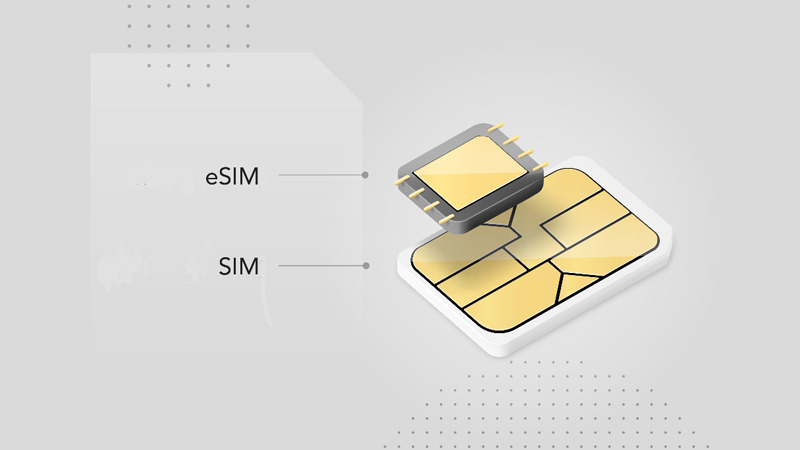
A very common question is: if eSIM has been around for nearly a decade, why are physical SIMs still sold everywhere? The answer is not only about technology, but also about user habits, device costs, carrier infrastructure, and subscriber registration rules in each country.
Below are the basic differences between a physical SIM and an eSIM:
| Criteria | Physical SIM | eSIM |
|---|---|---|
| Activation | Insert directly, no internet required | Scan a QR code or download the profile over the internet |
| Switching phones | Remove the SIM and insert it into a new phone in about 30 g seconds | Re-download the profile, with transfer support via iCloud or Samsung Cloud |
| Changing carriers | Need to visit a store or receive a new SIM | Scan a new QR code, done in a few minutes |
| Multi-profile | One SIM corresponds to one profile | One eSIM can store 5-10 profiles |
| Environmental impact | Plastic card and packaging | No plastic card waste |
| Device support | Most devices with a SIM slot | Mainly on newer smartphones and wearables |
There are five main reasons why physical SIMs still maintain their position in many segments. First, feature phones and low-cost smartphones under 100 USD in India, Indonesia, or rural Vietnam still struggle to absorb the cost of eSIM chipsets. Second, many users are used to removing a SIM and inserting it into a new phone, so they do not yet see the need to switch to a cloud-account-based profile sync process.
Third, SM-DP+ infrastructure has not been deployed evenly across smaller carriers, especially in remote areas of Africa and Southeast Asia. Fourth, some countries still require SIM registration at the counter or direct eKYC for security reasons, making QR codes unable to fully replace the traditional process. Fifth, the second-hand phone market is still very large, and physical SIMs make it easier for buyers to check a device right at the point of sale.
According to GSMA Intelligence forecasts, the ratio between physical SIM and eSIM will gradually shift across the following milestones:
| Year | Forecast ratio |
|---|---|
| 2025 | Around 60/40, physical SIM still dominates globally |
| 2030 | Around 30/70, eSIM and iSIM become the majority |
| 2035 | Around 10/90, almost entering the all-eSIM/iSIM era |
The pace of change is not the same across countries. Singapore, the US, Hong Kong, and the UAE had already passed the tipping point from 2024, with eSIM accounting for over 50% of new connections. Meanwhile, Vietnam, India, and Indonesia are forecast to remain in a balanced state between physical SIM and eSIM until the end of 2027 before accelerating more strongly.
See also: How does eSIM work? A simple explanation of the 4-step process
Apple and Samsung: Two opposing eSIM philosophies
When observing the world’s two largest smartphone brands, it is clear that Apple and Samsung have chosen nearly opposite approaches to eSIM. Apple follows an “All-in eSIM” philosophy, gradually removing the physical SIM and pushing users to fully switch to eSIM. Samsung takes a “Dual SIM coexist” approach, keeping the physical Nano-SIM slot while adding eSIM so users have more choices.
For Apple, the decision to remove the SIM tray on the US version of iPhone 14 in 2022 was a very decisive move. The company also brought some 5G iPad Pro models into the eSIM-only product group, while continuously working with global carriers to standardize QR profiles. Apple can do this because it has a very strong position in key markets, especially the US.
Counterpoint Research recorded Apple holding around 55-65% of the US smartphone market in 2022-2024, peaking at 64% in Q4 2023. This is large enough that when Apple makes technical requirements to carriers, network operators can hardly stay outside the process.
Samsung faces a different challenge. The company leads smartphone market share in about 95 countries, including major markets such as China, India, Vietnam, and Indonesia. These are places where users still rely heavily on physical SIMs, eSIM infrastructure is not yet evenly deployed, or the mid-range segment still accounts for a large share. If Samsung were to remove the SIM slot too early, it could make things difficult for itself in markets that contribute important sales.
| Criteria | Apple “All-in eSIM” | Samsung “Dual SIM coexist” |
|---|---|---|
| Strategy | Gradually remove the SIM tray | Keep the SIM tray and add eSIM |
| Target market | The US, developed Europe | Global, especially China, India, ASEAN |
| Design benefits | Optimize space, improve water resistance | Backward compatibility with physical SIM |
| Risk for users | Higher, because users are forced to switch to eSIM | Lower, because users can choose flexibly |
For Vietnamese users, the impact of these two philosophies is very clear. If you buy a US-import iPhone from iPhone 14 onward, you will get a device with no physical SIM slot and will have to use eSIM from Viettel, VinaPhone, MobiFone, or Vietnamobile. Meanwhile, users of Samsung Galaxy, Google Pixel, or many other Android models can still use a physical SIM and eSIM side by side.
Google Pixel takes a more moderate approach. The Pixel line still supports both physical SIM and eSIM, but Google has pushed eSIM more strongly since the release of Pixel 8 in 2023. This shows that Google also believes eSIM is the future, but does not want to move as fast as Apple.
eSIM in Vietnam: A 2019-2026 journey that is 4-5 years behind the world
Vietnam entered the eSIM world about 4-5 years later than the US and the EU, but this gap does not mean the domestic market lacks technological capability. The main reason is that telecom infrastructure needs time to coordinate with GSMA, international certification partners, and each carrier’s backend systems.
In 3 2019, Viettel marked the first milestone by launching commercial eSIM for iPhone XS and XR. This event brought Vietnam into the group of about 25 first countries in the world to support eSIM, a rather impressive position compared with the common perception that Vietnam usually adopts new technology later.
By 12 2019, Viettel continued expanding eSIM to the Apple Watch line. This was the time when eSIM began to come closer to mainstream users in the country, especially iPhone and Apple Watch users. In 2019, VinaPhone also launched eSIM, while MobiFone entered the market in 2020.
The number of eSIM subscribers in Vietnam is growing rapidly during the period2022-2025, especially after the Ministry of Information and Communications promoted subscriber information standardization and eKYC via VNeID. The relevant legal framework is based on Decree49/2017/ND-CP and the accompanying guiding documents updated in the period2022-2024.
There are three main reasons why Vietnam is about 4-5 years behind the world in eSIM adoption:
| Reason | Explanation |
|---|---|
| Slow SM-DP+ infrastructure build-out | Carriers need to coordinate with GSMA and international certification partners, which requires significant time and investment costs |
| Mid-range devices lack eSIM | Most smartphones under 10 million VND in Vietnam previously did not support eSIM |
| VNeID eKYC became popular late | Before the 2022-2024 period, the eSIM activation experience across sales points was not yet truly consistent |
If you are interested in the security aspect, you can also read the article Can eSIM be hacked? This content will help you understand attack scenarios, SIM swap risks, and the necessary preventive measures when using eSIM.
Looking ahead, the Information and Communications Infrastructure Planning for the period2021-2030, approved by the Prime Minister under Decision36/Decision of the Prime Minister dated11month1year2024, aiming to strongly expand the national digital infrastructure. In this context, eSIM and iSIM have been identified as trends worth encouraging for IoT devices and5GVietnamese carriers are expected to adopt the SGP standard.32 cho IoT B2B during the period2026-2027, laying the foundation for the broader transformation of the domestic telecommunications industry.
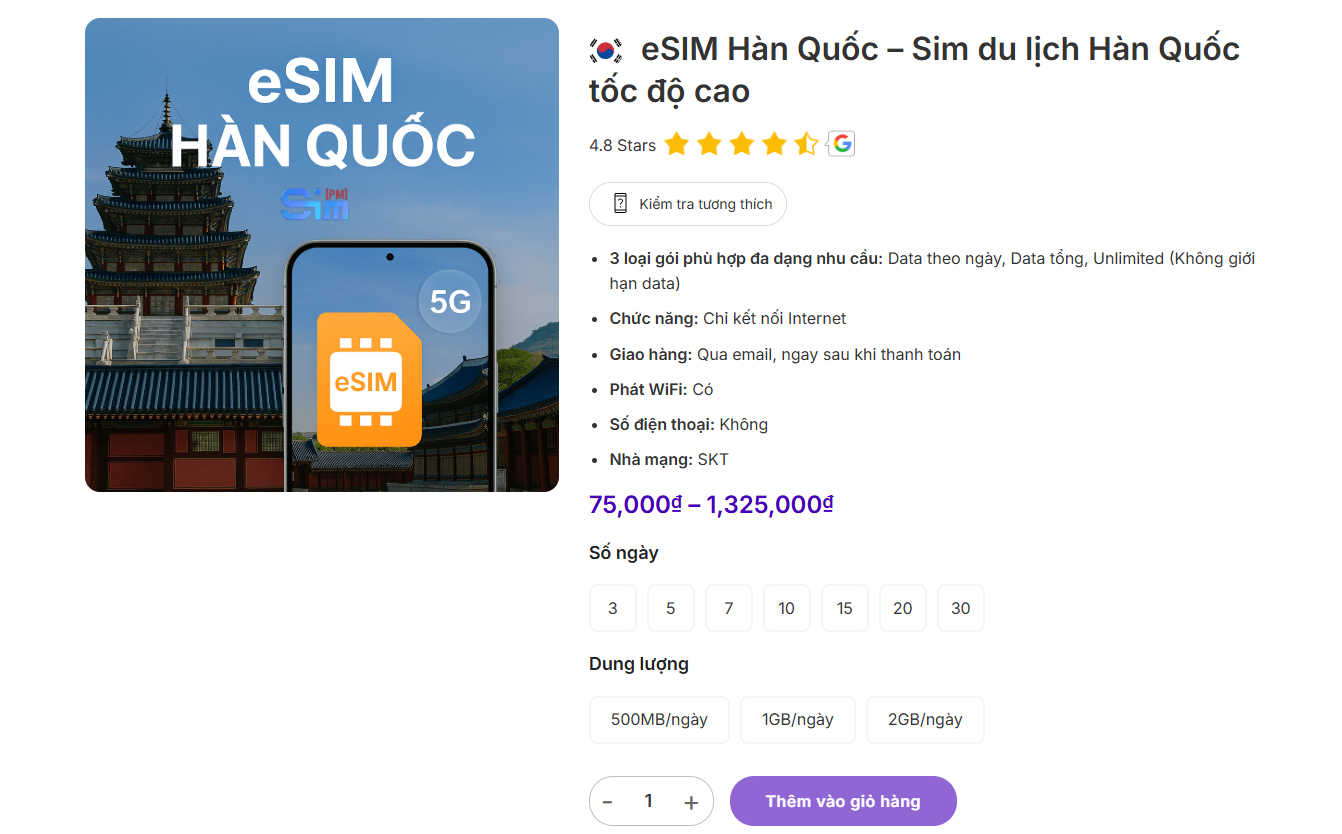
If you are preparing to travel abroad and want to use eSIM instead of traditional roaming, you can explore Korea eSIM plans. This is one of the most popular options for Vietnamese users as demand for travel, business trips, and short-term connectivity continues to rise.
After understanding the development journey of eSIM, you can start experiencing this technology right on your next international trip, whether that is cherry blossom season in Korea, autumn foliage in Japan, or a short holiday in Southeast Asia. SimPMSimPM now offers eSIM plans for more than 200 countries, with 24/7 consultation support via Zalo and the simpm.vn website. You only need to tell the team your destination, and the consultants will help you choose the right plan for your trip, while also guiding activation and troubleshooting for compatible devices such as iPhone XS, Apple Watch Series 3, Samsung Galaxy S20+ and later.