What Is eSIM IoT? Definition, Applications and the Future in 2026

eSIM IoT is the next-generation embedded SIM technology developed specifically for Internet of Things devices. From VinFast VF3 electric vehicles moving through the streets of Hanoi to drones surveying rice fields in Dong Thap, this technology is becoming an important connectivity foundation for many smart devices. The article below will help you understand what eSIM IoT is, how it works, real-world applications, the latest GSMA SGP.31/SGP.32 standards, common chipsets, and iSIM trends in the 2026-2030 period in Vietnam.
What is eSIM IoT?
eSIM IoT is a version of embedded SIM designed to GSMA SGP.31 and SGP.32 standards, dedicated to Internet of Things devices. This technology is different from consumer eSIM standard SGP.22 that is currently used on iPhone or Android smartphones.
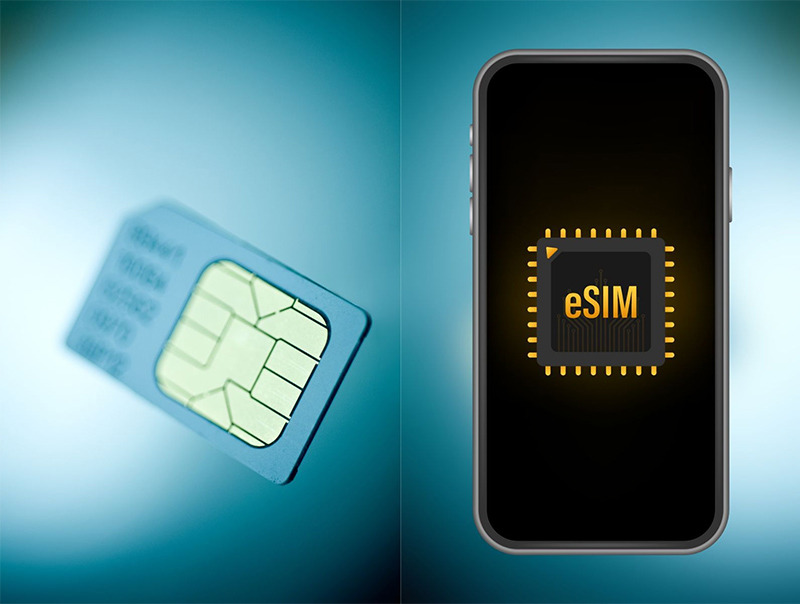
In essence, eSIM IoT is an eUICC chip, short for embedded Universal Integrated Circuit Card, soldered directly onto the device’s motherboard. This chip cannot be removed like a physical SIM, but it can download, store, and switch carrier profiles remotely via mobile connectivity.
The biggest difference lies in the target users. Consumer eSIM is designed for phone users, usually activated by scanning a QR code, choosing a plan, and using it for a certain period. Meanwhile, eSIM IoT serves machines, allowing devices to connect automatically and send data continuously for 10-15 years without direct operator intervention.
Quick comparison of 4 SIM generations:
Over roughly the past three decades, SIM technology has evolved through four main generations, each corresponding to different connectivity needs.
| SIM generation | Time period | Main characteristics |
|---|---|---|
| Traditional physical SIM | 1991 | Removable plastic card, storage capacity only a few KB |
| eSIM Consumer | 2017, GSMA SGP.22 standard | Embedded chip in the phone, activated by scanning a QR code |
| eSIM IoT | 2023, GSMA SGP.31/SGP.32 standard | Embedded chip in machines, can self-activate and be managed remotely |
| iSIM | 2025+ | SIM integrated directly into the SoC, no separate chip needed |
Each SIM generation was created to solve a different connectivity challenge. If the physical SIM serves traditional telecom needs, consumer eSIM is optimized for personal devices, then eSIM IoT is designed for ecosystems of machines, sensors, and automation devices. To understand the common foundation of embedded SIM technology, you can read more about what eSIM is.
How does eSIM IoT work?
The eSIM IoT architecture has three main components: the eUICC chip inside the device, the carrier’s SM-DP+ server, and the IPA server, short for IoT Profile Assistant, designed specifically for IoT under the SGP.32 standard. When the IoT device boots for the first time, the IPA proactively contacts SM-DP+ to download the appropriate carrier profile to the eUICC chip. The entire process happens automatically, without any manual user action.
The common form factor of eSIM IoT is MFF2, short for Machine Form Factor 2. This is a physical chip measuring about 6×5 mm, soldered directly onto the motherboard like a normal electronic component. Compared with a nano-SIM measuring 12,3×8,8 mm, MFF2 is about 6 times smaller and more durable because it has no separate contact pins.
The ability to operate in harsh environments is a major advantage of eSIM IoT. Industrial extended-range eSIM IoT chips can operate stably in temperatures from -40°C to +85°C. This heat tolerance is suitable for car engine compartments in summer, outdoor devices, or sensors operating in deep cold areas.
The design life of eSIM IoT often reaches 10-15 years according to specifications from chipset manufacturers such as Quectel. This is significantly higher than consumer eSIM in smartphones, which is usually optimized for a shorter lifecycle of about 2-5 years.
In terms of connectivity, eSIM IoT is optimized for LPWA technologies, short for Low Power Wide Area, including LTE-M and NB-IoT. These two standards were defined by 3GPP starting from Release 13 and continued expanding in Release 17 and Release 18. Thanks to extremely low power consumption, around 3 microamps in Power Saving Mode, devices can run on AAA batteries for many years.
How are eSIM IoT and consumer eSIM different?
eSIM IoT and consumer eSIM both use the embedded UICC platform, but they are designed for two completely different device groups. One serves individual users, the other serves machines, sensors, and automated systems.
| Criteria | Consumer eSIM, SGP.22 | eSIM IoT, SGP.31/SGP.32 |
|---|---|---|
| Target users | Smartphones, consumer smartwatches | IoT devices, M2M machines |
| Form factor | eUICC integrated into the phone mainboard | MFF2 soldered directly onto the motherboard, 6×5 mm |
| Activation method | User scans QR code | Automatically via IPA and SM-DP+ |
| Design life | 2-5 years | 10-15 years |
| Operating temperature | -25°C to +85°C | -40°C to +85°C, extended industrial standard |
| Power consumption | Optimized for everyday use | Ultra-low, around 3 µA in PSM mode |
| Profile management | LPA in the phone | Separate IPA, including eIM/IPAd |
| Buyer type | Individual consumers | B2B enterprises, device OEMs |
A subtle but very important difference lies in the Profile Assistant. With consumer eSIM, each device runs its own LPA and needs a user interface to scan a QR code or confirm actions. In eSIM IoT, IPA can operate separately and support headless devices, meaning devices without a screen, which is very suitable for smart electricity meters, agricultural sensors, or asset tracking devices.
7 real-world applications of eSIM IoT
eSIM IoT is being used in many fields, from transportation and logistics to smart agriculture and personal healthcare. What these applications have in common is that the devices need stable connectivity, low power consumption, and long-term operation without manually replacing the SIM.
1. Electric vehicle connectivity
VinFast VF3 uses eSIM IoT through partner Webbing, a global connectivity provider with coverage in more than 190 countries. Thanks to continuous mobile connectivity, the car can remain online even when the owner does not turn on Wi-Fi.
This connectivity supports features such as OTA firmware updates, remote diagnostics, predictive maintenance, and real-time safety alerts. Tesla, BMW iX, and many electric vehicle models in Asia are also deploying similar connectivity models.
2. Smartwatches
Apple Watch Ultra 2, Samsung Galaxy Watch7, and Garmin Forerunner 965 all integrate eSIM IoT to support calling and data access independent of the phone. Users can go for a run, work out outdoors, or travel without carrying a smartphone.
Thanks to eSIM IoT, smartwatches can still make and receive calls, run maps, receive notifications, and stream music. For users who need an independent wearable device, this is one of the most visible applications of embedded SIM in everyday life.
3. Asset tracking and logistics
Shipping containers, long-haul trucks, pet trackers, and high-value cargo locators can all use eSIM IoT. Chipsets such as Quectel BG770 or Sierra HL7800 g enable devices to record location, temperature, humidity, and continuously transmit data back to the management system.
A small chip mounted in a container can operate for many years on AAA batteries. This is very difficult to achieve with a traditional physical SIM, especially on cross-border routes or in complex transport environments.
4. Smart electricity, water, and gas meters
In Vietnam, EVN has installed more than 24 million electronic electricity meters out of a total of 30,5 million meters, accounting for 80,26% according to the announcement in 2024. These meters can connect through many protocols such as NB-IoT, PLC, RF mesh, or mobile networks, depending on the deployment area.
Thanks to automatic connectivity, the meter can send readings to the central system without staff coming to record them manually. EVNHCMC is also deploying full coverage of electronic meters for customers in Ho Chi Minh City, in which eSIM IoT connected through NB-IoT infrastructure is an important solution.
5. Drones and Air Mobility
DJI Mavic 3 Enterprise and many trial delivery drone models use eSIM IoT to communicate with the ground through mobile networks. This is different from the Wi-Fi connection used by a conventional remote controller.
Thanks to mobile connectivity, drones can fly more than 10 km while maintaining seamless communication. This is an important foundation for topographic surveying, agricultural monitoring, trial delivery, and infrastructure management applications.
6. Smart agriculture in Vietnam
FPT has partnered with Fujitsu since 2014 to deploy a smart agriculture model in Vietnam. In this model, FPT provides IT infrastructure, while Fujitsu provides the cloud platform and devices.
In the Mekong Delta, Tra Vinh University and projects in Can Tho have applied IoT to alternate wetting and drying irrigation, microclimate monitoring, and drip irrigation systems. Most of these systems connect through mobile networks or eSIM IoT, helping farmers monitor field data directly on smartphones.
7. Medical wearables
Medical wearables such as continuous glucose monitors, portable ECG devices, and emergency pendants for the elderly all need stable connectivity. These devices cannot depend entirely on smartphones because health data needs to be transmitted continuously and in a timely manner.
eSIM IoT is a suitable solution thanks to its small size, low power consumption, and always-online connectivity. For personal medical devices, connection stability can directly affect monitoring and response capability in emergency situations.
See also: Is secure eSIM safe? Standards analysis
GSMA standards for eSIM IoT
GSMA SGP.31 and SGP.32 are the two official technical documents defining the eSIM IoT architecture. These standards were released during the 2022-2023 period and continue to be updated to fit real-world deployment needs.
The Trustworthy Connectivity Alliance has also published an analysis document for SGP.32 v1.0 in 9 2024. This document helps providers better understand how to implement eSIM IoT according to the new standard.
SGP.31: Architecture & Requirements
SGP.31 describes the overall architecture of eSIM IoT, including the roles of the eUICC, eIM, IPA, and backend systems. This is a foundational document for chipset, module, and IoT device manufacturers to ensure interoperability across the entire ecosystem.
In other words, SGP.31 answers the question of which components eSIM IoT needs and how those components interact with each other. Any manufacturer that wants devices to operate according to the standard must follow this architecture.
SGP.32: Technical Specification
GSMA released SGP.32 v1.0 on 26 5 2023 and updated it to v1.1 in 2024. If SGP.31 is the architecture document, SGP.32 goes deeper into protocol, API, and specific implementation procedures.
Thanks to SGP.32, mobile operators, device manufacturers, and platform providers can work together to deploy Remote SIM Provisioning for IoT devices. This is an important step for eSIM IoT to operate at scale.
Difference from SGP.22
SGP.22 is designed for consumer eSIM, so this standard assumes the device has a screen and the user can interact directly. Users usually scan a QR code, confirm the profile, and activate the plan right on the phone.
SGP.31 and SGP.32 remove this requirement, allowing devices to operate completely headless. This is why you cannot use a consumer eSIM QR code for an IoT device without a screen. More details about the GSMA standard system can be presented in the article on GSMA standards for eSIM.
3GPP Release support
3GPP Release 17 and Release 18 have significantly expanded LPWA features. These updates include NR-RedCap, short for 5G New Radio Reduced Capability, and NR-Light for 5G IoT devices.
These standards are compatible with eSIM IoT under GSMA SGP.32, paving the way for a wave of 5G IoT devices in the 2025-2026 period. As 5G infrastructure becomes more common, eSIM IoT will have more application space in industry, smart cities, and logistics.
Top 5 popular eSIM IoT chipsets and modules
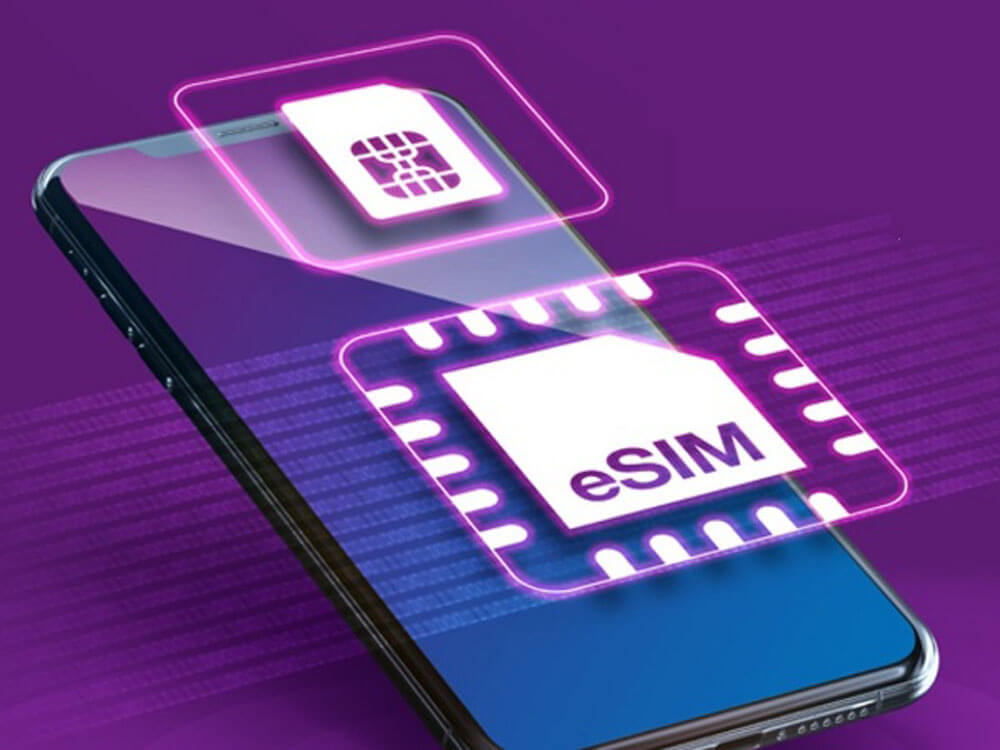
The eSIM IoT market currently has many chipset and module providers, but the five vendors below account for a large share globally.
| Vendor | Main products | Technical features |
|---|---|---|
| Quectel, China | BG770, BG77xA-GL | LTE-M/NB-IoT, ARM Cortex M4, size 14,9×12,9×1,9 mm, around 3 µA PSM, battery 10-15 years |
| Sierra Wireless, Canada | HL7800, HL7900 | LTE-M/NB1 Cat-M1, 3GPP Release 13, suitable for static sensor and asset tracking |
| Telit, Italy | ME910 series | LTE-M/NB-IoT, integrated GNSS, suitable for healthcare and industrial |
| u-blox, Switzerland | LARA-R6, SARA-R5 | LTE-M/NB-IoT, automotive grade, EU certified |
| Nordic Semiconductor, Denmark | nRF9160 | LPWA, GNSS, ARM Cortex M33, integrated BLE 5.x, optimized for low power |
In Vietnam, these modules are distributed through Viettel R&D, FPT Smart Cloud, and technical dealers such as Anh Em Co. and DKE Technology. The main customer group is enterprises deploying IoT projects in logistics, agriculture, industry, and smart infrastructure.
Quectel currently has a major advantage in the Asian market thanks to reasonable pricing and a broad dealer network. For projects requiring large-scale deployment, module price, stability, and technical support capability often directly influence the vendor selection decision.
See also: Can eSIM be hacked? 7 real attack scenarios + how to recognize them
eSIM IoT in Vietnam: VinFast, Viettel and FPT Smart Cloud
The eSIM IoT market in Vietnam began to accelerate strongly from 2024. The three standout pioneer groups are VinFast in consumer electric vehicles, Viettel in B2B telecom, and FPT Smart Cloud in enterprise IoT platforms.
VinFast: Pioneer of eSIM IoT for electric vehicles
VinFast partnered with Webbing, a global IoT connectivity provider, to integrate eSIM IoT into the VF3, VF5, VF6, VF7, VF8, and VF9 lines. As a result, VinFast cars can maintain continuous connectivity via mobile networks in more than 190 countries.
This connectivity supports VinFast Connect, OTA updates, and predictive maintenance. For car owners in Vietnam, eSIM IoT on VF3 operates through Viettel/MobiFone infrastructure and can automatically roam when needed.
Viettel: The largest B2B IoT network operator in Vietnam
Viettel provides eSIM IoT packages for enterprises with two main technologies: LTE-M and NB-IoT. Major projects include smart parking in Hanoi, smart lighting in Ho Chi Minh City, and fleet management for logistics companies.
The pricing model of B2B plans is often based on data volume and number of devices. Since this is a service for enterprises, prices are usually not publicly listed and customers need to contact Viettel IDC’s sales department directly for consultation.
FPT Smart Cloud: IoT platform for enterprises
FPT Smart Cloud provides the FPT.IO platform integrated with eSIM IoT for many application groups. Typical fields include smart agriculture, smart factory, and smart building.
In smart agriculture, this platform can connect soil sensors in the Mekong Delta. In factories and buildings, eSIM IoT supports temperature, CO2, power consumption, and many other operational data sensors.
iSIM: The next technology after eSIM IoT
iSIM, short for integrated SIM, is considered the next generation after eSIM IoT. While eSIM IoT still requires a separate eUICC chip soldered onto the circuit board, iSIM integrates SIM functionality directly into the SoC, or System-on-Chip.
The core difference lies in the physical architecture. eSIM IoT is a separate component, while iSIM uses security hardware integrated directly into the main processor. This makes devices more compact, more power-efficient, and lowers manufacturing costs when deployed at scale.
The advantages of iSIM
The first advantage of iSIM is that it saves board space compared with eSIM IoT MFF2. This is especially important for small devices such as smartwatches, tiny sensors, or wearable medical devices.
iSIM also consumes less power thanks to sharing the power management system with the main processor. According to floLIVE’s analysis, iSIM can use around 70% less power than traditional physical SIMs. At large-scale production, iSIM also helps reduce costs by eliminating the need for an independent eUICC chip.
When will eSIM IoT become obsolete?
eSIM IoT will still be the dominant choice for the next 3-5 years, meaning roughly until the 2028-2030 period. The reason is that the market still has many legacy devices, production lines have already stabilized, and the eSIM IoT module ecosystem is still operating effectively.
iSIM could become more common from 2026-2027, especially in devices designed from the ground up. However, the transition will happen gradually rather than replacing eSIM IoT all at once.
The future of eSIM IoT in the 2026-2030 period
From 2026 to 2030, eSIM IoT will continue to evolve alongside new connectivity trends. Four notable trends include 5G IoT adoption, the shift to iSIM, NTN satellite connectivity, and Open-RAN deployment in Vietnam.
- 5G IoT adoption with NR-RedCap and NR-Light will deliver higher speeds than LPWA while still maintaining low power consumption.
- The shift to iSIM will be driven by major chipset manufacturers such as Qualcomm and MediaTek, especially in new devices.
- NTN, short for Non-Terrestrial Network, will expand satellite connectivity options such as Starlink or OneWeb for remote and underserved areas.
- Open-RAN deployment in Vietnam, with Viettel as one of the leading players, could help IoT infrastructure 5G grow faster.
These trends show that eSIM IoT is not only the connectivity technology of today, but also a stepping stone for the smart device ecosystem in the years ahead. As 5G, satellite, and iSIM develop together, machine connectivity will become more flexible and sustainable.
Understanding eSIM IoT correctly helps users feel more confident when choosing smart devices such as the VinFast VF3 or Apple Watch Ultra, while also helping businesses clearly see the connectivity foundation behind smart agriculture, fleet tracking, and smart city ecosystems in Vietnam. As iSIM gradually develops in the 2026-2030 period, foundational knowledge of eSIM IoT will remain an important anchor so businesses and users are not lost in the wave of next-generation connectivity.
To avoid internet interruption for your upcoming trip or business travel abroad, you can choose and use eSIM products at SimPM. SimPM offers Korea travel eSIM, Thailand eSIM, eSIM Singapo and eSIMs for more than 200+ other countries. Visit SimPM now to choose the eSIM product that suits you.