Japan Tourist Visa Application Experience: How to Prepare Your Documents Correctly

Japan has long been among the most dream-visited destinations for Vietnamese travelers – from autumn forests of red leaves and snow-covered Mount Fuji to the captivating urban rhythm of Tokyo and Osaka. However, to set foot in the “Land of the Rising Sun”, the first step you need to overcome is applying for a Japan tourist visa. This article compiles the most complete and detailed information on documents, procedures, fees, and tips to increase your chances of getting a Japan visa, helping you prepare confidently for your upcoming trip.
Do Vietnamese people need a Japan tourist visa?
The short answer is yes. Vietnam is not currently on the list of countries exempt from visas to Japan – while Japan has opened visa-free entry for citizens of 74 countries, including the US, UK, Australia, Singapore, Malaysia, and most European countries. Therefore, all Vietnamese citizens who want to enter Japan are required to apply for a visa in advance, whether for tourism, visiting relatives, or business.
There are two exceptions that do not require a visa: holders of diplomatic or official passports traveling on official Government duties, and family members living in the same household who hold those passport types. Outside of these two cases, everyone must complete the full visa application procedure.
Types of Japan tourist visas available today
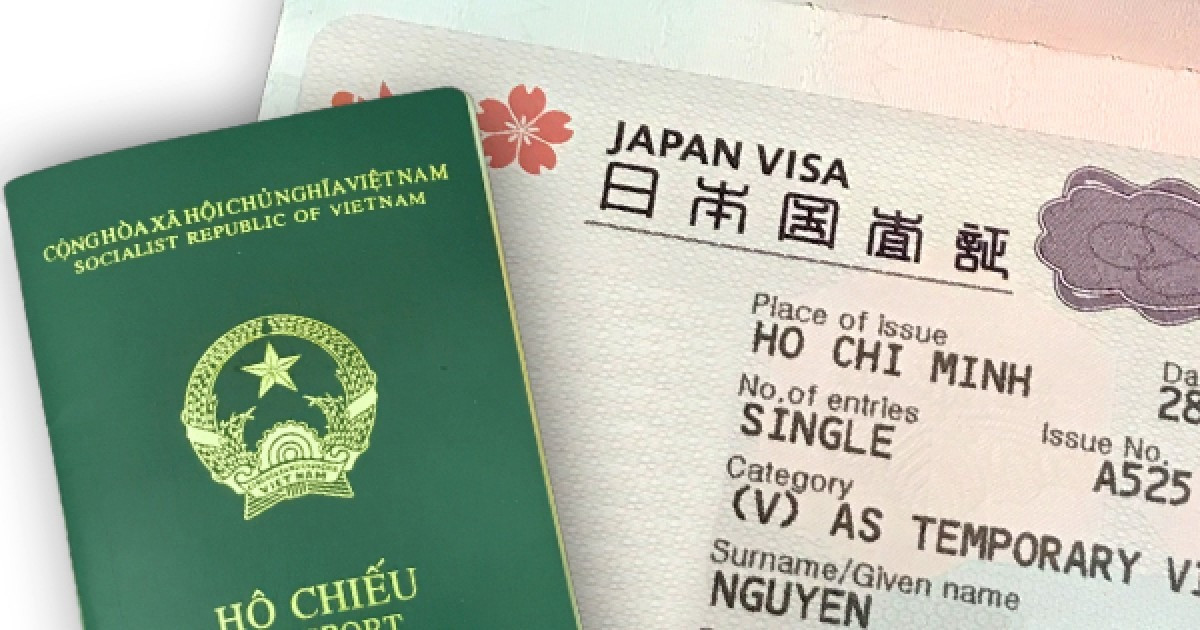
Japan tourist visas are classified by number of entries, marked with the letter “V”, and each stay is valid for 15 or 30 days depending on the case.
1-entry visa (Single Entry) is the most common type for first-time visitors to Japan. The visa is valid for 3 months from the date of issue, allows 1 entry, and permits a maximum stay of 15 days. This is the standard option for the majority of Vietnamese travelers.
2-entry visa (Double Entry) is valid for 6 months and is suitable for those who plan to enter and exit twice during a long trip or combine multiple destinations.
Multiple Entry visa is the most “premium” type of visa, valid from 1 to 5 years, allowing unlimited entries, with a maximum stay of 30 days each time. To be granted this visa, you must have previously traveled to Japan within the last 3 – 5 years, or currently hold visas from developed countries such as the US, UK, or the Schengen area, together with convincing financial documents.
Conditions for being granted a Japan tourist visa
The Japanese Embassy reviews visa applications based on 4 core criteria:
- The applicant must have a valid passport and ensure the right to re-enter the country of origin;
- All documents in the application must be truthful and accurate
- The purpose and length of stay must be appropriate for the visa type requested under Japan’s Immigration Control and Refugee Recognition Act
- The applicant must not fall under the prohibited categories under Clause 1 of Article 5 of the above law
In practice, the Embassy pays special attention to three main factors: employment stability, financial capacity, and consistency in the application. Applications with missing documents, contradictory information, or signs of forged documents will be rejected immediately and blacklisted for 6 months.
What documents are needed for a Japan tourist visa application?
A basic Japan tourist visa application file includes 6 required types of documents. Important note: all documents must have been issued within 3 months from the date of submission (except for those with a separately specified validity period). Applications missing any item will not be accepted.
Original passport: The passport must still be valid and have at least 2 blank pages for the visa sticker. If you have an old expired passport that previously had a Japan entry stamp, you should submit it together to strengthen the credibility of your application.
Visa application form: Fill out according to the prescribed form (downloadable from the Embassy website), in English, and attach a passport photo sized 4,5 × 3,5 cm taken within the last 6 months. The photo must be original, with a white background, no hat, no glasses, and no editing. The signature at the end of the form must match the signature on the passport. Write your full name clearly on the back of the photo and absolutely do not staple the application file.
Financial proof documents: This is the most decisive factor in the application. You need to submit one of the following: bank account statements for the last 6 months (preferably a salary account, clearly marking salary deposits), a fixed-term deposit certificate, or an income certificate issued by a state agency. The account balance should be maintained at a minimum of 200 million VND or a savings book equivalent to 5.000 USD deposited at least 3 months before the submission date.
Some specific professions such as teachers, doctors, lawyers, flight attendants, architects, journalists, customs officers, or state officials at department level and above with sufficiently high income may be exempt from the financial proof requirement. Instead, they only need to submit proof of employment and a professional license card.
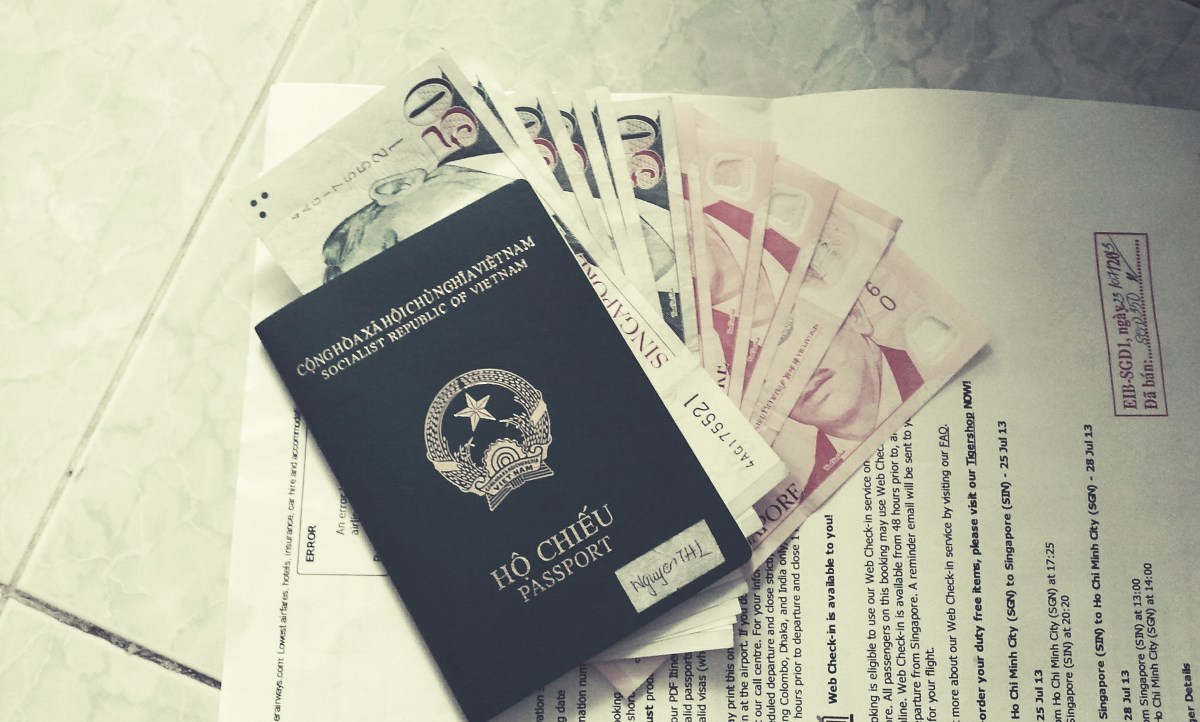
Booking confirmation for flight tickets or flight itinerary: Submit a printed booking confirmation (itinerary), showing your full name, flight date and time, departure point, and destination. Important note: you should only make a booking and choose pay later. Absolutely do not issue a ticket before having a visa, because the Embassy is not responsible for refunding any cost if the application is rejected.
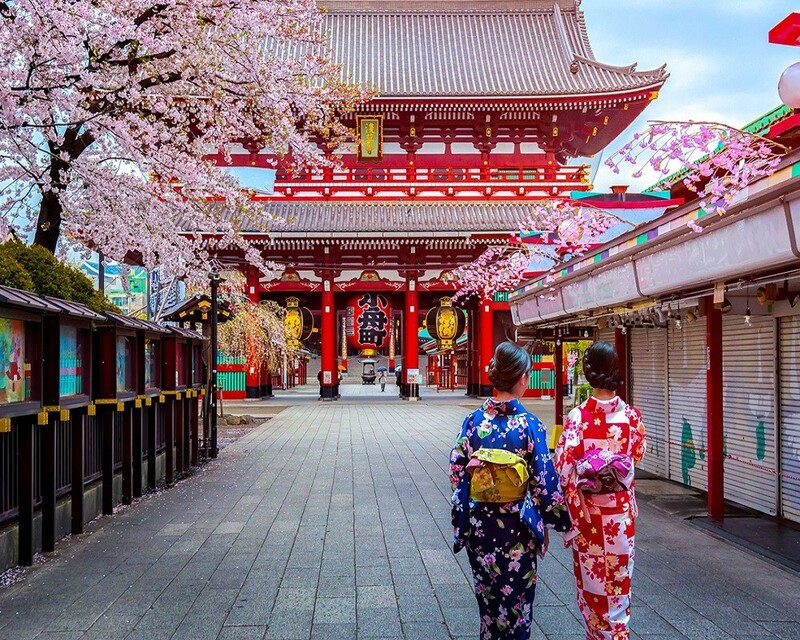
Detailed planned itinerary: This is the document many people prepare too casually. The itinerary must be written day by day, clearly stating the places to visit (not just “Tokyo” or “Osaka” in general, but the actual destination names such as “visit Sensoji Temple, Asakusa”), the hotel name, address, and phone number of each place of stay each night. The entry date and return date must match the flight ticket information you booked.
Additional documents (if applying as a group): If traveling with family, you must submit a birth certificate or marriage certificate to prove the relationship. If traveling with friends, include clear front-facing group photos. Groups of 3 people or more need to draw an additional relationship chart among members. Each application form and document in the group should be numbered correspondingly before submission.
Where to submit a Japan visa application?
Method 1: Submit directly at the Embassy / Consulate General.
There are 3 submission locations corresponding to 3 geographic regions in Vietnam (applicable from 01/07/2024):
- The Embassy in Hanoi (27 Lieu Giai, Ba Dinh) accepts applications from residents in provinces from Ha Tinh northward. Application hours: 8h30 – 11h30; result collection: 13h30 – 16h45, Monday to Friday. Phone inquiries: Morning 8:30 ~ 12:00, Afternoon 1:30 ~ 5:15
- The Consulate General in Da Nang (No. A17 – 18 – 19, 2/9 Street, Hai Chau) accepts applications from Quang Binh to Gia Lai. Receiving hours: 8h30 – 11h30; result collection: 13h30 – 16h45.
- The Consulate General in Ho Chi Minh City (261 Dien Bien Phu, District 3) accepts applications from Dak Lak and Phu Yen southward. Receiving hours: 8h30 – 11h30; result collection: 13h15 – 16h45. Advance appointment is mandatory at least 1 days via hotline +84-28-3933-3510. When arriving, you must present your passport or a photo ID.
The advantage of this channel is that fees are only charged when the visa is granted. The downside is that processing time is longer (about 7 – 10 working days) and an appointment is mandatory.
Method 2: Submit via VFS Global or an authorized agent
VFS Global has 2 offices in Hanoi (Ocean Park Building, 1 Dao Duy Anh, Dong Da) and Ho Chi Minh City (Floor 3, Resco Building, 94-96 Nguyen Du, District 1), no appointment required, faster processing by about 9 working days, and result delivery by postal service. However, you must pay a service fee of about 200.000 VND even if the visa is rejected.
Japan visa fees and processing time
Current fees (applicable from 01/4/2025 to 31/3/2026): A 1-entry visa costs 500.000 VND; a multiple-entry visa costs 1.000.000 VND; a transit visa costs 120.000 VND. Add the VFS service fee (if submitted through this channel) of about 200.000 VND/application, plus translation fees if needed, and the actual total cost ranges from about 1.500.000 – 2.000.000 VND/person. Payment is by cash only, cards are not accepted.
Processing time: Normally, results are available after 7 working days (when submitted at the Embassy/Consulate) or 9 working days (when submitted via VFS Global), counted from the first working day after the file is received. Some complicated cases requiring additional documents or consultation with the Japanese Ministry of Foreign Affairs may take several weeks. The Embassy does not offer expedited processing, except in special humanitarian cases. A visa can be submitted up to 3 months before the entry date, so you can proactively arrange your schedule to avoid pressure.
Don’t forget to prepare internet for your trip to Japan
Once you have your visa in hand, the next step is to ensure internet connectivity as soon as you land at Narita or Kansai airport. No network in Japan means you can’t check maps, book a car, check in to your hotel, or use Google Translate while shopping.
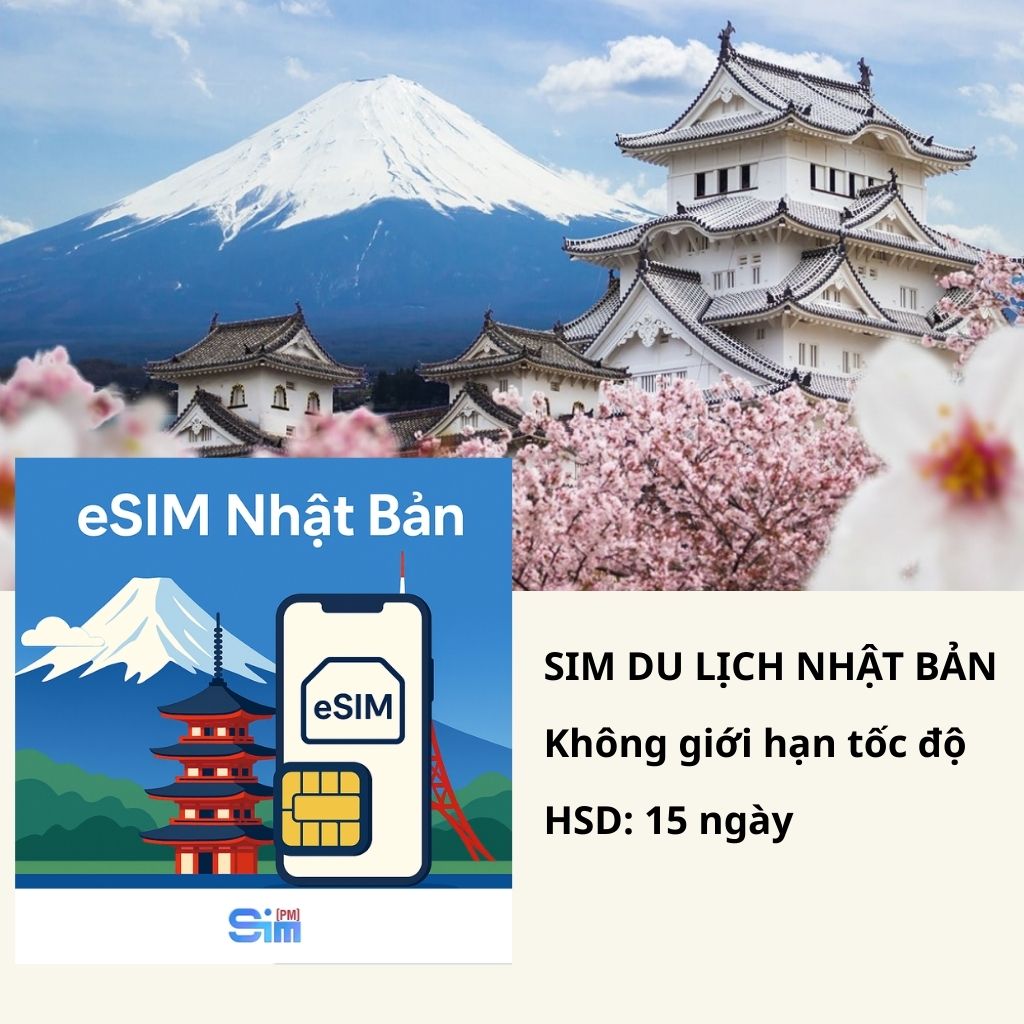
Japan eSIM from SimPM is the most compact and cost-effective solution today – starting from only 125.000 VND, no need to change a physical SIM, and no need to go to a store. You buy online, receive a QR code by email, install it before departure, and the internet connects automatically as soon as the plane lands in Japan. View Japan eSIM plans at SimPM – Support 24/7 via hotline 0919.999.336
Tips to increase your Japan tourist visa approval chances
A complete set of documents is necessary, but not sufficient. Below are the factors that truly determine whether your visa is approved or rejected:
Diverse travel history: A “blank” passport with no visa stamps from any country will make the consular officer doubt the real purpose of your trip. Try traveling to a few countries in Southeast Asia such as Thailand and Singapore first. If you have previously held a US, UK, or Schengen visa, your chances of getting a Japan visa, even a multiple-entry visa, will be significantly higher.
Prove ties to Vietnam: What consular officers care about most is not whether you have money, but whether you have reasons to return to Vietnam after your trip. A long-term employment contract, stable income (preferably from 1.000 USD/month or higher), and at least 1 years of working seniority are all good signals. If you have a family (spouse, children), this is also a strong plus point.
Transparent and strong finances: Your account balance should be maintained stably for at least 3 months before submitting the application, and there should be no unusual fluctuations such as receiving a large sum of money right before printing the bank statement. A salary account with regular monthly deposits is much more convincing than an account with a large balance but sparse transactions.
A feasible and detailed itinerary: A good itinerary does not just list city names but shows that you have truly researched Japan carefully. Clearly state where you go, what you do, and which hotel you stay at each day. The itinerary must match exactly the entry and return dates shown on the booked flight ticket.
Return plan before the visa expires: The planned departure date from Japan should be at least 3 days before the visa expiration date to show that you respect the allowed stay period and have no intention of overstaying.
Important notes when applying for a Japan visa
Not buying your airline ticket before getting a visa is the most important rule. The Embassy is not responsible for any costs arising from tickets purchased if the application is rejected. It is enough to make a booking and choose pay later, then print the booking confirmation (itinerary) to submit with the application.
Submitted documents will not be returned. If you want to keep the originals of documents such as the household registration book, birth certificate, or marriage registration certificate, submit a photocopy so that the Embassy can keep the copy and return the originals to you.
Never send your application by email, post, or fax to the Embassy. All applications sent this way will not be accepted. Applications must be submitted in person at the visa counter of the Embassy/Consulate or at VFS Global.
If the Embassy requests additional documents or an interview and you do not comply, your application will be suspended – not rejected, but considered invalid. If officially rejected, you must wait at least 6 months before reapplying for the same purpose.
Applying for a Japan tourist visa is not too difficult if you clearly understand the requirements and prepare your documents carefully and early. The most important thing is honesty and consistency throughout the entire application – from the itinerary and finances to the purpose of the trip.
Once you have your visa in hand, make sure your trip is not interrupted by a lack of internet. Japan travel eSIM from SimPM: high-speed 4G/5G connectivity, nationwide coverage across Japan, prices starting from only 125.000 VND, helping you check maps, book rides, call home, and share moments from the very first second you arrive in Tokyo or Osaka.