Does Thailand Have WiFi? Thailand Travel Internet Guide 2026

You’re planning a trip to the Land of Smiles but still wondering whether does Thailand have WiFi and whether public networks there are strong enough to check maps or book a Grab ride? In reality, although free WiFi is available almost everywhere from airports to coffee shops, for a smooth and secure travel experience you will definitely need a more proactive Internet solution. In this article, SimPM will help you compare the most common connectivity options in detail so you can find the best solution to stay online throughout your trip.
Does Thailand have WiFi?

Many first-time travelers to the Land of Smiles often wonder does Thailand have WiFi so they can stay in touch and check maps on the go. The answer is YES and the WiFi system here is extremely developed, with broad coverage from transport hubs to bustling shopping areas. To help you picture it more clearly, below are the connectivity details at each popular location compiled by SimPM compiled.
WiFi at airports and shopping malls
At airports such as Suvarnabhumi Airport and Don Mueang Airport, free WiFi is always available for travelers and is fairly easy to connect to. You only need to quickly register with an email address or phone number to access the Internet for communication or information lookup. This is a convenient option while waiting to check in or resting after your flight.

At shopping malls such as Siam Paragon or CentralWorld, WiFi is also widely available and more stable than outdoors. However, usage time is usually limited, and you will have to log in again if you use it for a long time or move between areas. This means the experience is not really seamless when you need continuous Internet, especially when you need to quickly look something up.
WiFi at hotels and coffee shops
Most hotels in Thailand offer free WiFi for guests, with quality that is relatively stable compared with public areas. You can use the network to browse the web, check email, or view maps before heading out without too many interruptions. However, during peak hours or when the hotel is busy, the network speed can still slow down noticeably.

Coffee shops such as Starbucks Thailand are also places where WiFi is fairly good and are a popular choice for travelers who want to sit for a long time working or use the Internet more stably. That said, you usually need to buy a drink or ask for the password to access it, and not every shop has the same network quality. So the WiFi experience at coffee shops still depends quite a lot on the location and time of use.
WiFi at restaurants and night markets
At local restaurants or lively night market areas such as Chatuchak Market, the question of does Thailand have WiFi starts to vary more clearly. Some large restaurants may provide free WiFi, but you usually have to ask the staff for the access password. At outdoor stalls or street food areas, finding a stable free WiFi hotspot is quite difficult.

Network quality in these crowded areas is usually not very good and is easily interrupted because too many people are accessing it at the same time. This causes considerable inconvenience if you need Google Maps for directions or to call a ride between market areas. Therefore, relying entirely on public WiFi in these places is usually not the best solution.
3 reasons free WiFi in Thailand is not enough for travelers
Although the answer to the question of whether Thailand has WiFi is yes, in reality the public WiFi system here only serves as a temporary “backup” rather than something that accompanies you throughout the journey. Relying completely on free hotspots often leads to less-than-pleasant experiences, especially for those who love independent travel. Below are 3 of the biggest limitations you will definitely face if you do not prepare a more proactive Internet solution:
- Constantly interrupted connection while moving:The coverage of public WiFi is extremely limited, usually confined to a small area such as a hotel lobby or inside a cafe. As soon as you step outside to begin exploring the city, the connection is cut off immediately, leaving your phone completely unable to access the internet. This is extremely risky if you are in the middle of checking directions on Google Maps or booking a ride through apps like Grab or Bolt.

- Cumbersome and time-consuming login process: To access WiFi at airports or large shopping malls, you usually have to go through a series of cumbersome steps such as entering your email, phone number, or passport information. More importantly, these connections often automatically disconnect after about 30 – 60 minutes of use, forcing users to repeat the registration process from scratch, which is very inconvenient. In urgent situations when you need to quickly check information or contact your travel companion, having to struggle with these registration steps is truly a bad experience.
- Extremely high risk to personal information security: Free WiFi at busy tourist spots is always a top target for cybercriminals looking to steal user data. When connecting to networks without passwords or with weak security, everything from your social media passwords to your credit card details can be exposed. Carrying out bank transfers or hotel bookings via public WiFi in Thailand carries many financial risks.
In short, learning whether Thailand has WiFi only helps you have a backup option when resting in one place. To enjoy your trip to the fullest, safely, and without interruption, you need a stronger mobile Internet solution that keeps you connected everywhere, all the time. This is where options such as physical SIM cards or modern eSIM technology can fully deliver their advantages.
4 g most popular Thailand travel Internet solution
To stop worrying about whether Thailand has WiFi, preparing a personal Internet solution is absolutely necessary. Today, travelers have 4 popular options including: Pocket WiFi, physical SIM cards, roaming services, and modern eSIM technology. Each option has its own pros and cons, suited to different usage needs and budgets for individuals or groups.
Renting a WiFi hotspot (Pocket WiFi)
Using a portable WiFi hotspot (Pocket WiFi) is a familiar choice for groups of friends or families traveling together thanks to its ability to share a connection across multiple devices at once. Sharing one hotspot device helps the whole group save significantly compared with each person buying an individual plan. This is a solution that gives everyone Internet for communication and check-ins without having to depend on whether Thailand has WiFi at each stop.
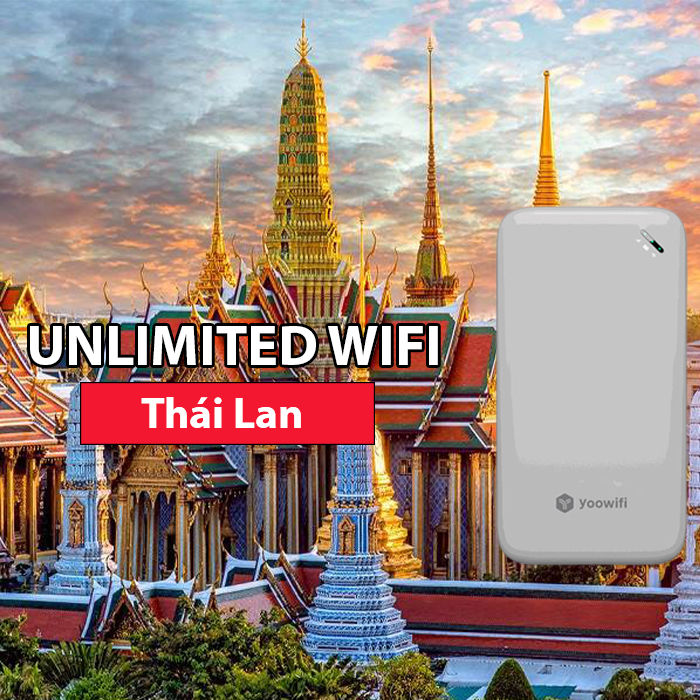
However, the inconvenience of Pocket WiFi is that you always have to carry a bulky physical device in your bag and make sure it is fully charged every day. If the device runs out of battery midway, the whole group will completely lose Internet access, causing major disruptions when finding directions or calling a ride. In addition, the fairly high cash deposit procedure and the risk of having to pay compensation if the device is lost or damaged make this option not truly flexible for active independent trips.
Thailand travel physical SIM card
Travel SIMs from major carriers such as AIS Thailand, DTAC or TrueMove H are always known for their stable 4G/5G network speeds and wide coverage across the Land of Smiles. Travelers can easily buy these SIMs at service counters in the airport or at 7-Eleven convenience stores nationwide. This is a solution that gives you complete control over connectivity without worrying about public WiFi quality in remote areas or night markets.
That said, the biggest downside of a physical SIM is that you must remove your main SIM currently used in Vietnam and replace it with a Thailand SIM. This is not only inconvenient when you need to receive bank OTP codes or important messages, but it also carries the risk of misplacing your tiny original SIM card. In addition, having to queue for passport registration at the airport during peak hours is often exhausting, wasting valuable time right after you arrive in Thailand.
International roaming
Roaming (International roaming) is the simplest option in terms of operation because you can use your Vietnamese SIM directly in Thailand without changing hardware. You only need to sign up for a plan with your domestic carrier before flying, and you can stay connected throughout the trip. This is a quick and convenient solution for those who do not want to learn too much about whether Thailand has WiFi or deal with local SIM cards.
However, roaming services are usually very expensive and the included data allowance is often quite limited compared with other solutions. If you do not closely control data usage, you may face a huge phone bill after your trip ends. In addition, roaming speeds can sometimes be less stable than local SIMs because they must pass through intermediary connection gateways, significantly affecting web browsing or video watching.
Thailand travel eSIM
Thailand travel eSIM is considered the most modern and convenient Internet solution for international travelers thanks to technology that is integrated directly into the phone’s hardware. You only need to scan a QR Code to install the plan and can start using the network immediately as soon as your device lands. The outstanding advantage of eSIM is absolute compactness; no physical SIM swapping is needed, so you can keep your main SIM active to receive calls or OTP messages from Vietnam.
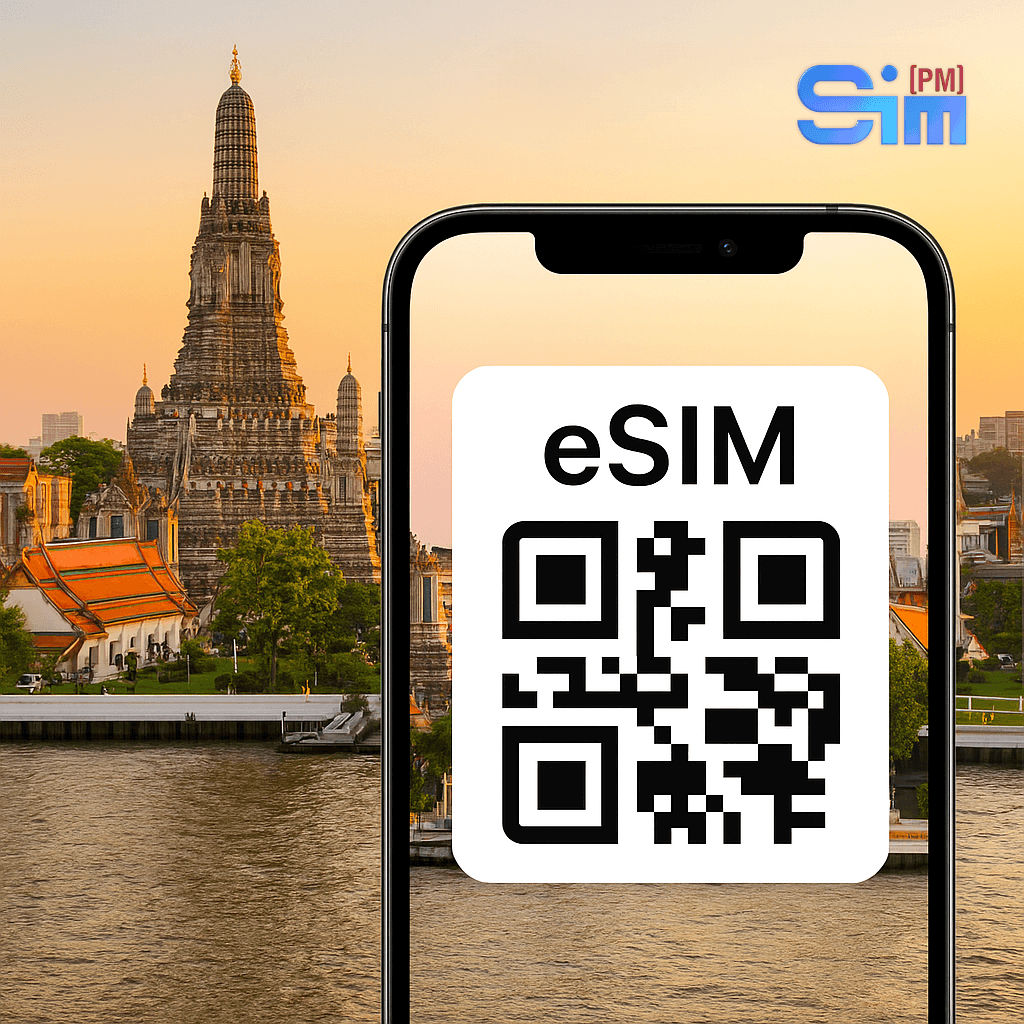
In addition to technical convenience, eSIM also offers highly competitive prices and a variety of flexible data plans depending on the length of your trip. With direct connection to the network infrastructure of Thailand’s leading carriers, eSIM ensures access speeds are always at their highest and most stable. This is why more and more independent travelers prioritize eSIM for a smooth travel experience, free from worries about whether Thailand has WiFi.
Summary table: Should you choose WiFi, SIM, or eSIM?
The decision of which connectivity solution to choose depends greatly on your actual usage needs and travel budget. To help you stop hesitating about whether Thailand has WiFi or which SIM to buy, SimPM has created the detailed comparison table below. This summary table objectively evaluates criteria from convenience to security so you can get the clearest overview before making a decision.
| Criteria | Public WiFi | Travel WiFi rental | Thailand travel SIM card | International roaming | Thailand travel eSIM |
| Device needed | No device needed | Must carry a separate WiFi hotspot | Must remove and replace SIM cards | No device needed | No device needed, built in |
| Setup method | Manual login, enter information | Turn on the device and connect to WiFi | Insert a new SIM into the phone | Register a plan with the carrier | Scan QR and activate quickly |
| Connection stability | Low, easily interrupted | Average, device-dependent | High, uses local network | Average | Very high, direct connection |
| Convenience while traveling | Poor, loses connection when leaving the hotspot | Inconvenient because you must carry an extra device | Stable but requires SIM swapping | Stable | Very convenient, nothing extra to carry |
| Cost | Free | Quite high (Rental + Deposit) | Average | Very high | Cost-effective, flexible |
| Usage risk | Personal information exposed | Lost or damaged device must be compensated | Main SIM lost | Extra charges incurred | Almost none |
| Best for | Temporary use | Large groups | General users | Light Internet users | Individuals, independent travelers |
Choosing how to use the Internet in Thailand depends quite a lot on your needs and how you move around during the trip. There is no option that suits everyone, but it can be divided by specific situations. If you only need basic Internet and do not move around much, free WiFi may temporarily meet your needs.
Meanwhile, if you are traveling in a group, renting travel WiFi can save costs by sharing the connection. For those who need a more stable connection, a physical SIM or eSIM is a suitable choice. In particular, if you prioritize compactness and flexibility, eSIM is often rated higher because you do not need to carry extra equipment or swap SIM cards.
Thailand travel eSIM at SimPM – The most convenient Internet solution
SimPM not only provides high-speed data plans but also offers transparent service and complete peace of mind for Vietnamese customers. All information about the carrier, data allowance, and day-counting method is clearly published in the system so you can easily check it before deciding. This is the top choice to completely eliminate worries about whether Thailand has WiFi thanks to a personal 4G/5G connection always available 24/7.
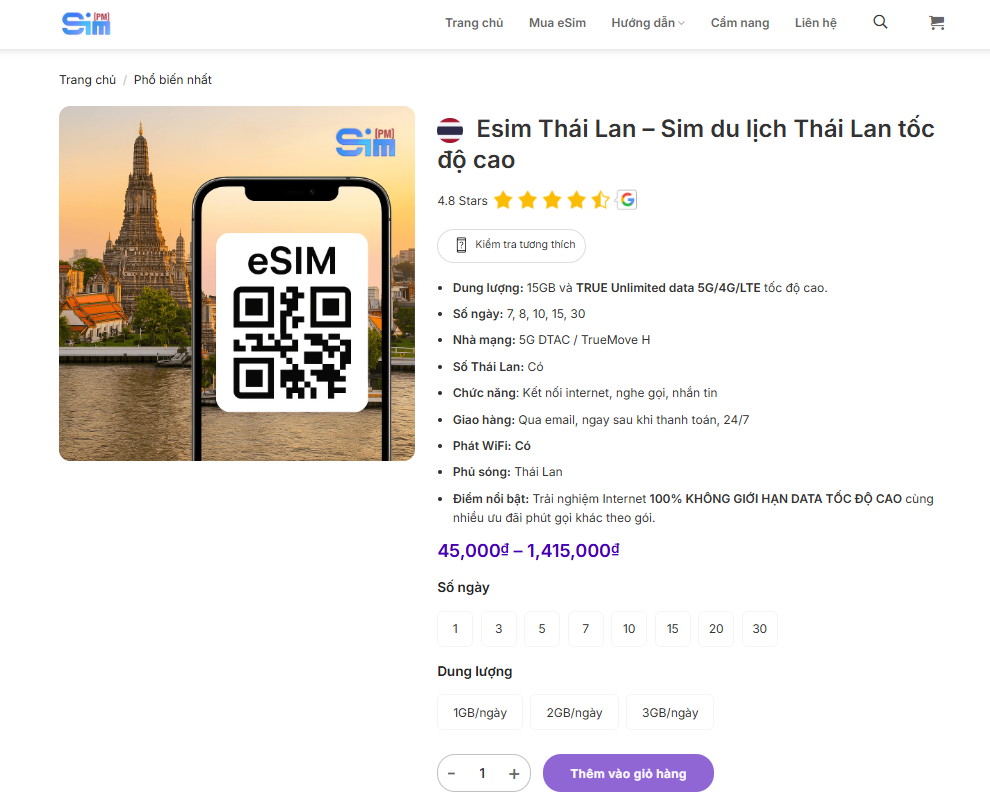
SimPM’s outstanding strength is its ability to deliver the eSIM within 5 minutes via email or the app right after you complete online payment. This allows travelers to proactively install the QR code in Vietnam and be ready to use the network as soon as the plane touches down at the Thailand airport runway. Throughout the trip, the Vietnamese-speaking technical support team is always available 24/7 via fanpage and website to handle any questions as quickly as possible.

To get this Internet pass, you can visit website SimPM or download app SimPM on iOS and Android to place your order in just a few minutes. With just a few simple taps, you are ready to explore the Land of Smiles without having to line up to buy a physical SIM at the airport.
We hope the information above has helped answer your question about whether Thailand has WiFi and helped you choose the best Internet connection option for you. Wishing you a Thailand trip filled with memorable moments, always staying connected and fully enjoying every exciting experience!