Independent Busan Travel 2026: visa, costs, 4-day itinerary

Independent travel in Busan is a very worthwhile option if you want to explore a Korea that is both modern and close to the sea. This port city has the calm Haeundae Beach, the colorful Gamcheon Culture Village, the ocean-scented Jagalchi Fish Market, and streets lively enough to keep your trip from ever feeling boring. This article compiles the essential information for Vietnamese travelers visiting Busan independently for the first time: visa, real costs, the best time to go, a 4-day 3-night itinerary, how to get around, where to stay, must-try dishes, and an eSIM so you always have mobile data when traveling to Korea.
Korean visa for Vietnamese travelers visiting Busan
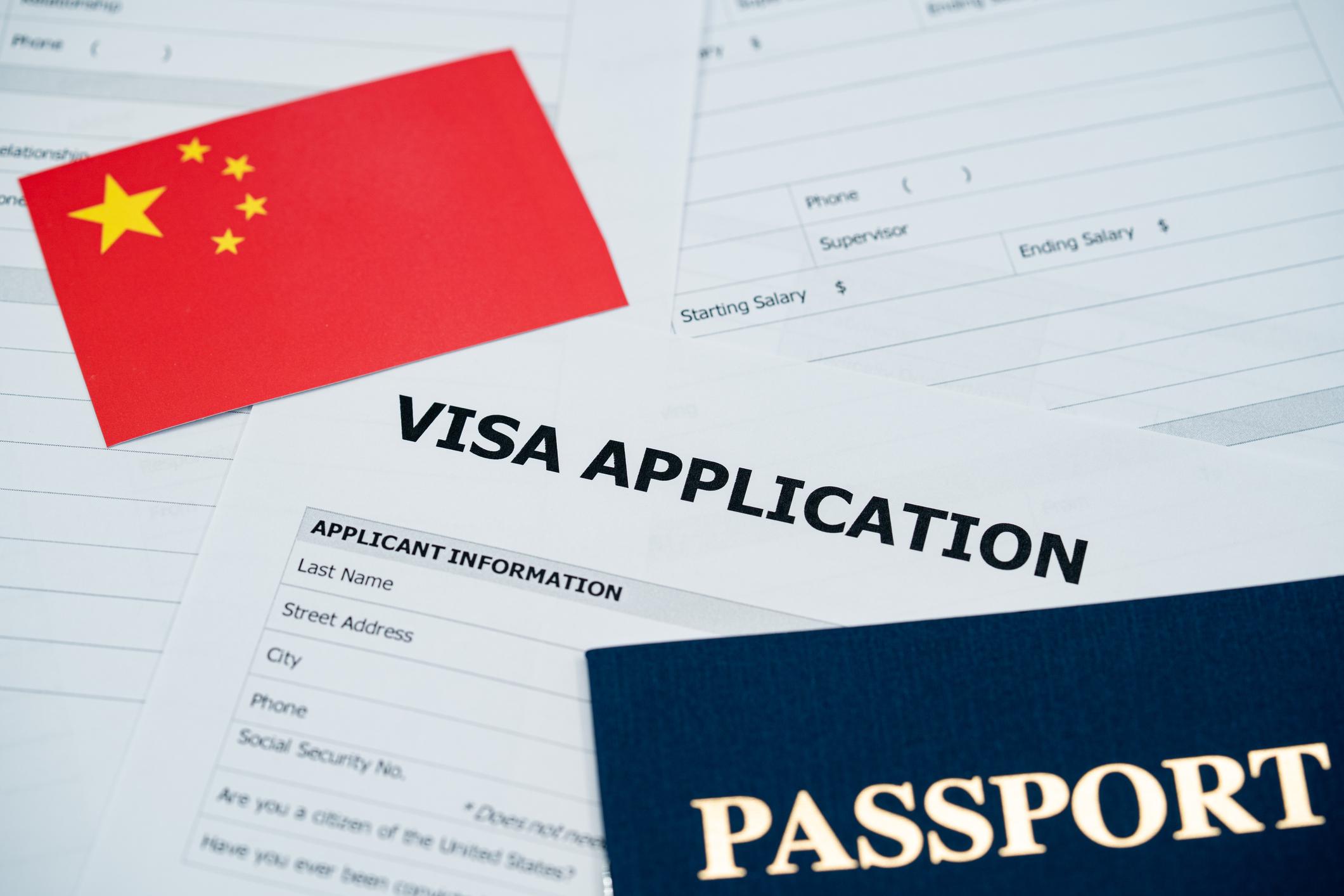
A fairly common misunderstanding among Vietnamese travelers is thinking that K-ETA alone is enough to enter Korea. In fact, K-ETA does not apply to Vietnamese citizens. It is a form for citizens of visa-waiver countries, while Vietnam is not on that list. Therefore, if you are traveling to Busan, Vietnamese travelers need to apply for a C-3-9 visa before flying.
Visa type and length of stay
The C-3-9 visa is a short-term tourist visa for sightseeing and leisure. This visa is usually valid for 3 months and allows a maximum stay of 30 days per entry, according to information from Vietnam Airlines and mofa.go.kr. For Busan trips under 1 months, Vietnamese travelers usually only need to apply for a single-entry visa.
Documents to prepare
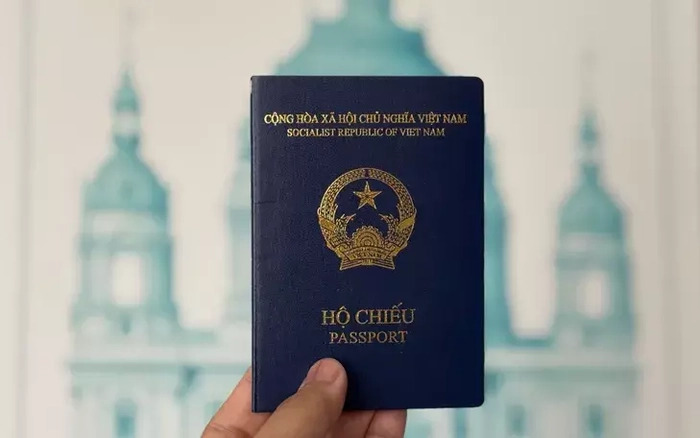
The application for a C-3-9 g visa requires 8 basic document groups:
- Passport valid for at least 6 months
- 2 passport photos, 3.5 x 4.5 cm, white background, taken within the last 6 months
- Bank statement for the most recent 3 months, with a balance from 80 million VND
- Employment confirmation letter and salary slips for the most recent 3 months
- Notarized household registration book
- Detailed travel itinerary
- Hotel booking confirmation
- Round-trip flight booking, payment not required yet
You should prepare your documents early and check each item carefully to avoid having to supplement them multiple times, especially during Korea’s peak travel season.
Fees and processing time
The total cost of applying for a C-3-9 visa usually ranges from 910.000 to 2.500.000 VND, depending on whether you apply on your own or use support services. According to Vietnam Airlines 2025, the core fee is about 910.000 to 950.000 VND, including 20 USD in consular fees and the service fee at KVAC.
The usual processing time is about 7 to 10 working days. However, during peak months such as 3, 4, 10, and 11, the review time may extend to 18 to 20 days. To be safe, you should book an appointment at KVAC Hanoi or Ho Chi Minh City at least 1 months in advance.
Submit the e-Arrival Card before flying
After obtaining your visa, you still need to complete one more important step: submit the e-Arrival Card within 72 g hours before entering Korea. You submit it directly on the official portal e-arrivalcard.go.kr. This is the Korean government website, not the Korea Travel app or any other travel app. After completing it, you will receive a QR code. Save the image on your phone or print it out to present when you arrive at Gimhae Airport.
When is the best time to visit Busan?
Busan is beautiful year-round, but each season brings a very different feeling. If you ask many Vietnamese travelers who have been to Busan, 4 is often the most mentioned time because of cherry blossoms, beautiful sunshine, and pleasant weather. SIMPM hotline data from 1 to 4/2026 also shows that 4 is the most popular time among Vietnamese travelers.
Spring: 3 to 5
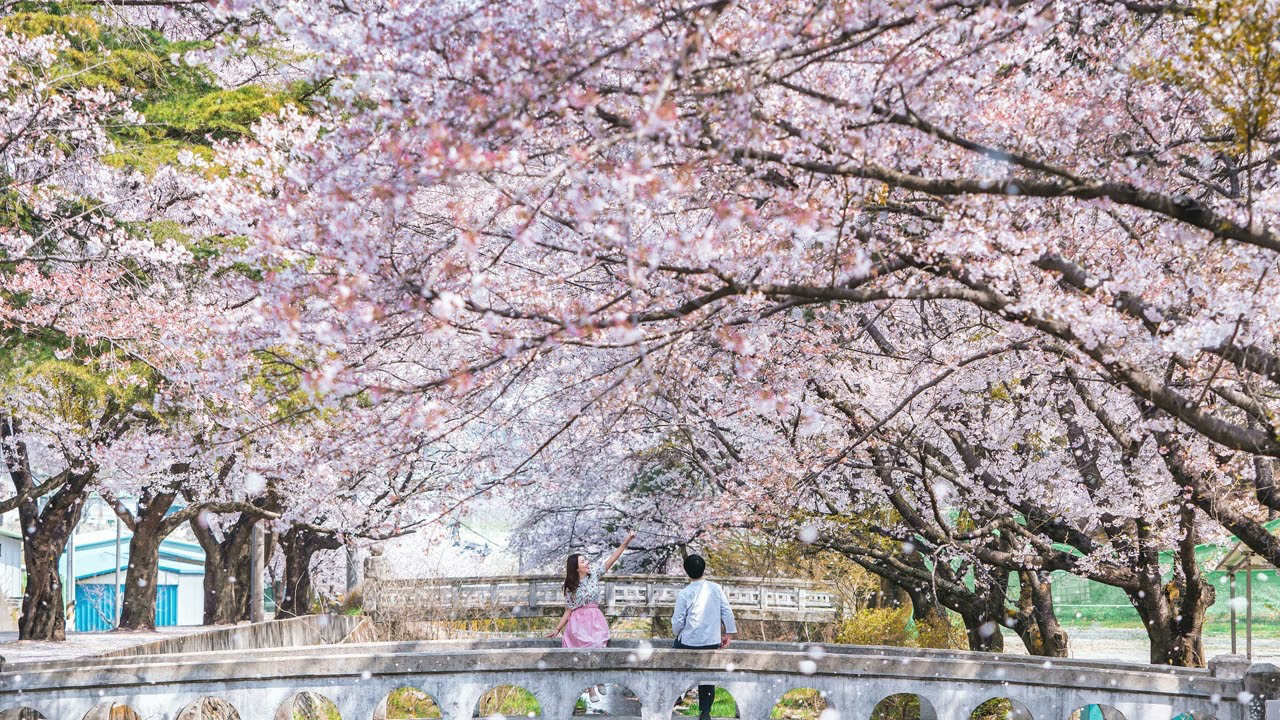
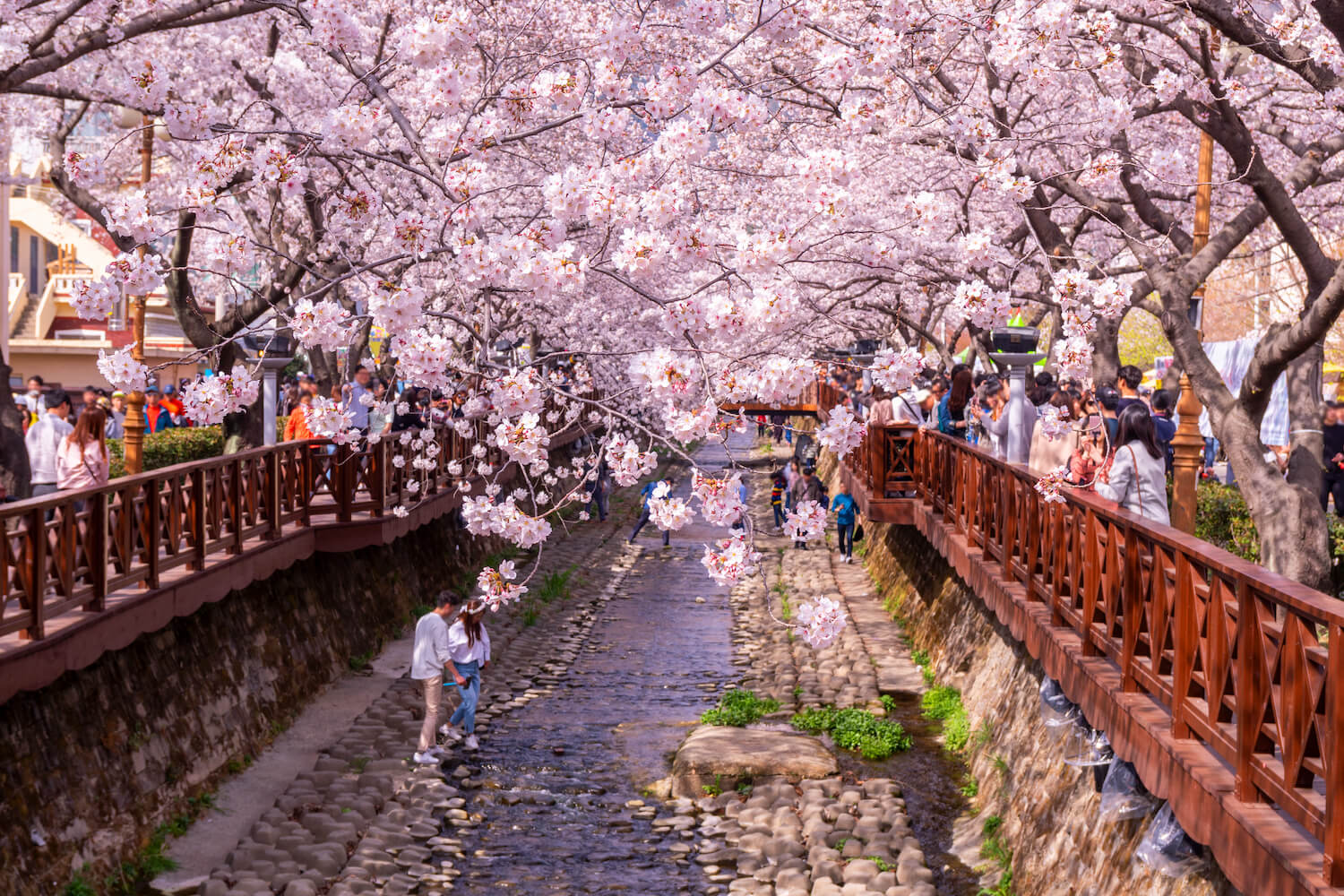
Spring is cherry blossom season in Busan and nearby areas. A place well worth visiting is the Jinhae Gunhangje Festival, about 40 km from Busan. If you go by bus from Sasang Bus Terminal, the travel time is about 1 to 2 g hours.
In 2026, the Jinhae Gunhangje Festival took place from 27/3 to 5/4. The old railway track at Gyeonghwa Station is famous for rows of cherry blossoms lining both sides of the walkway. Busan temperatures from 3 to 5 range from about 5 to 20 degrees Celsius, depending on the week. Mornings and evenings are still cold, so you should bring a light windbreaker.
Summer: 6 to 8
Summer is when Busan truly lives up to being a seaside city. The seawater at Haeundae and Gwangalli is warm enough for swimming, with daytime temperatures around 26 to 31 degrees Celsius. Koreans usually go to the beach from early morning, making the beaches very lively.
However, showers may appear in early 7, with high humidity of around 80 to 85. If you are visiting Busan in this season, you should prepare a foldable umbrella, quick-dry clothing, and shoes that are easy to walk in during humid weather.
Autumn: 9 to 11
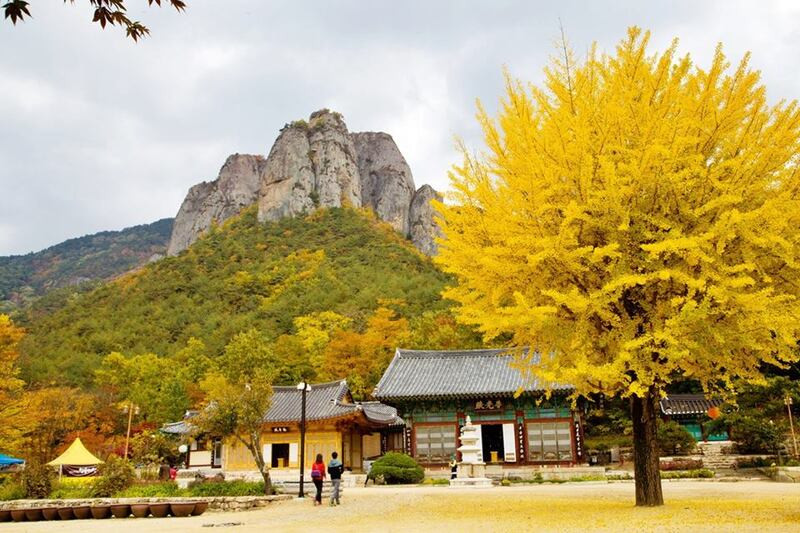
Autumn is the ideal time if you like dry weather, gentle sunshine, and romantic scenery. Red leaves appear at Beomeosa Temple, Yongdusan Park, and many roads throughout the city.
Autumn temperatures are around 15 to 22 degrees Celsius. A light jacket is all you need. This is also a season when international visitors come to Korea in fairly large numbers, so hotels should be booked about 2 months in advance to get a better price.
Winter: 12 to 2
Winter in Busan sees fewer visitors, and hotel prices may drop by about 30 to 40. Temperatures usually range from -3 to 8 degrees Celsius. Busan does not get as much snow as Seoul, but the sea breeze is much colder.
This season is suitable for those who like a quiet atmosphere, want to eat fresh cod, soak in a hot spring spa, and enjoy a very “Korean” feeling in cold weather.
Independent Busan travel costs for 4 days 3 nights

Independent Busan travel costs for Vietnamese travelers usually range from 12 to 25 million VND per person for a 4-day 3-night trip. The 15 million VND per person level is the most common, according to data from 10 SIMPM customers during the period from 1 to 4/2026.
| Category | Budget | Standard | Premium |
|---|---|---|---|
| Round-trip flight SGN/HAN – PUS | 4,5 – 5,5 million | 5,5 – 7 million | 7 – 9 million |
| Hotel 3 nights | 1,8 – 2,5 million | 2,8 – 4 million | 5 – 8 million |
| Food and drinks 4 days | 1,2 – 1,5 million | 1,8 – 2,5 million | 3 – 4 million |
| In-city transport | 400.000 – 600.000 | 600.000 – 900.000 | 1 – 1,5 million |
| Attraction tickets | 500.000 – 800.000 | 800.000 – 1,2 million | 1,2 – 1,8 million |
| Shopping and contingency | 1 – 2 million | 2 – 3 million | 4 – 6 million |
| Total/person | About 12 million | About 15 million | About 22 million |
4-day 3-night Busan travel itinerary
The itinerary below is adapted for first-time visitors to Busan. The places are arranged to reduce crisscrossing across the city, making the trip easier and more relaxed.
Day 1: Arrive in Busan and get to know Seomyeon
If you land at Gimhae Airport in the morning, you can take the LRT to Sasang, then transfer to Line 2 to Seomyeon. The total time is about 24 minutes, and the cost is about 1.600 KRW according to Visit Busan.
After checking in at the hotel, you can have lunch at the nearby Bujeon Market. If you see a stall crowded with locals, try a bowl of hot clam soup.
In the afternoon, stroll through Seomyeon Underground and the BIFF Square area in Nampo. In the evening, you should try dwaeji gukbap at Ssangdungi. A bowl of milky white, hot, and richly flavored pork bone soup is perfect for your first evening in Busan.
Day 2: Haeundae Beach and Gwangan Bridge at night
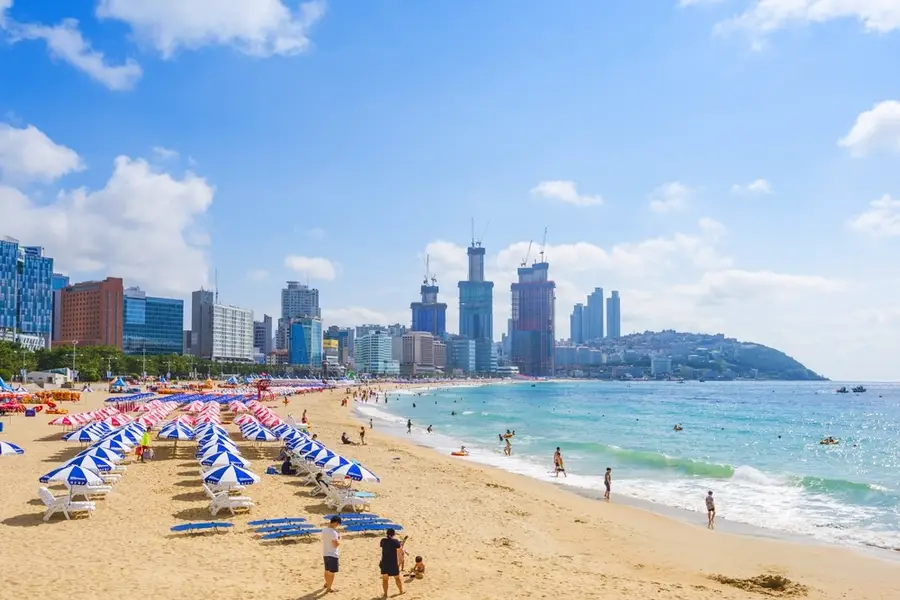
In the morning, take Line 2 to Haeundae Beach. If you are traveling with children, you can stop by SEA LIFE Busan Aquarium.
At lunch, eat sashimi at Haeundae Market. The seafood here is fresh, with many dishes brought straight off the boats, and the fish slices are thin and sweet with ocean flavor.
In the afternoon, head to Gwangalli Beach. This is the best place to admire Gwangan Bridge at night. In the evening, choose a high-floor cafe near the beach and look out at the long bridge.7,4km illuminated. The LED strip on the bridge often moves to music every hour, creating one of the most memorable scenes in Busan.
Day 3: Gamcheon Culture Village and old Nampo
In the morning, take bus number to Gamcheon Culture Village.2, about30minutes from Toseong. The box-shaped houses painted blue, pink, and yellow line the hillside, creating a very distinctive scene. This place was once a settlement for refugees during the Korean War and has now become an arts district with many small cafes and beautiful photo spots.
At lunch, return to BIFF Square and try ssiat hotteok, Busan’s famous seed-filled fried pancake.
In the afternoon, go up Busan Tower in Yongdusan Park to watch the sunset over the port. In the evening, eat Korean BBQ at Hwangsil Garden in Seomyeon, ending the day with the smell of charcoal, grilled meat, and a very local atmosphere.
Day 4: Haedong Yonggungsa seaside temple and spa before departure
Early in the morning, take bus 181 to Haedong Yonggungsa Temple. This temple sits right by the sea, where waves crash directly beneath the main hall. Watching the sunrise from the temple is a moment well worth waking up early for.
If you still have time, you can stop by Oryukdo Skywalk. At lunchtime or in the early afternoon, head back to Spa Land Centum City to soak in the onsen for 3 to 4 g hours before going to the airport. This way of ending the trip makes it feel more relaxed, especially if you are flying back in the evening.
How to get around Busan
Busan has a subway and bus system that is fairly easy to use, with reasonable costs, making it suitable for independent travelers. However, one issue many first-time visitors to Korea run into is that Google Maps does not provide accurate walking directions in Korea. The reason is that Korea restricts Google from publishing detailed maps because of security concerns. Therefore, before flying, you should install Naver Map and Papago in advance.
Subway and T-money card
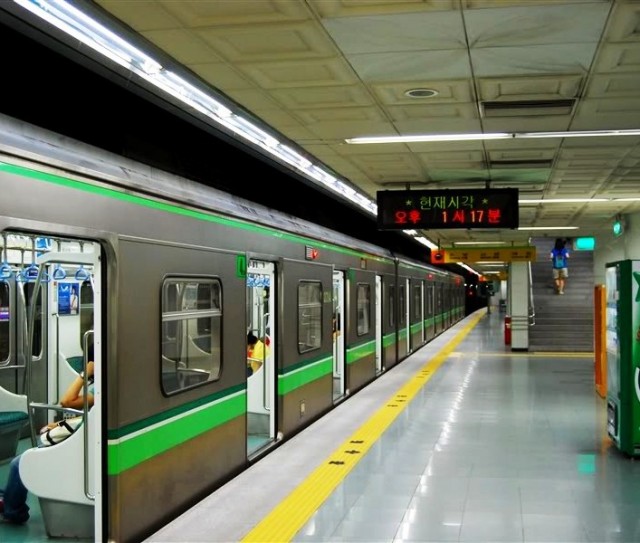
Busan Metro has 4 main lines, in addition to the Busan-Gimhae LRT and Donghae Line. Subway fares are about 1.400 to 1.500 KRW per ride, depending on distance, according to Humetro Busan.
A few notes when using T-money:
- You can buy T-money at CU or GS25, with prices of about 2.500 to 4.000 KRW depending on the store. Prices at the airport may be higher.
- Minimum top-up is 5.000 KRW, but if you are traveling for 3 to 4 days, loading about 20.000 KRW is more convenient.
- T-money can be used for the subway, bus, taxi, and some convenience stores.
- The card supports transfer discounts within 30 minutes.
- If you buy it at Lotte Mart or 7-Eleven, you may get a Cashbee card instead of T-money. Both types can be used for public transportation.
Taxis and ride-hailing apps
Taxi fares in Busan start at around 4.800 KRW for the first 2 km, then an additional 131 KRW is charged every 100 m, according to Visit Korea 2026. When the car is moving below 15 km/h, an extra time charge of 100 KRW every 30 g seconds applies.
Some tips for taking taxis in Busan:
- Download Kakao T before coming to Korea.
- You can register with the Vietnamese phone number you are using with eSIM.
- Check the estimated price on Kakao T before booking to avoid taking a detour.
- After 24 PM, night taxis usually charge an extra about 20%.
- Paying with T-money is more convenient than cash because you do not need to count coins.
Buses and bus route 181
Regular buses in Busan usually cost about 1.200 to 1.700 KRW, including some night routes. Bus 181 in particular is an important route if you want to go to Haedong Yonggungsa Temple.
Route 181 connects Haeundae subway station, exit 7, with Haedong Yonggungsa Temple. The frequency is about 17 minutes per bus, and the total travel time is about 45 minutes. Since there is no direct subway to the temple, the bus is the most reasonable choice if you do not want to take a taxi.
If you are going from Gimhae Airport to the city center, you can also take the limousine bus, priced at about 7.000 to 8.000 KRW, connecting to areas such as Seomyeon and Haeundae.
See also: Top 15 Busan travel spots 2026: opening hours, ticket prices, subway
Top attractions in Busan
Busan has many places worth visiting, but with a 4-day itinerary, you should prioritize the most representative spots so you do not get overwhelmed. Below are 6 highlights you should include in your first trip.
Haeundae Beach
Haeundae Beach is Busan’s most famous beach, about 1,46 km long according to Visit Korea. The beach has fine sand, clear water, and is at its best from 5 to 9. Early morning is a very worthwhile time to visit Haeundae. The beach is still quiet, the sea breeze passes through rows of pine trees, and locals jog along the shoreline. This is one of the calmest and most pleasant scenes in Busan. Entry to the beach is free and it is open 24/7.
Gwangalli Beach and Gwangan Bridge
Gwangalli Beach is the best place in Busan for night views. The sandy shore is about 1,4 km long, and the waves are gentler than at Haeundae, making it quite suitable for families with small children. The most prominent feature here is the 7,4-km Gwangan Bridge. In the evening, the LED lighting system on the bridge creates a very impressive scene. If you take photos with a camera or a phone set to a 5 to 10 g-second exposure mode, you can get postcard-like pictures.
Gamcheon Culture Village
Gamcheon Culture Village is often called the “Machu Picchu of Korea.” The small colorful houses are packed closely together on the hillside, creating a very distinctive scene.
Previously, this area was a settlement for war refugees. Today, Gamcheon has become an arts district with murals, small cafes, souvenir shops, and many photo spots. You should wear flat shoes because the roads are quite steep. Gamcheon is free to enter and open24/7, but it’s best to go during the day for beautiful photos.
Haedong Yonggungsa Temple
Haedong Yonggungsa is one of the most famous seaside temples in Korea. According to Visit Korea, the temple is considered one of the three sacred places honoring the Bodhisattva Guanyin in Korea. The temple is said to have been built in 1376 during the Goryeo period by the monk Naong, and later restored in the early 20 century after the Imjin War.
The special feature of the temple is its location right by the sea, with waves crashing directly below the main hall. The best time to visit is around 5 to 6 g in the morning, when the sun casts a golden glow on the curved roof tiles and the scent of incense mixes with the sea air. The temple does not charge an entrance fee.
Busan Tower and Yongdusan Park
Busan Tower is located in Yongdusan Park, in the Nampo area. The tower is about 120 m tall and is an ideal place to overlook Busan Port and Yeongdo Island. Tickets to the observatory are about 12.000 KRW. The best time to go is at sunset. On clear days, especially in 10 and 11, you can even see Tsushima Island of Japan in the distance.
Jagalchi Fish Market
Jagalchi is the largest seafood market in Korea according to Visit Korea. The market opens from 5 AM to 22 PM and is closed on the 3 of the first and third weeks of each month. The 1 floor is the area for fresh seafood, always full of calling vendors and a very strong ocean smell. The 2 floor is the restaurant area, where you can eat sashimi, fish soup, or grilled seafood. Many stalls accept cash only, so you should bring at least 30.000 KRW if you plan to eat here.
See also: Top 20 famous places in Seoul 2026: opening hours, ticket prices, subway
Busan dishes visitors should try
Busan cuisine leans toward seafood, hot soup dishes, and foods closely tied to the sea. Compared with Seoul, food in Busan feels more rustic and more distinctly local. Below are 6 dishes worth trying:
Dwaeji gukbap
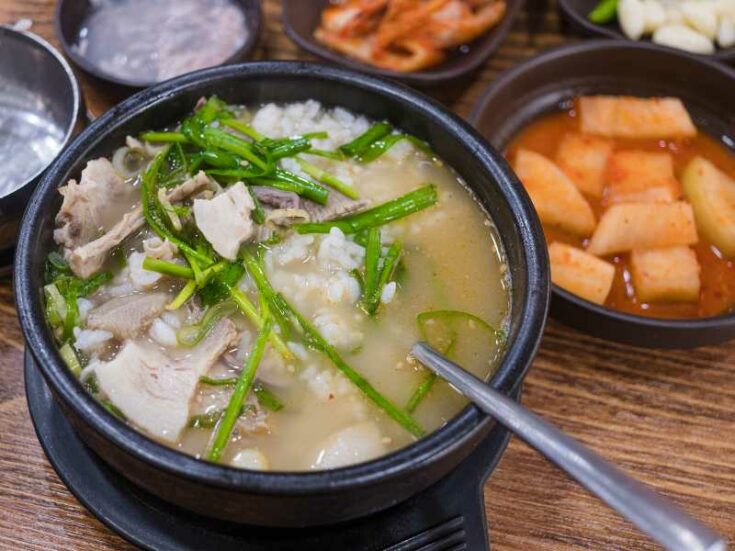
Dwaeji gukbap is a cloudy white pork-bone soup served with rice, scallions, chili powder, and side dishes. It is a dish that suits cool weather very well. One much-mentioned address is Ssangdungi Dwaejigukbap, main branch at 16 UN Pyeonghwa-ro, Nam-gu, about 2 from Daeyeon Line station, roughly 2 minutes on foot. The restaurant is recommended by TasteAtlas, with prices around 9.000 KRW per bowl.
Milmyeon
Milmyeon is Busan’s signature cold noodle dish. According to Korea.net, it originated during the Korean War 1950 – 1953, when northern refugees used U.S.-supplied wheat flour instead of buckwheat to make naengmyeon. The original Naeho Naengmyeon restaurant is located in Uam-dong Market, Nam-gu. It was opened by the You family from North Korea in 1953 and is still operating today. Milmyeon has a slightly sour, lightly spicy taste, with chewy, refreshing noodles, making it ideal for summer.
Brown sugar hotteok
Hotteok is a hot fried pancake filled with brown sugar, peanuts, and sunflower seeds. In Busan, the ssiat hotteok version at BIFF Square is especially famous. One pancake here costs about 1.500 KRW. It tastes best fresh from the fryer, with a crispy outside, sweet fragrant filling, and a hot center. If it cools down, it loses the part that makes it most appealing.
Eomuk Busan
Eomuk is fish cake made from sea fish and wheat flour, and it can be fried, grilled, or cooked in broth. Busan is one of the most famous places in Korea for eomuk. Samjin Eomuk at 36 Taejong-ro 99beon-gil, Yeongdo-gu, was founded in 1953 and is recognized by Visit Korea as the oldest fish cake brand in Korea. The 2 floor also has the Samjin Fish Cake History Museum. One box of eomuk costs about 8.000 KRW, and it can be eaten on site or bought as a gift.
Sashimi at Jagalchi Market
Eating sashimi at Jagalchi Market is a highly recommended experience. You choose live fish on the 1 floor, then take it to the 2 floor for the restaurant to prepare. The service fee is about 5.000 KRW per person. A portion of snow crab sashimi or white-flesh fish sashimi ranges from 25.000 to 50.000 KRW depending on size. The seafood here is very fresh, creating a very different experience from pre-prepared sashimi.
Bingsu Sulbing
Bingsu is Korean shaved ice, often eaten with red beans, fruit, soybean powder, or cheese. Sulbing Haeundae on Haeundae-ro offers many easy-to-enjoy flavors, priced around 8.500 to 12.000 KRW per serving, usually enough for 2 people. If it’s your first time, you can order mango cheese or injeolmi. The sweetness is moderate, refreshingly cold, and perfect after BBQ or after a trip to the beach.
Recommended places to stay in Busan
Busan has 4 popular areas to stay: Seomyeon, Haeundae, Nampo, and Gwangalli. Choosing the right area can save you about 30 to 45 minutes of travel time each day.
| Khu | Advantages | Budget hotel price/night | Best for | Nearby subway |
|---|---|---|---|---|
| Seomyeon | Central location, many eateries, easy to get around | 70.000 – 100.000 KRW | First-time visitors, families | Seomyeon Line 1 and Line 2 |
| Haeundae | Close to the beach, many upscale hotels, beautiful views | 120.000 – 200.000 KRW | Couples, people who like the beach | Haeundae Line 2 |
| Nampo | Close to the old town, Jagalchi Market, and BIFF Square | 60.000 – 90.000 KRW | Backpackers, people who like walking | Nampo Line 1 |
| Gwangalli | Quieter than Haeundae Beach, Gwangan Bridge view | 90.000 – 150.000 KRW | Couples who want night scenery | Gwangan Line 2 |
Accommodation area recommendations:
- Families visiting Busan for the first time should choose Seomyeon because it has 2 intersecting subway lines, convenient dining, and a lively atmosphere even at night.
- Couples who like taking photos should consider Gwangalli, especially high-floor hotels with a view of Gwangan Bridge.
- Solo travelers can choose Nampo because it is close to Jagalchi Market, BIFF Square, and many small cafes.
- Travelers seeking a high-end beach getaway should choose Haeundae, especially hotels with balconies overlooking the beach.
On the trip in 4/2026, My Linh chose Toyoko Inn Seomyeon at 78.000 KRW/night. The hotel is close to the subway station, and it takes about 30 minutes to get to Haeundae from there.
Korea eSIM for a Busan trip
eSIM is the most convenient way for 4G Vietnamese travelers going to Busan to stay connected. You don’t need to line up to buy a physical SIM at Gimhae Airport, and you also don’t have to worry about high roaming charges.SIMPM offers eSIMs using the KT network, one of the three main carriers in Korea together with SK Telecom and LG U+. The QR code is sent by email and can be activated in about 1 minutes.
Buy SimPM eSIM from Vietnam is often many times cheaper than a physical SIM card at Gimhae Airport. The couple Le Anh and Pham Thu Ha,30and28years old, working in marketing in Da Nang, going to Busan in4/2026bought a physical SIM at Gimhae for the price of89.000KRW/person, equivalent to about1,6million VND, because they didn’t know there was a cheaper option. Next time, they used a SimPM eSIM with the same data allowance for a price of280.000VND, save more1,3million VND per person.
Four specific benefits of SimPM eSIM:
- Activates in about 1 minutes, no need to queue at the SIM counter at Gimhae
- Get connected as soon as the plane lands, convenient for booking a Kakao T taxi and checking directions
- Vietnamese support 24/7, with APN issue handling via hotline
- 100% refund if it has not been activated and the issue comes from the provider
You can book a Korea eSIM at SimPM and receive the QR code by email in about 5 minutes. Then just scan the QR code once, install the eSIM on your phone, and activate it on your departure day. When you arrive at Gimhae Airport, your phone will have 4G for directions, rides, and immediate communication.
Busan is a great destination for anyone who wants to explore Korea independently in a relaxed, flexible way with plenty of experiences: the sea, old streets, local food, and memorable moments. Before your trip, all you need is to prepare your visa, itinerary, budget, transportation card, and internet connection carefully. To have mobile data right when you land, check directions, book a ride, and stay in touch easily, you can buy a Korea eSIM from SimPM before your flight, receive the QR code quickly, and get Vietnamese support throughout your trip.